Why this matters
Kyiv Mayor Vitali Klitschko told The Times in an interview that about 600,000 people left the city in January. For a city of more than three million residents, this means that roughly one-fifth of the population was displaced in a short time — not for economic reasons, but because of safety and basic living conditions.
What happened
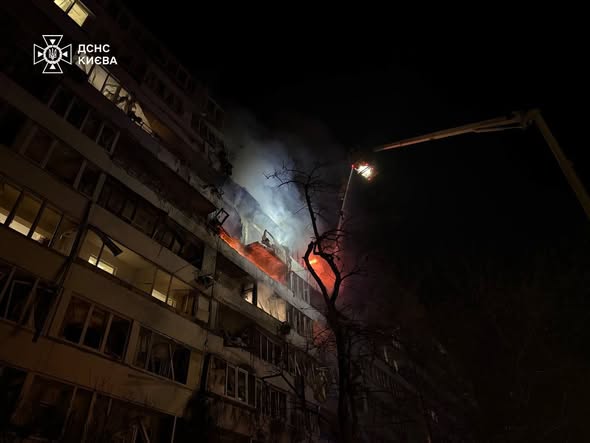
The cause was heavy strikes on critical infrastructure, which left significant parts of Kyiv temporarily without heat, water and electricity. City authorities reported that, to avoid system ruptures and frozen pipes, they had to partially drain centralized heating and water-supply networks. After the attacks on January 9, four people were killed and 22 injured; nearly 6,000 apartment buildings lost heating at that time. Repeat strikes on the night of January 20 again left more than 5,600 homes without heat.
"Putin is driving Kyiv toward a 'humanitarian catastrophe'"
— Vitali Klitschko, Mayor of Kyiv (interview with The Times)
Why this happened and what it means
Targeted strikes on energy and municipal infrastructure are a tactic that increases pressure on the civilian population during cold periods. The logical chain is simple: destruction or disabling of networks — fall in quality of services — evacuation of part of the population — additional strain on aid networks and humanitarian resources.
Practical consequences: the need for temporary accommodation centers, additional mobilization of volunteers and rescuers, rapid delivery of mobile sources of heat and water, and international assistance to restore critical infrastructure.
What experts say and what steps are needed
Energy and urban analysts point out that short-term technical solutions (mobile boilers, temporary power lines) must be combined with long-term investments in network resilience. At the same time, a coordinated humanitarian response is needed — so that people who left have somewhere to return to, and those who stayed receive basic services.
Quick numbers
— According to the mayor: ~600,000 people left in January.
— Kyiv is large and densely populated: with more than 3 million residents, evacuation and recovery plans must be adjusted.
— At the end of January there were reports of thousands of apartment buildings without heat after the attacks on January 9 and 20.
Conclusion
These displacements are an indicator not only of humanitarian pressure but also a test of the operational capacity of city authorities and the speed of international response. While Kyiv maintains a tuned shield of public solidarity — volunteers, rescuers, neighbors — recovery requires resources: technical, financial and political. The ball is now in the partners' court — can their declarations be turned into concrete supplies and reconstruction projects?





