What happened
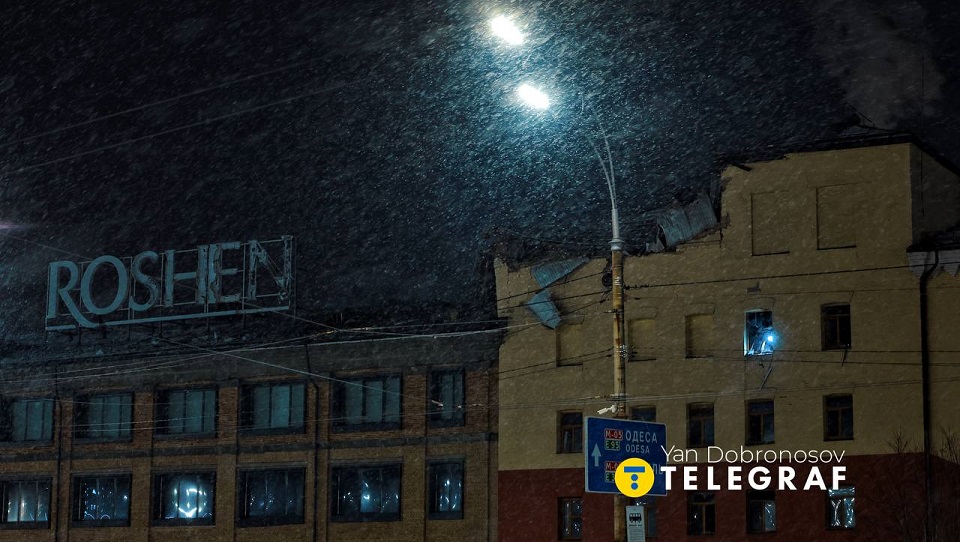
In the night of January 24, as a result of being struck by a Russian Shahed drone, the building of the Roshen confectionery factory in the Holosiivskyi district of Kyiv was damaged. One woman was killed, and two other employees were wounded, the State Emergency Service and Member of Parliament Viktoriia Siumar reported.
“There is destruction on the upper floor of the confectionery factory in the Holosiivskyi district: a woman was killed, two other people were injured”
— State Emergency Service
“She was working in the production workshop so that people would have fresh products in the morning… The workshop also has serious damage… Two more workers were wounded”
— Viktoriia Siumar, Member of Parliament
Official sources and visual confirmation
Footage of the damage was released by The Telegraph photojournalist Yan Dobronosov. Member of Parliament Oleksii Honcharenko added that not only production areas but also the factory’s office premises were affected. The adjacent square with an ice rink and a fountain was also damaged — places many Kyiv residents use in everyday life.
Why it matters
This strike is not just about one factory. First, it is a human loss and a risk to employees of non-military enterprises that continue to operate under shelling. Second, damage to production disrupts supply chains and jobs. Third, hits on public spaces undermine residents’ sense of security.
Context: scale of the nighttime attack
The nighttime strikes on January 24 were part of a powerful wave of attacks across Ukraine: according to reports, about 21 missiles and 375 drones were launched across the country that night, of which air defenses shot down approximately 357 drones and 15 missiles. The main targets were energy infrastructure and areas around Kyiv.
Consequences for Kyiv
Due to power shortages after the mass strikes, several metro stations (including Lisova, Chernihivska, Hydropark, Dnipro) are temporarily closed; train services are operating in a limited capacity. Many buildings are again without heating, and there are problems with water supply in some districts.
What’s next
This is another example of how strikes on non-military facilities affect daily life and the city’s economic stability. It is important that, after documenting the damage, rapid restoration of infrastructure follows, support is provided to those affected, and protection of critical facilities is strengthened.
Now it is up to local services and partners — whether they will be able, in a short time, to restore production capacities and public spaces, and how quickly they can reduce risks for workers and residents in the event of future attacks?







