Context: what happened
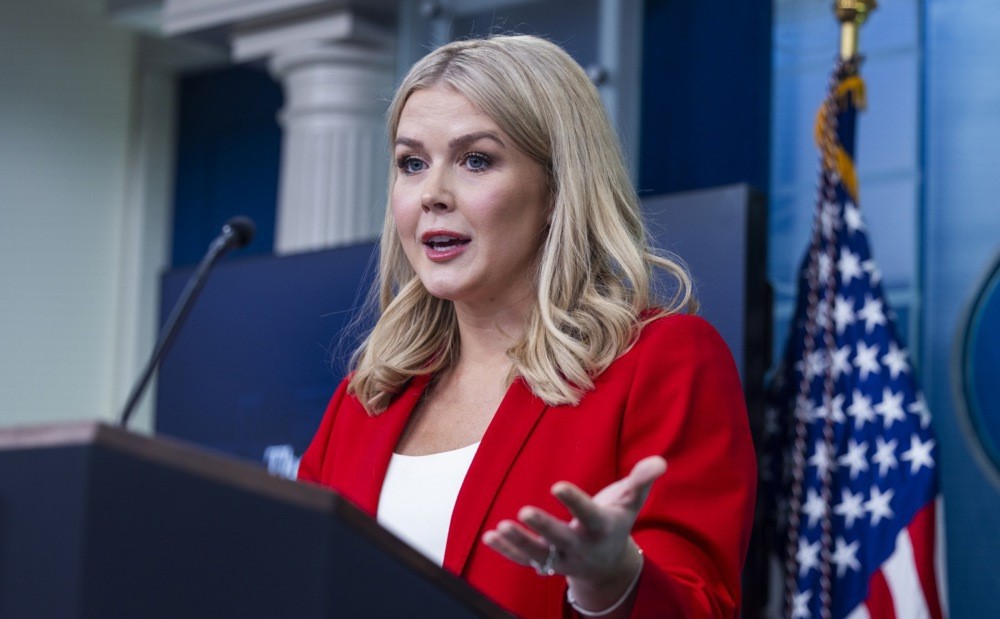
White House press secretary Caroline Leavitt told reporters that President Donald Trump "does not rule out options" in the conflict with Iran, including the possibility of deploying American troops on the ground. The statement was provided to CNN as a comment on the administration's handling of military options.
"Regarding participation in the operation, the president has spoken about this repeatedly. He wisely does not rule out such options as commander-in-chief... I would hesitate to confirm anything that a Democrat on Capitol Hill is now saying about the president's position."
— Caroline Leavitt, White House press secretary (CNN)
Congress reaction: more questions than answers
After the briefing, Democratic Senator Richard Blumenthal warned that the situation "looks like a path toward deploying American troops" and that after the hearings "there were more questions than answers, especially about the cost of war" (The Hill). Democrats insist on Congress's role in deciding the use of force and are threatening procedural steps if the administration refuses to testify under oath.
"It seems we are on the path to deploying American troops on the ground in Iran to achieve any of the potential objectives... There were more questions than answers, especially regarding the price of war."
— Senator Richard Blumenthal (The Hill)
Why this happened: the logic of decisions
There are several factors that explain why the administration is considering a wide range of options. First, according to the WSJ, some advisers urged looking for an exit plan and/or escalation depending on how events unfold — a response to uncertainty in the region and domestic pressure for a quick result. Second, Trump himself in an interview with CBS News said the conflict is "practically over," suggesting a divergence between official statements and the team's assessment of the situation.
In addition, changes in energy policy — notably the referenced easing of sanctions that Trump mentioned and which Reuters linked to Russia — show that economic factors (oil prices, political vulnerability) are influencing military-political decisions.
What experts say and what to expect
Analysts warn that a military operation in the region could easily drag on and trigger a chain reaction — from rising energy prices to heightened tensions among allies. Social evidence: several think tanks and investigative journalistic reports point to decisions being shaped under the influence of concurrent political, economic, and military signals.
Consequences for Ukraine
This story affects us directly. First, energy markets react noticeably to escalations in the Middle East — which is already pushing up fuel costs in Ukraine (for more detail — analysis by LIGA.net). Second, the redirection of U.S. diplomatic and military attention to other regions could affect the pace and priorities of support for Ukraine. Finally, escalation in the region increases overall international risk, which Moscow exploits for its own interests.
Conclusion
Now the ball is in Congress's and allies' courts: the administration can maneuver among operational options, media behavior, and economic consequences, but the final decision to scale up presence carries both political and long-term strategic costs. For Ukraine the key is to monitor practical effects (fuel, diplomatic attention, defense support) and demand clear guarantees from partners, not just declarations.





