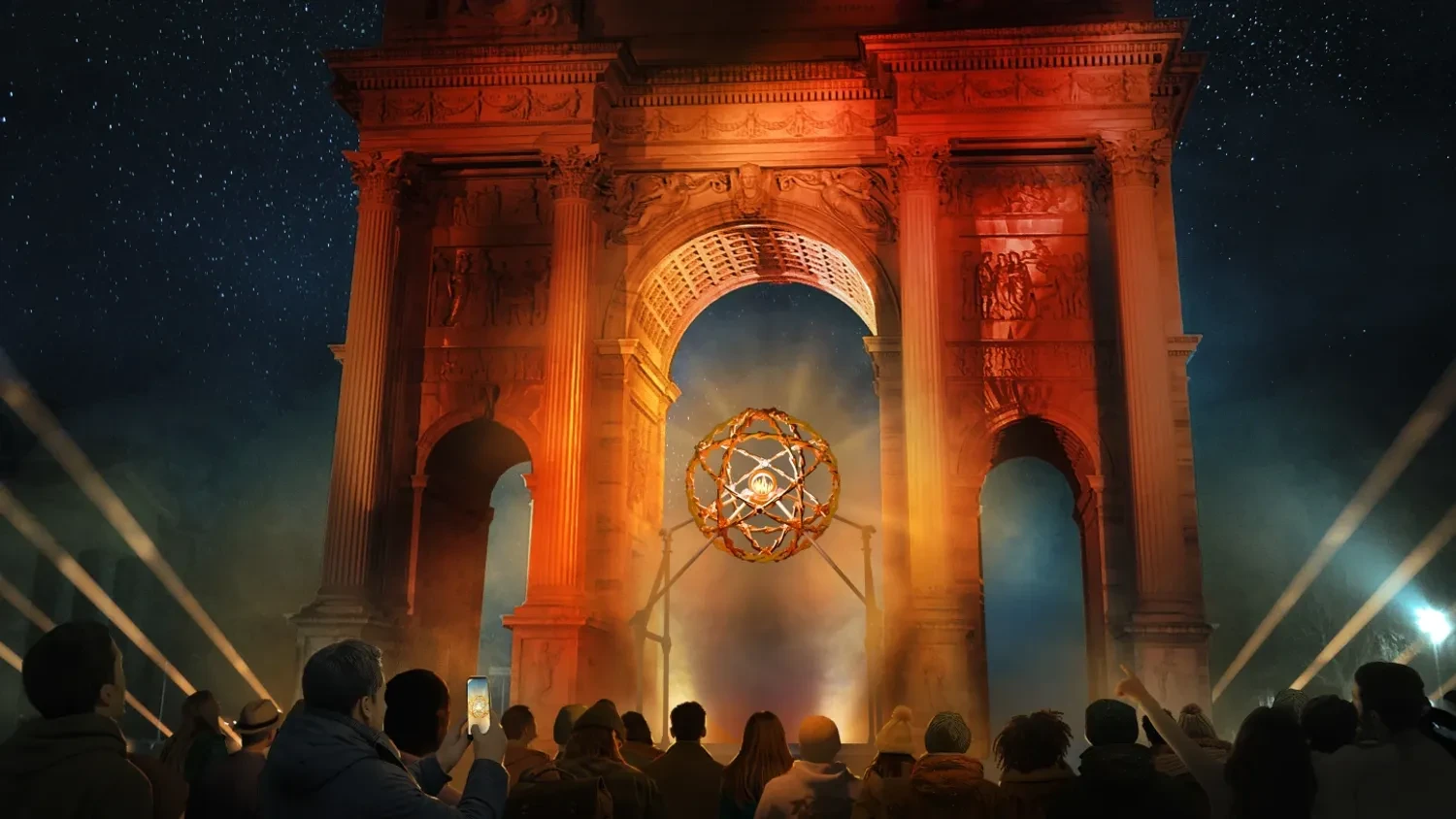
Organizing Committee «Milan–Cortina–2026» unveiled the design of the Olympic cauldrons, inspired by the creative legacy of Leonardo da Vinci. AP reports; the piece was reprinted by UNN. The main technical innovation — for the first time in the history of the Games two flames will be lit and extinguished simultaneously in two different cities: Milan and Cortina d'Ampezzo.
Design and mechanics: beauty in motion
The cauldrons are sun-shaped and equipped with a mechanism that allows them to open and close: the structure’s diameter varies from 3.1 to 4.5 meters. The Olympic flame will be housed in a special glass-and-metal vessel at the base of the structure. In Milan the cauldron is planned to be installed near the Arco della Pace; in Cortina — on Piazza Dibona.
"The design combines engineering excellence and the cultural memory of the city where Leonardo created his key works,"
— Organizing Committee Milan–Cortina–2026
Schedule and public program
The simultaneous lighting ceremony will take place on February 6; they will be extinguished on February 22. The cauldrons will operate again during the Paralympic Games — from March 6 to 15. For residents and visitors of Milan there will be an evening light show near the city cauldron: hourly demonstrations will last up to five minutes.
Why this is more than a spectacular element of the ceremony
At first glance — scenography. But synchronous flames in different cities are a technical solution with symbolic weight: it emphasizes the idea of a unified space where sport and culture reinforce each other. For audiences in Ukraine it is a chance to see how major European events work to shape the continent’s image in an era of geopolitical challenges.
Experts in cultural diplomacy and urban projects note that such visual solutions often serve as tools of soft power — they create associations that remain in memory longer than individual reports. Therefore it is important not only to show a visual spectacle, but to fill it with program and substance: performances, meetings, and initiatives that will engage diverse audiences.
Now the question for organizers and partners: will they turn these cauldrons into a platform for longer-term cultural dialogue, including with Eastern European countries, or leave them merely as a striking episode of the ceremony?
Sources: AP (reprinted by UNN), official release of the Organizing Committee Milan–Cortina–2026.