What happened
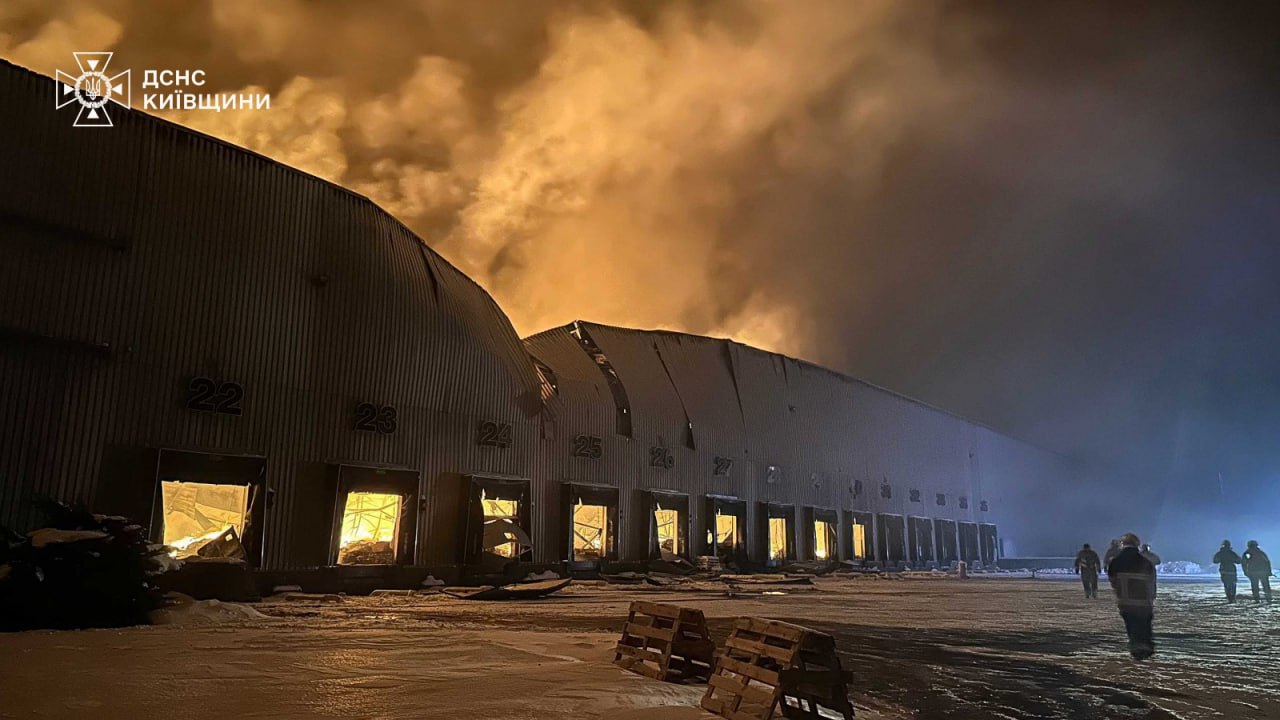
After a nighttime attack by Russia in Yahotyn (Kyiv region) a warehouse building is on fire. The State Emergency Service reported the blaze; firefighters are working on site.
"A warehouse building is on fire in Yahotyn."
— State Emergency Service
Member of Parliament Oleksii Honcharenko clarified that this concerns a warehouse of the confectionery company Roshen — a brand with a large supply network across the country. It is not only reputation or goods: such facilities are important for logistics and jobs in the region.
"A warehouse of the confectionery company Roshen is burning."
— Oleksii Honcharenko, Member of Parliament
Context of infrastructure attacks
This fire occurred against the backdrop of a series of strikes on infrastructure: on the night of 7 February Russia launched drones and missiles at cities and sites across Ukraine. According to reports, substations and overhead lines of 750 kV and 330 kV were hit, and strikes were also carried out against the Burshtyn and Dobrotvir thermal power plants.
"The Russians struck substations and 750 kV and 330 kV overhead lines, as well as the Burshtyn and Dobrotvir thermal power plants."
— Denys Shmyhal, Minister of Energy
The sequencing of the strikes complicates the work of rescuers and increases risks for warehouses and factories, where without stable power supply cooling, security and logistics are impossible.
Background
On 24 January a Russian strike already damaged the Roshen factory building in Kyiv: a woman was killed, two others were injured, and production and office premises were damaged. Since 14 January a state of emergency in the energy sector has been in effect in Ukraine due to massive strikes and the cold — a backdrop that increases the vulnerability of critical facilities.
Why this matters to you
Damage to a warehouse is not just a photo in a news feed. It means:
- a risk of supply disruptions on the domestic market and for exports;
- a threat to jobs in the region and added strain on local infrastructure;
- increased fire and technological risks due to power outages and hindered access for rescuers.
What's next
In the short term it is important to ensure safety on site, assess the scale of the damage and protect supply chains. Medium- and long-term plans require restoring the energy sector, strengthening protection of critical facilities and rapid coordination between businesses, local authorities and rescuers.
Experts note that strikes on warehouses and thermal power plants are part of a strategy intended to break logistics and the rhythm of life. Ukraine's response, therefore, is not only air defense but systemic work on the ground: from supplying generators to insuring supply chains.
Conclusion
The fire at the Roshen warehouse in Yahotyn is another indicator of how infrastructure attacks reverberate through the economy and the security of everyday life. The next steps fall to local authorities and partners: quickly extinguish the consequences and implement measures that will reduce the risk of recurrence. Whether losses can be minimized will depend on the speed of power restoration and coordinated action on the ground.







