What happened
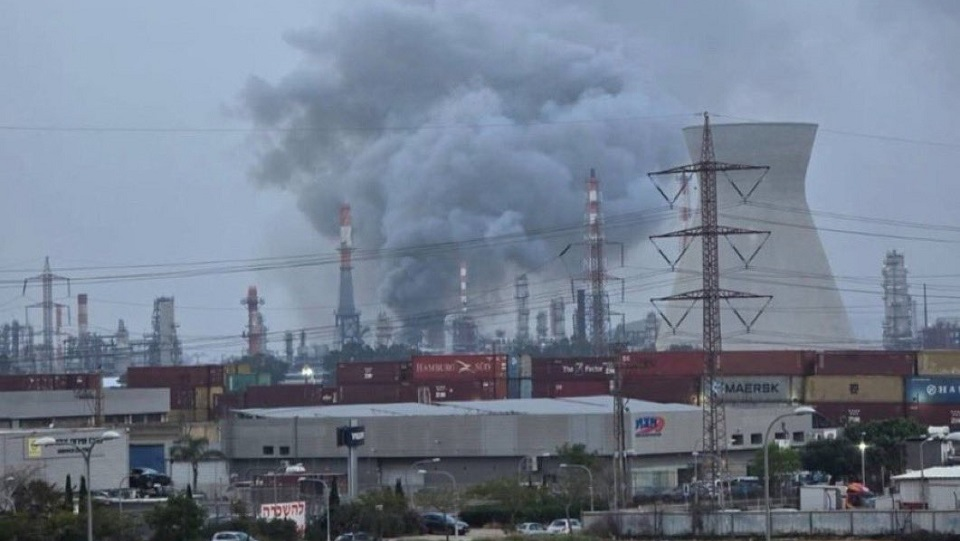
In the morning, Iran's Islamic Revolutionary Guard Corps reported strikes on strategic targets in Israel — including Ben Gurion Airport and oil refineries in Haifa and possibly Ashdod. Axios journalist Barak Ravid posted on social media X that one of the two key refining complexes in Haifa — BAZAN — was hit.
"As a result of a missile strike on Haifa, one of Israel's two key refineries — BAZAN — was hit."
— Barak Ravid, Axios journalist
Official position and situation on the ground
Israel's Ministry of Energy confirmed that the attack was aimed at oil refining facilities in Haifa, but in official wording it did not cause "significant damage." Information on the condition of the Ashdod refinery is not yet available.
"The attack did not cause significant damage."
— Israel Ministry of Energy
The Ministry of Environmental Protection reported that debris from an intercepted missile fell in Haifa and is being treated as an incident involving potentially hazardous materials. The fire and rescue service noted that debris fell in two locations on the refinery premises, caused local fires and temporary shutdowns of supply sources — there are no casualties, the situation is under control, and air quality indicators are currently within normal limits.
Context: why this matters beyond the region
This is not the first strike on Israeli oil refining capacity: in June 2025 a similar attack on a plant in Haifa resulted in three deaths and the shutdown of the facility. Recent missile strikes by Iran on a large LNG center in Qatar and rockets toward Saudi Arabia have already caused energy price fluctuations — markets are sensitive to risks to infrastructure.
Energy market analysts note: even limited damage to infrastructure increases uncertainty and can trigger temporary fuel price hikes. For Ukraine this matters in two ways — through a possible impact on imported fuel prices and through logistical risks that complicate supplies for both the civilian sector and defense. LIGA.net has already explained the mechanics of rising fuel prices and the risks of shortages — these mechanisms also operate during new energy shocks.
What's next
In the short term, official data indicate a controlled situation in Haifa, but the risk of escalation remains a key factor for markets. If attacks continue or threaten major processing and transport capacities, the consequences could become long-term. For Ukraine it is important to monitor developments, strengthen diversification of supplies, and maintain strategic reserves.
Whether this incident turns into a prolonged shock for the energy sector depends on further escalation and the response of international partners. We are monitoring updates and analyzing which countermeasures could mitigate risks to the markets and to our state.







