What happened on Nasdaq
On March 17 the deftech startup Swarmer, which builds a software platform for coordinating drone “swarms,” conducted a public listing on Nasdaq. The company sold 3 million shares at $5 each — the implied valuation at the time of the offering was just over $60 million.
During trading the stock jumped to $31: an intraday high that Bloomberg described as an increase of roughly 700% from the offering price; trading closed at a level representing +520% from the IPO price. High volatility even led to temporary trading halts.
"At its peak the stock jumped 700%, making the company's debut the most successful since the high-profile listing of Newsmax Inc."
— Bloomberg
Why this matters for Ukraine
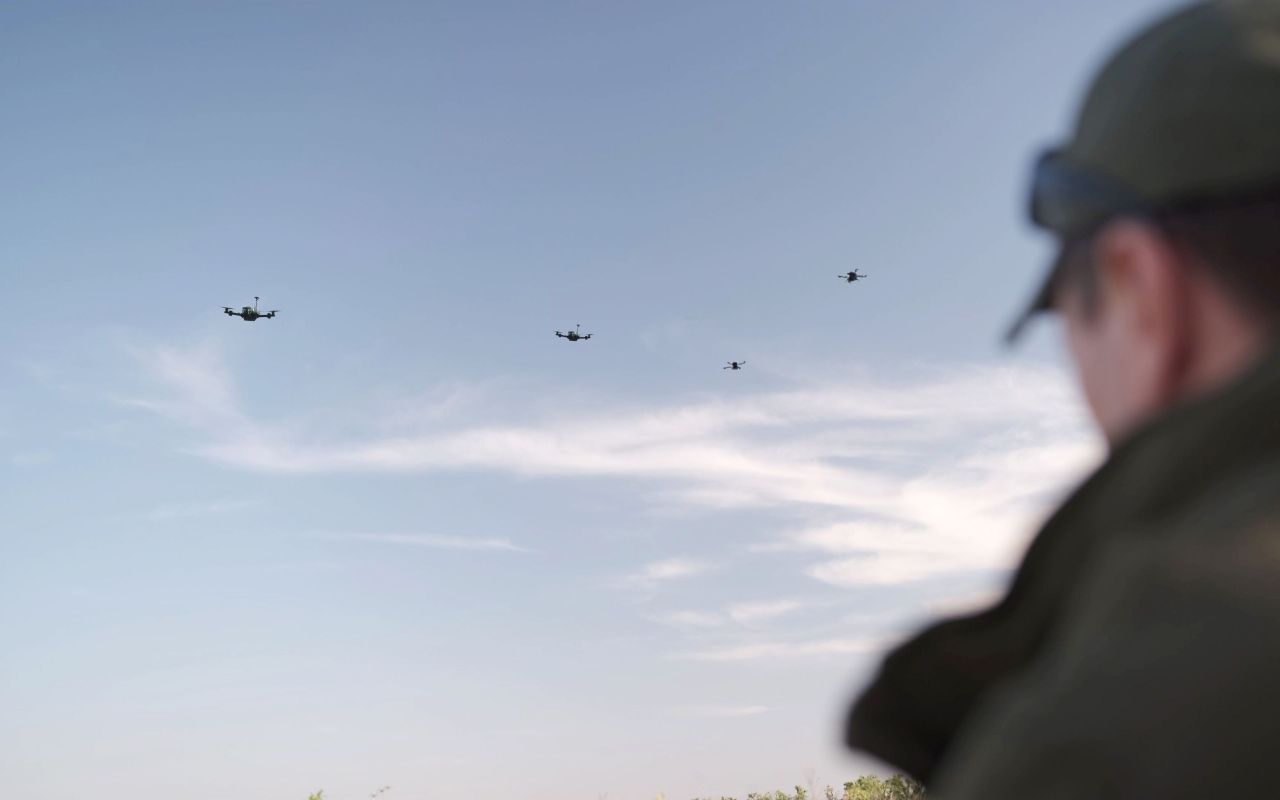
Swarmer is an example of a technology that combines artificial intelligence and autonomous coordination, allowing a single operator to control dozens or hundreds of platforms simultaneously. Such an architecture has clear value for defense: it scales, reduces the need for human resources, and creates asymmetric advantages on the battlefield.
The company has offices in Austin, Kyiv and Warsaw, and its platform has been used in Ukraine since April 2024 — according to the company, it has accumulated data from more than 100,000 combat missions under conditions of heavy electronic warfare. Such a "combat track record" makes the product more attractive to foreign buyers and investors.
According to President Volodymyr Zelensky, Ukraine has received more than 10 requests from countries in Europe, the Middle East and the United States for assistance in countering strike drones — a market whose demand is rising right now.
What’s behind the sudden price jump
Three key factors that explain the sharp market interest:
1) Small float — only 3 million offered shares means that even moderate demand produces a large percentage jump in the price.
2) Military demand and real-world data — solutions tested in combat conditions and compatible with various hardware platforms look significantly more attractive than theoretical products.
3) Media attention and investment sentiment — the combination of defense themes and AI technologies quickly attracts both institutional and retail investors.
Risks and limitations
Despite the hype, the facts call for caution. For the year ended December 31, 2025, Swarmer recorded only $309,920 in revenue with a loss of about $8.5 million. Market capitalization during trading exceeded $380 million — significantly higher than current financial results.
Attention should also be paid to the board composition: the non-executive chairman of the board is Erik Prince — a figure who attracts additional attention and may provoke political and ethical debates beyond purely market valuation.
What’s next: for the market and for the country
This IPO is a signal for the Ukrainian tech sector: products tested in Ukraine have high export potential. At the same time, the price jump shows how sensitive the market is to a small float and the narrative of “combat experience.”
The next step is to turn interest into sustained financing and contracts. This requires transparent deals, export controls, and proof of commercial viability — not only battlefield use.
Conclusion
Swarmer's IPO is not just a financial story. It is an indicator of how war is transforming investment priorities and creating markets for solutions born in combat conditions. The question for policymakers and business is whether an interesting start will turn into a long-term contribution to strengthening Ukraine's defense capability and economy, or remain an episode of high volatility?







