What happened
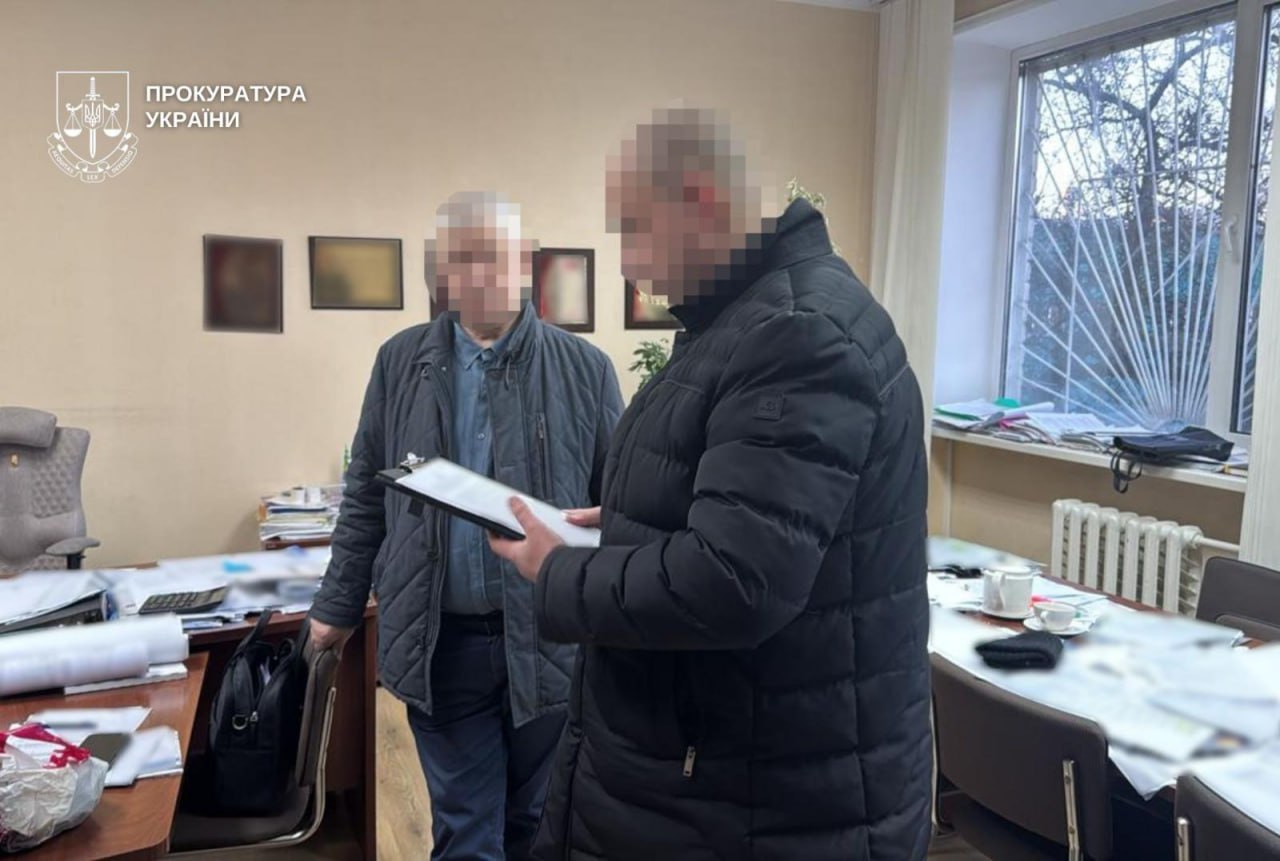
On March 10 the Office of the Prosecutor General reported the detention of the owner of a cardboard packaging plant from the Luhansk region. Although law enforcement did not name him, journalists from the "Schemes" program (Radio Liberty) identified the suspect as Hennadiy Minin. He has been notified of suspicion of assistance to a state aggressor (Part 1 of Article 111-2 of the Criminal Code of Ukraine). A court in the Dnipropetrovsk region imposed a non-alternative preventive measure — remand in custody.
Evidence and scheme
According to the investigation and the "Schemes" probe, Minin’s enterprises — the Rubizhne Cardboard and Packaging Plant and Donmakr — were re-registered under Russian law after parts of the Luhansk and Donetsk regions were occupied. Documents bearing 'LPR' and 'DPR' stamps reportedly bear signatures identical to Minin’s signatures on Ukrainian documents. In addition, RKTK owns 100% of the shares of the Russian plant "Packaging Kuban".
Key financial facts cited by investigators: in 2021 a contract was concluded between the Rubizhne plant and a Russian manufacturer for the supply of equipment worth more than €1.1 million; a prepayment of €810,000 was transferred to the accounts of the Russian company. After the full-scale invasion, despite a government ban on imports from the Russian Federation, deliveries allegedly continued via a Belarusian intermediary with transit through an EU country. At the same time, the remainder of more than €382,000 was transferred to the Russian supplier’s account, and an additional €92,400 was promised to speed up shipment and cover VAT.
Journalists also report that Minin and his wife hold valid Russian passports and tax identification numbers, and have deposits in the sanctioned Russian Sberbank — a fact that supports the version of economic ties with the aggressor.
"The suspect has been notified of suspicion of assistance to a state aggressor,"
— Ruslan Kravchenko, Prosecutor General
Context: why it matters
This case combines several risks for Ukraine: security (maintaining economic ties with the aggressor during wartime), economic (leakage of money and resources abroad) and politico-legal (evasion of sanctions and re-registration of assets under Russian jurisdiction). For readers this has a practical dimension: such schemes have undermined the effectiveness of trade restrictions and weakened pressure on the aggressor’s economy.
Market analysts and sanctions experts note that exposing such schemes is not only a criminal matter but also a test of the system for monitoring supply chains and financial flows.
Consequences and questions for policymakers
First, the case could set a precedent for investigations into other companies that worked with Russian counterparties through third parties. Second, it is a signal to business: hidden ties with the aggressor entail the risk of asset freezing and criminal liability. Third, the response of regulatory authorities will determine the trust of Western partners and Ukraine’s ability to cut off sources of sanctions circumvention.
Rubizhne has been under Russian occupation since May 13, 2022 — which adds another dimension to the case: can the interests of local workers be protected without allowing economic cooperation with the aggressor?
What’s next
The investigation must confirm all financial chains and the role of each participant in the scheme. At the same time, state regulators should strengthen monitoring of transit operations and compliance with trade restrictions. For the public the question is simple: does the system that severs the instruments for financing the aggressor and restores accountability work?
This story is a reminder: business responsibility during wartime is not only an ethical issue but also a matter of national security. Whether the uncovered facts will lead to real changes in control practices is a question for the next steps of law enforcement and the government.