Briefly — what happened
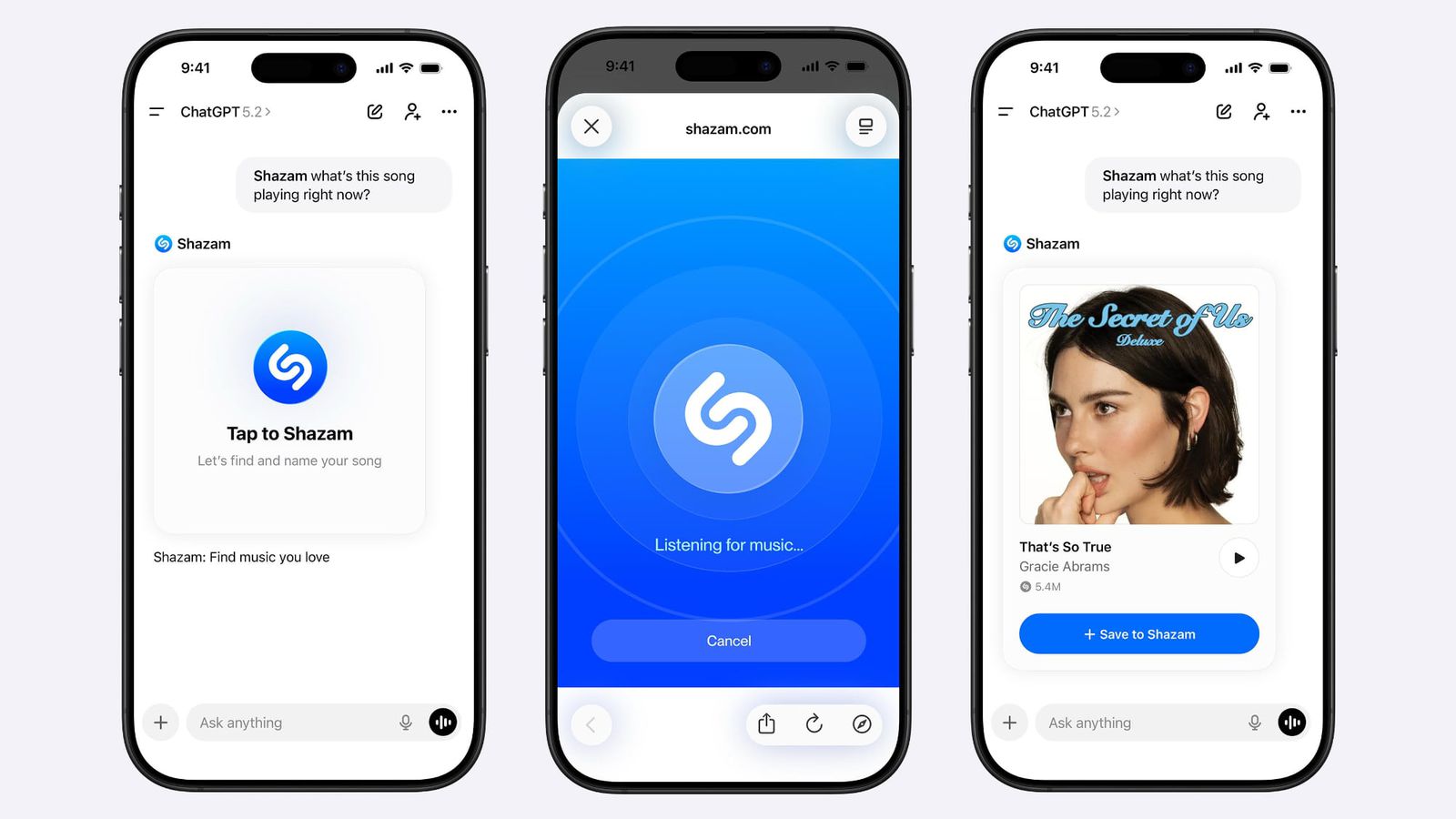
ChatGPT has received integration with the music recognition service Shazam (Apple). Users can identify songs directly in the chat — without switching between apps. It’s a simple but useful update that reduces friction between audio you encounter and information about the track.
How to use
Simply address the chat interface with a request like “Shazam, what’s this song?”. The response will display the Tap to Shazam interface, which lets you play a snippet and get the track title. You can enable the service in ChatGPT settings under Apps — find Shazam in the list and add it. If you already have the Shazam app installed, found tracks will be automatically saved to your library.
Practical significance for Ukraine
Small tools often provide big benefits. For Ukrainian journalists and fact-checkers, this is a faster way to identify music in videos, which helps verify sources and context. For volunteers and media outlets — a simple tool to establish a track’s origin or its author, and for listeners — the ability to quickly find Ukrainian performers in social media materials. The integration reduces the number of steps needed to complete a task: fewer clicks — more results.
"The integration is intended to make music recognition available directly in the chat and speed up users' workflows."
— OpenAI, press release
Technical and security considerations
The feature is available on multiple platforms and does not require installing a separate Shazam app, although having the official app allows tracks to be saved to your library automatically. As with any audio-service integration, it's important to check privacy settings and permissions: recognition is performed through the respective services of OpenAI and Apple, so you should operate within their policies.
Context — what else to know
This update arrived at a time when OpenAI also announced GPT‑5.3 Instant and released the Codex app for Windows. Together, these steps show that the company is expanding content-processing capabilities — notably for multimedia. For Ukraine, this means access to more convenient tools for verifying and distributing cultural products, although it also requires paying attention to privacy and the ethical use of audio.
Conclusion
The Shazam integration in ChatGPT isn't a revolution, but a practical improvement to the workflow. It saves time and makes verification of audio materials easier, which is important for media, volunteering, and cultural work. Questions remain technical and ethical: how the service processes audio, where results are stored, and how this affects users' privacy. Meanwhile, a simple step — update ChatGPT and review the Apps settings — will deliver noticeable benefits today.