Briefly: what happened
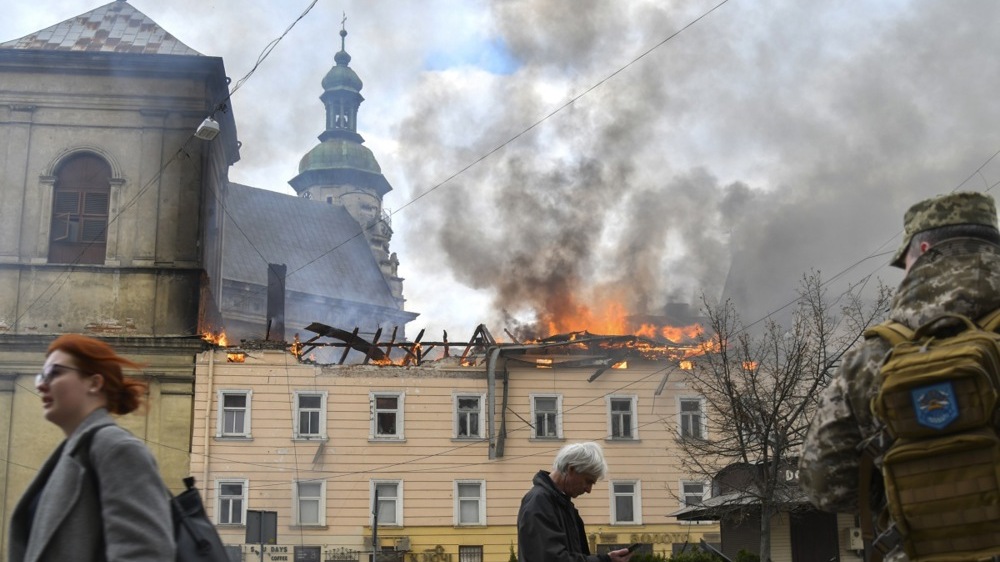
On March 24 Lviv was struck by Russian attack drones. As a result of the attack, residential buildings were damaged; structures burned on Soborna Square, Brativ Rohatyntsiv Street and Chervona Kalyna Avenue — there is damage to sites that are part of the UNESCO heritage, and dozens were injured.
"The Air Force said that Russia carried out one of the most massive drone attacks on Ukraine, using nearly 1,000 strike drones in a single day."
— Ukrainian Air Force
What the city is offering
The Lviv City Council announced compensation payments in the form of vouchers for affected businesses — up to UAH 500,000 for restoration. According to official data, as of March 25 22 businesses were damaged: windows blown out, entrance doors and roller shutters damaged.
"Entrepreneurs whose property has suffered minor damage and can be restored by their own means can receive a compensation voucher from the city for up to UAH 500,000."
— Press Service of the Lviv City Council
How to apply
Applications are accepted at the CNAP or online via the Resident Portal after damages have been documented. It is important to document losses (photos, descriptions, reports) to speed up verification and payment processing.
Why it matters
Voucher-based support is not just about money. It is an instrument of quick liquidity that reduces the risk of temporary closures, preserves jobs and allows small businesses to restore operational capacity without lengthy legal proceedings. In the context of massive attacks, such programs increase the resilience of the city’s economy and reduce cascading effects for related sectors.
What affected businesses should do
If your business was affected: record the damage, contact CNAP or submit an application on the Resident Portal, keep copies of documents and repair receipts. The city program provides fast but targeted aid — it is most useful in cases where restoration is possible without full reconstruction.
Conclusion. The consequences of missile and drone attacks can be minimized not only by defense, but also by rapid economic support. The task now for city authorities and entrepreneurs is to turn promises into cash in the hands of those who need it, and to do so quickly and transparently.