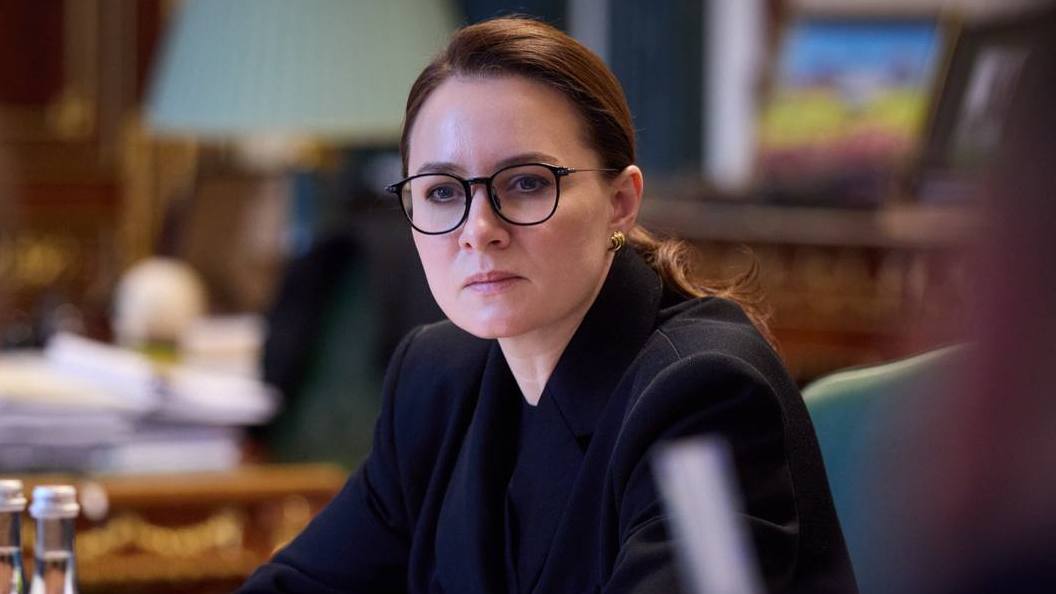
Declaration and brief context
On March 24 Prime Minister Yulia Svyrydenko filed an income declaration for 2025. The document lists total income of 4.76 million UAH, with the majority coming from honoraria from the expert community rather than a salary from the state budget.
Details of income
According to the declaration, in 2025 Svyrydenko received 1.37 million UAH as a salary from the Cabinet of Ministers and 3.24 million UAH in honoraria from the Kyiv School of Economics (KSE). A small fee of 5,195 UAH from the Kyiv School of Public Administration named after Serhii Nyzhny is also listed.
"Svyrydenko gives lectures in the 'Public Management and Governance' program when it is convenient for her."
— Tymofiy Mylovanov, president of KSE (LIGA.net)
Cash, accounts, deposits
The prime minister's bank accounts show 138,700 UAH, a rental security deposit of 100,000 UAH, and $10,000 in cash. These items provide an indication of liquid resources available for personal expenses and housing planning.
Property and housing
Svyrydenko owns an apartment in Kyiv measuring 33.5 sq. m and two apartments in Chernihiv — 74.3 sq. m and a 25% share in another. In 2025 she also began renting a larger apartment in Kyiv measuring 92.7 sq. m. In addition, the declaration lists a plot of land of 1,496 sq. m in Klochky, Chernihiv Oblast (acquired in 2022) and a 2016 BMW X3.
Why this matters
The figures are not important in themselves, but as indicators of sources of influence and independence. Honoraria from KSE show a close connection between the prime minister and the expert community — this can be a sign of professional autonomy and expert support for government decisions. At the same time, large non-state income raises natural questions about compatibility, transparency, and potential conflicts of interest.
That 42% of Ukrainians previously did not know who she was (according to polling at the time of her appointment) underscores that attention to financial declarations is now rising along with political influence.
Conclusion
The declaration is neither a verdict nor a medal. It provides facts that allow questions to be asked about transparency and the compatibility of official duties with private activity. Society, oversight bodies, and journalists have the tools to verify this data and demand explanations if necessary. Whether this will change the level of trust in the new government depends on how detailed and timely the responses are.