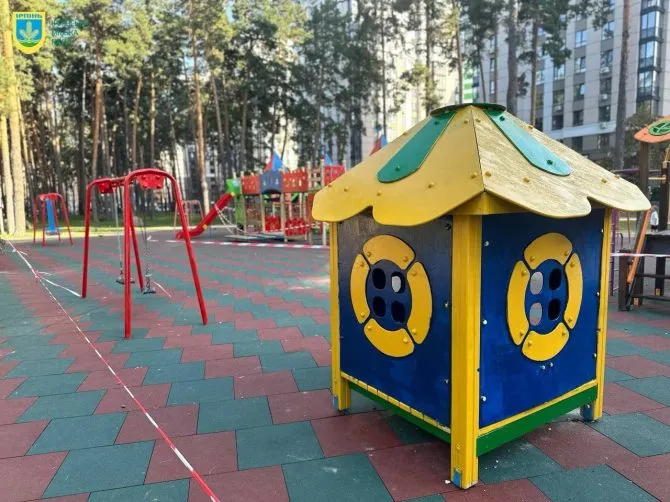
In Irpin, a planned inspection and repair of children's playgrounds has begun — after residents massively complained about the emergency state of play areas in various parts of the city. This was reported by Oleksandr Paschynskyi, first deputy acting city mayor.
What exactly is being done
Utilities are eliminating structural damage and repainting playground elements. Inspections are ongoing in parallel — to identify areas that require deeper intervention, not just cosmetic fixes.
Complaints from residents became the direct reason for starting work: residents reported broken equipment, dirt, and dangerous structures. This is essentially an admission that regular oversight of these facilities was not conducted systematically.
Context that is important not to lose
Irpin is a city where during Russian occupation in spring 2022, more than 4,500 buildings were damaged, of which 546 were completely destroyed. Some streets lost more than 90% of their buildings. According to analysts at Dozorro, a year after deoccupation, the city changed beyond recognition — schools, kindergartens, and residential buildings were restored.
However, rapid reconstruction had a downside: facilities that did not fall into priority funding programs — yard spaces, play areas, small landscape features — remained neglected longer. The current complaints from residents confirm this.
"Utilities are updating children's playgrounds, in particular eliminating damage and painting elements to ensure comfortable and safe recreation for the smallest residents of the community".
Oleksandr Paschynskyi, first deputy acting Irpin city mayor
Paint is not the answer to a systemic problem
Inspection is the right step, but its results have not yet been made public: how many playgrounds have been checked, how many were found to be in emergency condition, what work is planned and what funding will cover it. Without this data, it is impossible to assess the scale and real quality of restoration.
- No public registry of inspected facilities
- No deadlines for completion of work
- No information about the source of funding — city budget or donor programs
Kyiv's experience shows: regular inspection of children's playgrounds is an obligation of the facility maintainer, not a one-time action in response to complaints. If Irpin is moving to a systemic approach — that is progress. If this is just another one-time raid — in a year the complaints will repeat.
The question is simple: will the results of the inspection produce a public list of playgrounds with the condition of each specified — or will the community learn about the results again only from the next wave of complaints?