On July 15, three dates coincide in Ukraine: Day of Ukrainian Statehood, Day of the Baptism of Kyivan Rus-Ukraine, and the day commemorating Prince Volodymyr the Great. In the world, the UN marks World Youth Skills Day. At first glance — nothing in common. But both celebrations are about one thing: who controls the narrative about where we came from and where we are heading.
The Baptism of 988 as a Battlefield of Information Warfare
The date of July 15 for the church veneration of Volodymyr the Great appeared in Ukraine relatively recently. The Ukrainian Orthodox Church and the UGCC switched to the New Julian calendar, and the Day of the Baptism of Kyivan Rus-Ukraine was moved from July 28 to July 15 — starting in 2024. This is not merely a liturgical detail: Russia, which still celebrates the date on July 28, claims the same Rurikid heritage.
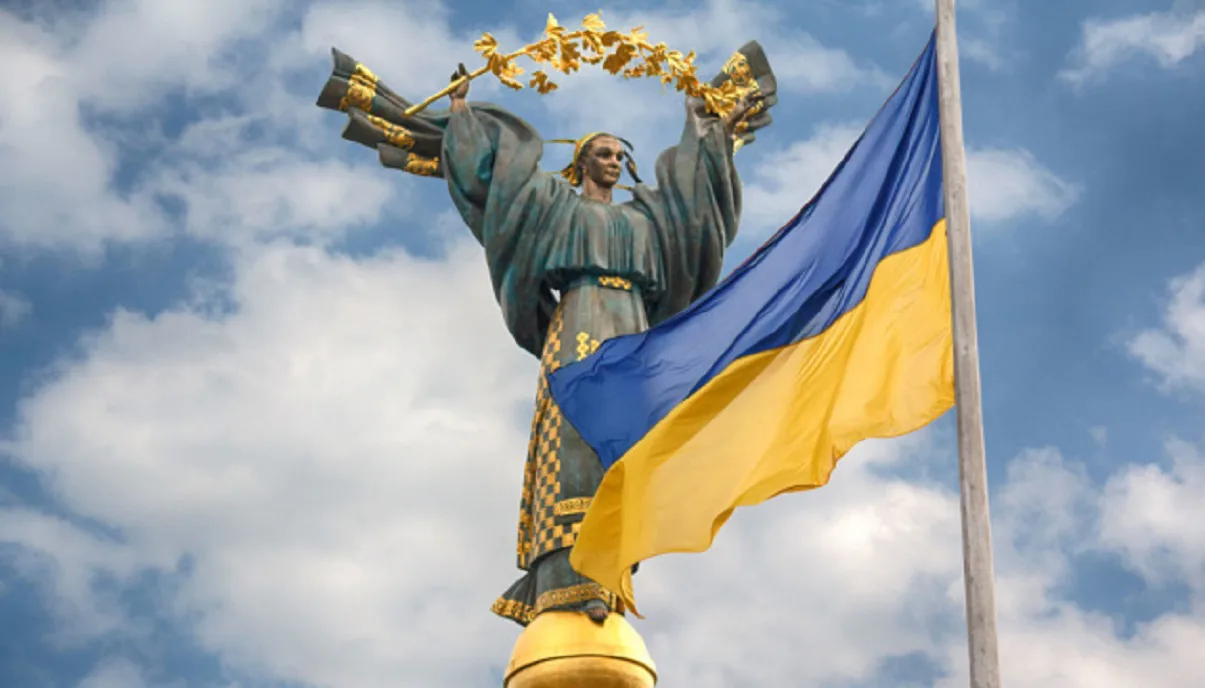
The Ukrainian state consciously builds continuity: from the Kyivan state — through the Galician-Volhynian principality, the Cossack state, the UNR and ZUNR — to modern independent Ukraine. According to the official materials for the celebration, "knowledge of the history of our state-building in all its continuity is a powerful force against manipulations of historical facts in the context of the RF's information warfare". The trident — a symbol that united Rus then and remains the state emblem today — in this context becomes not an archaism, but an active counterargument.
"After the official adoption of Christianity, the Kyivan state ceased to be perceived by its neighbors as a distant barbaric periphery, fully entering the circle of the most developed states of that time's Europe."
Information materials for Day of Ukrainian Statehood — 2025
Decade of Skills: From Craftsmanship to Artificial Intelligence
On the same July 15, the UN marks the 10th anniversary of World Youth Skills Day. The 2025 theme — "Youth empowerment through AI and digital skills". UNESCO-UNEVOC organized events in New York and Paris with the participation of governments, employers, and young people themselves.
The main concern of the organizers: artificial intelligence brings opportunities unevenly. Without systemic reforms, the digital divide between cities and periphery, between boys and girls, will only grow. UNESCO's research covered over 4,000 respondents from 128 countries — and showed that most vocational education teachers are not yet ready to implement AI tools in teaching.
- Global youth unemployment fell to 13% in 2023 — a 15-year low, but recovery is uneven: the situation is worse in Arab countries and Southeast Asia.
- AI can entrench gender and geographic disparities if access to education is not equalized.
- TVET (technical and vocational education) remains a key instrument — but requires updating for the realities of the fourth industrial revolution.
What These Two Celebrations Have in Common
In 988, the adoption of Christianity gave Rus the Cyrillic script — the era's "digital access," which opened education, trade, and diplomacy at the level of Europe's leading states. In 2025, the UN is sounding the alarm: if youth do not gain access to AI literacy, the divide between the "connected" and the "disconnected" will reproduce the old asymmetry of power in a new wrapper.
For Ukraine, the question is not abstract: a country waging war and simultaneously redefining its identity through 1,037 years of state continuity must decide — where in its education system is there room for digital skills, while millions of young people are either on the front lines, in emigration, or in destroyed cities without stable internet.
If by the next World Youth Skills Day Ukraine does not adopt a concrete program of digital education for internally displaced and demobilized persons — the symbolic connection between the baptism of Rus and the country's future will remain a fine speech, not a real legacy.