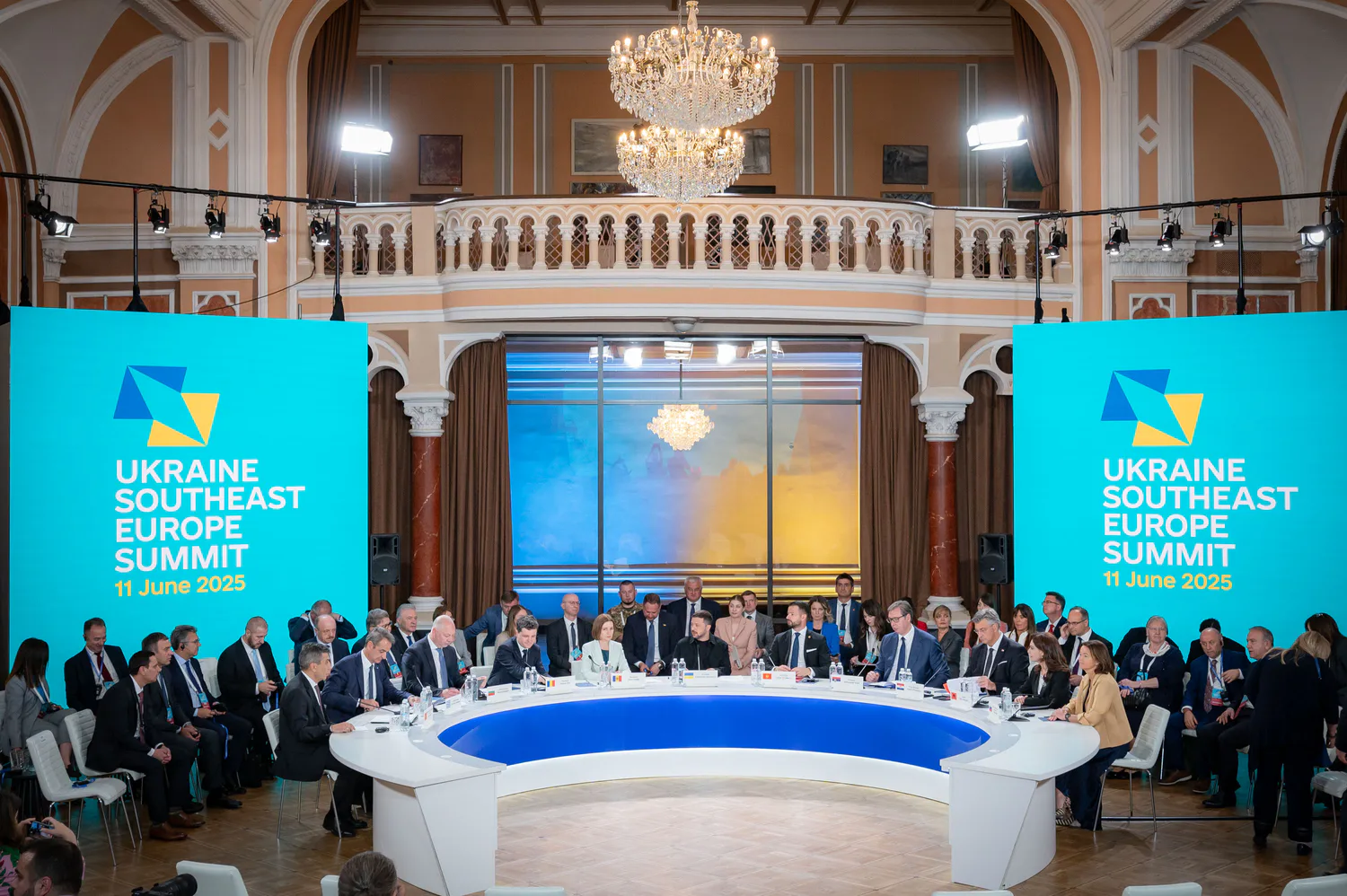
On the morning of July 15 — on the Day of Ukrainian Statehood — about 10 foreign delegations arrived by train at Kyiv Railway Station. The occasion was twofold: a state holiday and the fifth summit "Ukraine — Southeast Europe", whose venue was, according to the format's tradition, not publicly disclosed in advance.
Who Arrived
As correspondents from Suspilne and Fakty ICTV documented right on the platform, the following arrived in Kyiv: Moldova's President Maia Sandu, Romania's President Nicolae Ciucă, Serbia's President Aleksandar Vučić, Croatia's Prime Minister Andrej Plenković, Albania's President Bajram Begaj, Slovenia's PM Janez Janša, Montenegro's President Jakov Milatović, as well as foreign ministers from North Macedonia and other countries in the region. The first to announce her arrival was European Commission President Ursula von der Leyen — for her, this is already the 11th visit to Ukraine since the start of the full-scale war.
What's on the Negotiating Table
The agenda covers three blocks: regional security — including the situation in the Black Sea region, the European integration path of the summit participants, and Ukraine's preparation for winter. As Foreign Minister Andriy Sybiha wrote on X, the focus is on "strengthening Europe, multilateral political engagement, and security and defense cooperation."
Von der Leyen announced more specifically: she will announce new initiatives on the integration of defense industries.
"The course of events is changing in our favor. I will announce new initiatives aimed at integrating our defense industries — this will allow us to produce more weapons and do it faster."
Ursula von der Leyen, President of the European Commission, post on X
In parallel, on July 14, the EU officially opened the sixth cluster in negotiations on Ukraine's accession — a signal that the leaders' visit takes place against the backdrop of real negotiating progress, not merely ceremonial statements.
The Serbian Knot
The most ambiguous figure at the summit is Aleksandar Vučić. He came to Kyiv for the first time after the Odesa summit in 2025, where he became the only participant who did not sign the final declaration. That declaration called for "maintaining and strengthening sanctions against the Russian Federation" and reaffirmed Ukraine's course toward NATO membership.
On the eve, July 14, Vučić told journalists from the Tanjug agency in Paris: "I have already attended four such meetings — in Odesa, Dubrovnik, Athens, and Tirana. But this will also be difficult, given the proposed declaration and everything else." In other words, Serbia's president himself flagged the risk of a repeat of the Odesa scenario before even boarding the train to Kyiv.
To understand the scale: Serbia has been an EU membership candidate since 2012, but continues to balance between European integration and maintaining relations with Moscow. Signing or refusing to sign the declaration in Kyiv is not a procedural detail, but a public indicator of where exactly Belgrade is drawing that balance in 2026. Especially since Vučić himself announced on June 27 his intention to step down and call early elections.
Format Context
The "Ukraine — Southeast Europe" summit has been held since 2021. The previous four took place in Tirana, Athens, Dubrovnik, and Odesa. Kyiv is hosting it for the first time — and for the first time as the capital of a country with ongoing negotiations about EU accession and an active sixth cluster.
If Vučić signs the declaration this time — it will be more than just diplomatic news, but a signal of a shift in the balance of Serbian foreign policy on the eve of elections. If he refuses again — it will confirm that the summit format is growing in number of participants, but not in depth of consensus.







