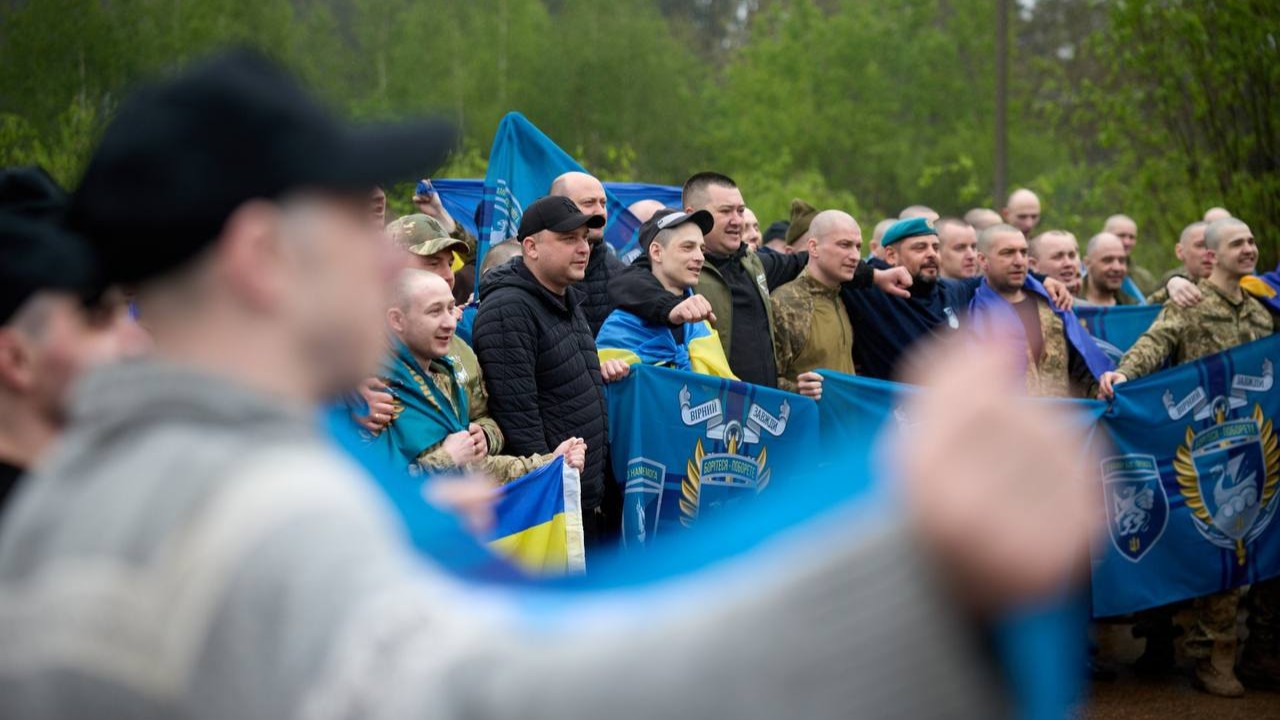
On May 15, 205 Ukrainian defenders returned home. This was the first stage of the "1000 for 1000" format — the largest exchange since the beginning of the full-scale war. Negotiations for subsequent stages are currently underway, but no dates have been set.
What Has Already Been Done — And Where the Delays Are
Dmytro Usov, secretary of the Coordination Headquarters, confirmed: "205 was the first stage of the so-called thousand. Discussions are now underway. All parties have already completed actual verification." In simpler terms: the lists have been agreed upon, people have been identified — what remains is to agree on logistics and a date.
The Coordination Headquarters is working not only on the "thousand" format, but also on other mechanisms for returning prisoners of war. Usov also suggested that the next exchange could be a combined one.
However, this calm at the level of statements contrasts with what happened earlier. The delay in the prisoner exchange in the "1000 for 1000" format occurred solely due to Russia's position — this was acknowledged by Ombudsman Dmytro Lubinets. The ombudsman assured that Ukraine fulfilled all obligations — the lists were handed over, and the negotiating team completed its part of the work.
"When you agree on something with the Russian side, you can never be 100% confident that it will be honored."
Dmytro Lubinets, Commissioner of the Verkhovna Rada for Human Rights
How Trump Nearly Derailed the First Stage
The prehistory of the format contains a detail that official statements omit. Despite "the strictest secrecy from Kyiv," Trump decided to be the first to publicly announce the exchange — at a moment when it had not even begun yet. Kyiv kept the process secret due to concerns about the safety of the first 270 soldiers and 120 civilians who were to be exchanged at the border with Belarus.
According to an anonymous Ukrainian official, Trump "wanted to be the first to announce it." The exchange was ultimately not halted, but the precedent demonstrated that the American mediator can act contrary to Kyiv's security protocols for the sake of his own PR moment.
What Actually Happened Over Three Days
The first major exchange took place from May 23 to 25 and proceeded in three waves:
- May 23 — 390 Ukrainians, exchanged at the border with Belarus;
- May 24 — 307 defenders, including servicemen of the Airborne Forces, Navy, Territorial Defense Forces, Border Service, and National Guard.
- May 25 — the third tranche of up to 1,000 people.
Among the freed are some of the defenders of Mariupol and Azovstal, who had been held captive since 2022. Most require serious medical and psychological rehabilitation.
There Is No Control Mechanism
Trump personally announced the "1000 for 1000" format after negotiations in Istanbul — but without any recorded mechanism for enforcing compliance. Russia already delayed the process once between the announcement on May 8 and the actual first stage on May 15. Now the situation is repeating itself: verification has been completed, but there is no second stage.
Andrii Yusov, deputy head of the Coordination Headquarters, hopes the next stage will take place "in the near future" — but "in the near future" already sounded like that back in May.
If Moscow delays the process again, the question will not be for Usov or Lubinets: is Trump ready to apply any pressure on Russia — or will the "1000 for 1000" exchange remain just another PR headline without an enforcement mechanism?





