What happened
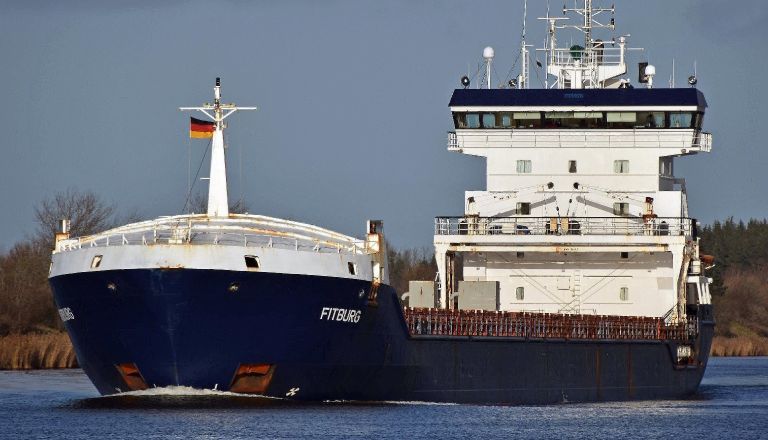
On 31 December damage to an undersea telecommunications cable between Finland and Estonia was recorded in the Gulf of Finland. Police and the National Bureau of Investigation of Finland detained the vessel Fitburg, which, according to local media (Yle), was en route with cargo to Russia.
Inspection results and seizure of cargo
Customs completed an inspection of the vessel on 7 January: a consignment of steel subject to international sanctions was confiscated. The Transport and Communications Agency carried out a technical inspection of Fitburg and found around a dozen deficiencies, after which the vessel was sent to a port near Helsinki for further investigative actions.
"The vessel has been detained; an investigation is being conducted into a possible violation both in relation to the cable damage and with regard to export control matters."
— National Bureau of Investigation of Finland (according to Yle)
Crew and legal consequences
Of the 14 crew members, the Helsinki court ordered the arrest of an Azerbaijani national; the others are citizens of Russia, Kazakhstan and Georgia. Three crew members, including one Russian, have been banned from leaving Finland for the duration of the investigation, reports RMF24.
"One of the crew members has been arrested at the request of the investigation; the investigation continues."
— RMF24 (reference to Helsinki court rulings)
Context: an accident or not?
This is not the first similar incident: comparable damage to undersea cables was recorded in the region in 2024–2025. Repeated occurrences of such incidents raise questions not only about the security of physical infrastructure but also about control over supply chains that could serve the economic or military needs of the Russian Federation.
- 31 December 2025 — damage to a cable in the Gulf of Finland; the vessel was detained the same day.
- 2 January 2026 — the crew were questioned by Finnish police.
- 7 January 2026 — customs completed the inspection; steel was confiscated, and the transport agency found technical defects.
Why this matters for Ukraine and Europe
Damage to undersea cables and transport routes that bypass sanctions undermine the region's digital and economic resilience. For Ukraine, this is a reminder that in modern war it is not only the frontline that matters, but also the protection of infrastructure and the disruption of supply channels that may support an aggressor's efforts.
Experts point to two key response vectors: strengthening monitoring of undersea infrastructure and tighter control over cargoes bound for sanctioned regions. It is the combination of technical and legal measures that can reduce the risk of recurrence of such incidents.
Summary
The incident involving Fitburg combines three issues at once: potential interference with telecom infrastructure, an attempt to transport sanctioned goods, and a questionable technical condition of the vessel. The course now depends on the investigation — and on whether the findings will be turned into a precedent for strengthening sanctions enforcement and infrastructure protection in the Baltic region.
Can European countries build sufficient coordination to permanently reduce risks to undersea cables and to shipments that circumvent sanctions? The answer to that question will determine the region's level of security in the coming years.





