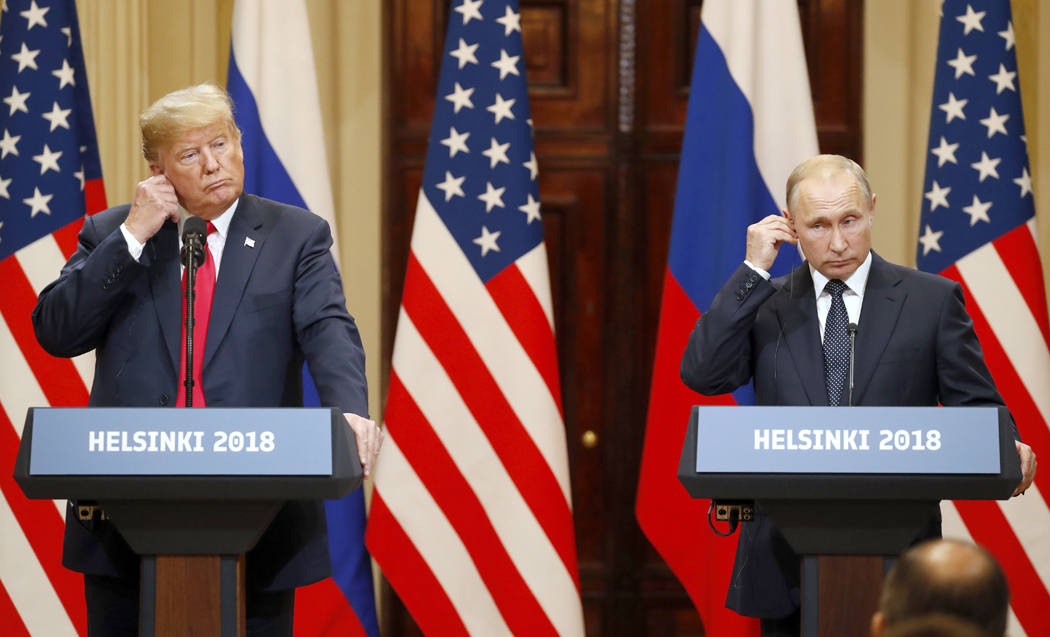
U.S. Position: From Carrot to Stick
According to The Telegraph, citing unnamed interlocutors, Donald Trump increasingly regards Vladimir Putin as "a major obstacle" to peace in Ukraine and signals a willingness to step up pressure on Moscow. This framing is important right now: actions at sea and new sanctions initiatives are seen in Washington not as a flash in the pan but as a systemic response to the Kremlin's behavior.
"He's using the carrot-and-stick approach. And I think his supply of carrots has run out"
— a source close to Trump's circle (The Telegraph)
What the Sources Said
The publication reports that the president's inner circle is worried about Russian negotiation tactics — "two steps forward, one step back" — which are wearing down the patience of the U.S. administration. One former White House official emphasized that constant maneuvers and episodic escalations are changing Washington's perception of Moscow and are bringing the U.S. administration closer to the European position on the full-scale war.
"Putin's constant brutality, his vile behavior and his games do not go unnoticed by the administration"
— a British official (quote via The Telegraph)
Facts at Sea: Tanker Seizures
This political decision has been accompanied by practical action: on January 7, 2026, the U.S. military seized the tanker Bella-1/Marinera flying the Russian flag. Russian warships, including a submarine, were nearby, but their actions did not prevent the operation; Britain also took part in the operation. On January 9 the U.S. carried out another operation involving the vessel Olina and released footage of it.
What This Means for Ukraine
First, such steps increase external pressure on the Kremlin and create additional levers for diplomacy and sanctions. Second, they signal a U.S. willingness to use operational means to implement political decisions — a fact that matters for the security environment in the Black and Azov Seas. At the same time, such actions raise the risk of escalation, so partners' reactions and legal verification of the seizures will be key.
Analysts in Washington and London note that the combination of public measures (sanctions, political statements) and covert or semi-public operations creates multi-channel pressure that is harder to counter with traditional diplomatic maneuvers.
Conclusion
The situation is changing not in a single moment but through a series of consecutive steps. It is now important to watch whether these signals will turn into lasting institutional decisions — new sanction packages, strengthened military cooperation, and legal actions regarding the seized vessels. For Ukraine, this is an opportunity to bolster its negotiating position and secure concrete security guarantees; but it is also a challenge — to avoid unpredictable escalation.





