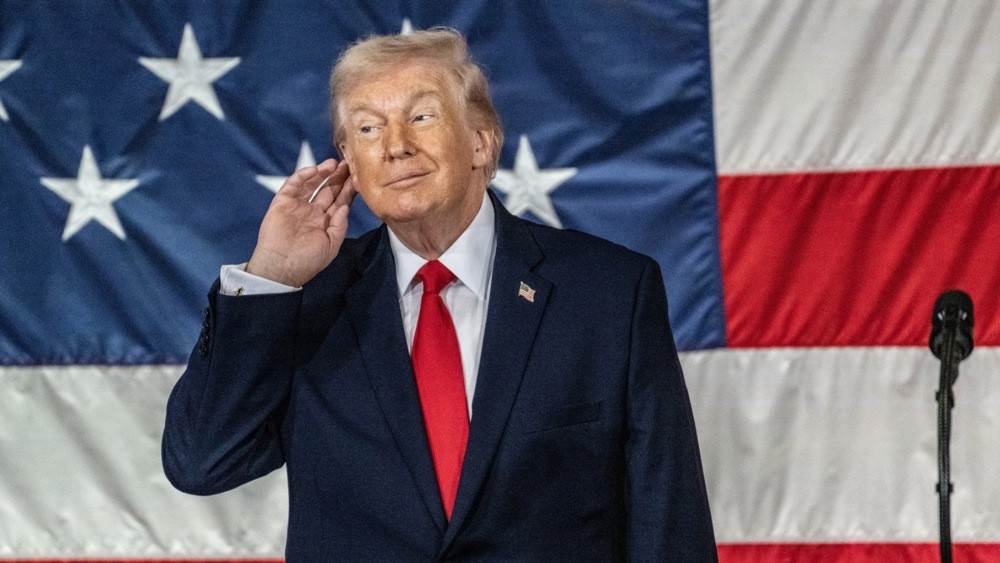
What Trump said
In a post on Truth Social, former president Donald Trump claimed that the United States has a "virtually unlimited supply" of mid- and higher-tier munitions, while criticizing the Joe Biden administration for large expenditures on aid to Ukraine and comparing Volodymyr Zelensky to American showman P. T. Barnum. Trump also said that the highest-tier stocks are "good," but not as much as the U.S. administration would like.
"The United States' stocks of mid- and upper-mid-level munitions have never been higher or better... Wars can be fought 'forever' and very successfully using only these stocks"
— Donald Trump, post on Truth Social
Context: where exactly the weapons are located and why it matters
Claims about weapons stocks should be read through the lens of actual material distribution. According to Bloomberg, regional stockpiles—such as those in Qatar—could run out of missiles for Patriot systems within days; this illustrates that logistics and the geographic placement of equipment determine operational capabilities, even when aggregate numbers look solid.
Framing the issue: The United States may have large quantities of munitions on a global scale, but some top-class equipment is reserved for other theaters or held in readiness for rapid response. That is why talk of "virtually unlimited stocks" does not automatically mean all of it is instantly available to Ukraine.
What this means for Ukraine
Kyiv has officially said it has not received signals of reduced deliveries under the PURL program in connection with the escalation in the Middle East. At the same time, it is clear that the intensity of fighting in the region can affect supply priorities and delivery timelines for air defense systems. Analysts and journalists (including Bloomberg and Politico) note that political debates in the U.S.—including criticisms from prominent political figures—can pressure the pace of decisions on reallocation or replenishment of stocks.
For Ukraine the key question is whether political slogans will turn into concrete contracts and logistical decisions. There is no instant "miraculous" replenishment of stocks—budgetary decisions, production, and supply chains are required.
Conclusion
Trump's statements amplify the discussion about stock levels and Washington's priorities, but they do not change the underlying logistics of deliveries. Ukraine should focus not on grandstanding formulations but on the practical side: signed contracts, delivery schedules, and partners' involvement in production and reprioritization of stocks. The question remains open: will partners have enough political will and technical capability to ensure stable supplies of critical air defense assets amid multiple simultaneous conflict hotspots?





