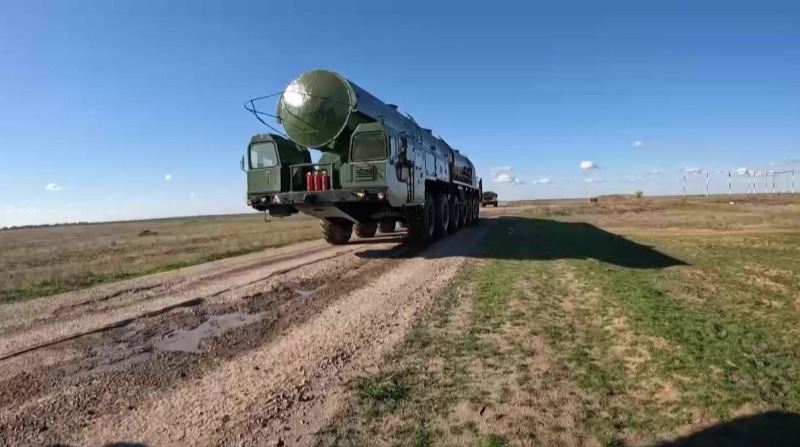
Operation summary
The General Staff of the Armed Forces of Ukraine reported that as a result of strikes on the state test range “Kapustin Yar” in Astrakhan Oblast, damage was recorded to a technical facility for servicing medium-range ballistic missiles and to an assembly building, as well as to a logistics/materials supply warehouse.
"Damage to the technical facility servicing medium‑range ballistic missiles and to the assembly building has been confirmed"
— General Staff of the Armed Forces of Ukraine
Context: what this means for security
The test range “Kapustin Yar” is linked to launches of missiles of the “Oreshnik” type — it is from this area, according to intelligence and reports, that launches were carried out that struck targets in Ukraine (including attacks in November 2024 on Dnipro and in January 2026 on Lviv Oblast). On 5 February the General Staff also reported that the Armed Forces of Ukraine used Ukrainian cruise missiles “Flamingo” to strike the range's infrastructure.
Analysis: how serious the strike was
A strike on service facilities and a warehouse not only inflicts material losses — it affects the readiness of equipment for launches, maintenance time, and the logistics of launch operations. Independent defense analysts and military experts note that damage to the assembly building and warehouse creates additional delays in preparing missiles for launch, even if it does not permanently eliminate the adversary's capabilities.
Consequences and what comes next
This is part of a systematic tactic of striking preparation and launch‑support points: to disrupt supply chains, increase preparation time, and force the adversary to spend resources on restoration and concealment. However, the long‑term effectiveness of such a strike will depend on further intelligence and follow‑up strikes on critical nodes, as well as on how quickly Russia can relocate or restore technological capabilities.
The key question now for Ukraine and its partners is whether tactical successes can be turned into a sustained reduction in the threat of launches. The answer depends on a combination of strike action, continuous intelligence, and international support in targeting the adversary's key logistical chains.





