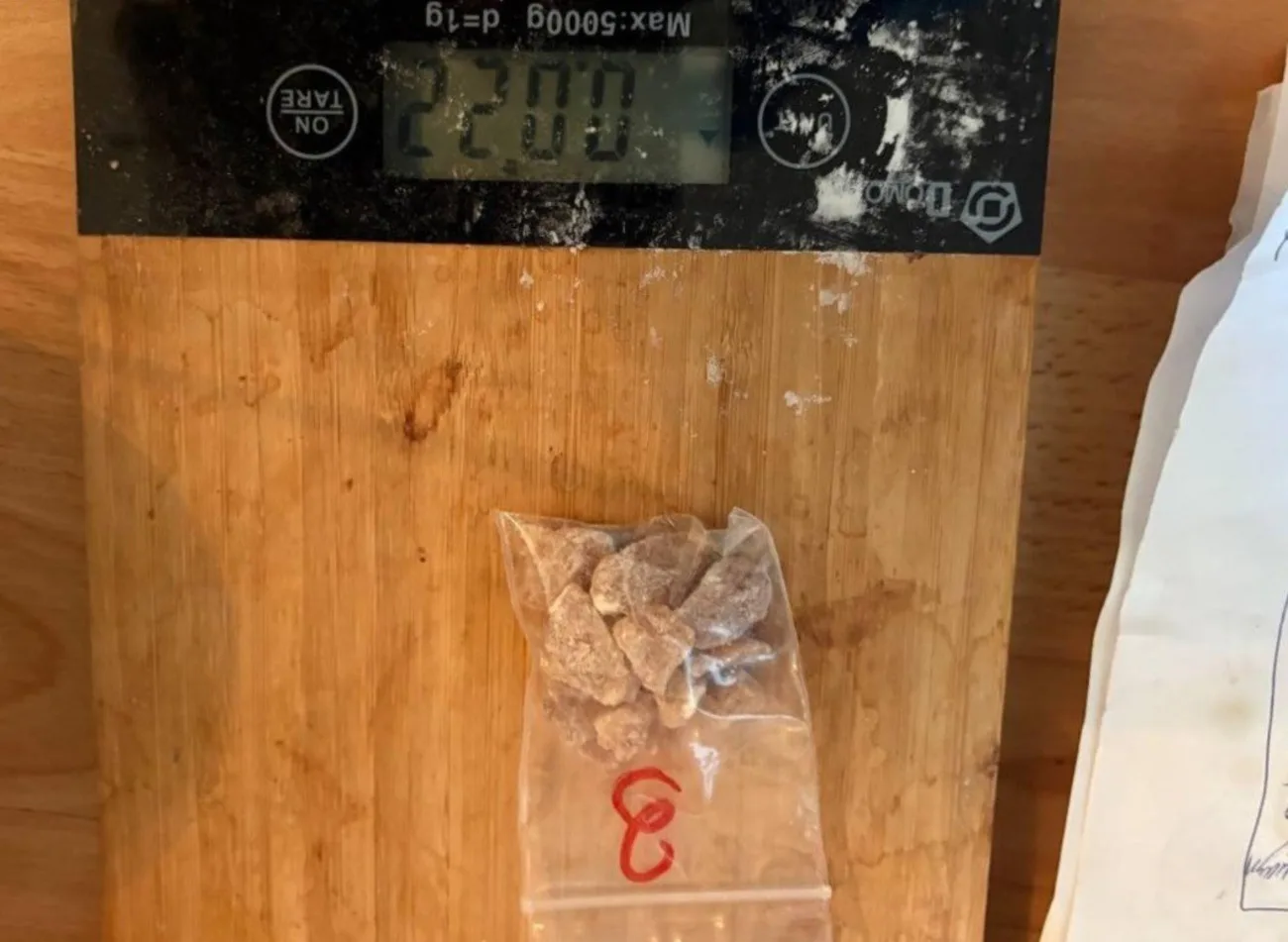
Near one of the capital's parcel lockers, operatives from the Darnitsky Police Department detained a 35-year-old Kyivan as he came to pick up a package. Inside was a metal baby food container with two cocaine bricks totaling 315 grams.
What Was Seized and How Much It's Worth
According to Kyiv City Prosecutor's Office data, the cocaine was intended for retail distribution. During a search of the man's residence, investigators found another batch — baked goods saturated with drugs. The total value of the seized drugs at black market prices exceeded 3 million hryvnias, or approximately 79 thousand dollars.
"Two cocaine bricks totaling 315 grams were sent to him in the container. At black market prices, the cost of one gram of such a narcotic substance is approximately 250 US dollars"
Kyiv City Prosecutor's Office
The man was informed of suspicion under the article on illegal acquisition and storage of drugs in particularly large quantities with intent to distribute. He faces 9 to 12 years imprisonment.
Parcel Lockers as Drug Trafficking Logistics — Not an Exception
This detention fits into a broader trend: drug traffickers increasingly use legal infrastructure — postal services, courier companies, disguising narcotics as ordinary goods. Previously, the capital's police documented schemes involving drug shipments in packages with chocolate cookies. Now — baby food.
The scheme is attractive for its anonymity: sender and recipient never physically meet, the chain is broken, and based on the package's external appearance, customs or postal control detects nothing.
- Cocaine in Ukraine is exclusively an imported commodity, meaning each batch involves an international supply channel
- The price of $250 per gram corresponds to the "elite" market segment — two to three times higher than average European retail
- The Darnitsky Prosecutor's Office is conducting the investigation — a district where elevated activity of drug networks has been recorded in 2024–2025
What's Next
The key investigative question is not the detention itself, but the chain: who sent the package and through which channel the cocaine was brought into Ukraine. The detainee is the final link in the retail chain, while the supplier remains unidentified. If the prosecutor's office limits itself to just the parcel locker suspect — the case becomes statistics, but not a blow to the network.







