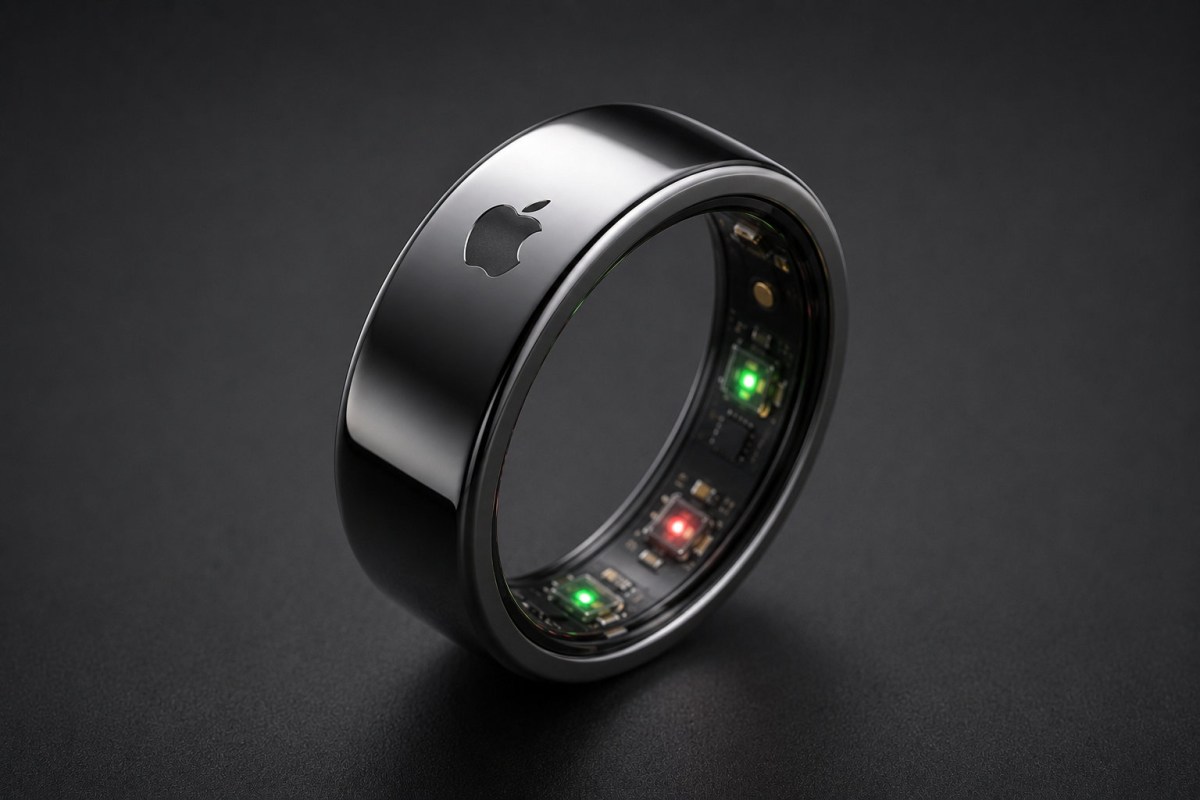
On June 24, 2026, insider and prototype collector Kosutami published a brief but revealing message on social network X: "iRing thing under development. What a surprise". No specifications, no timelines — just confirmation that the project exists in real development, not just on paper.
Why now — it's not coincidence
In October 2024, Mark Gurman from Bloomberg and Oura CEO Tom Hale both claimed the same thing: Apple has no plans for a smart ring because it would cannibalize Apple Watch sales. The argument looked convincing — until a certain point.
According to IDC analysts, the smart ring market grew 49% in 2025 — three times faster than the smartwatch segment. In parallel, the Oura Ring 5 was released with pressure tracking, nighttime breathing analysis, and GLP-1 medication monitoring tools. Samsung Galaxy Ring gained real traction among those already wearing Galaxy Watch. Even Google through Fitbit Air signaled that the category has potential.
Against this backdrop, Apple Watch fell 14% in 2025, and the entire wearables segment, which brought the company about $40 billion annually, contracted by 7%. Yearly Watch updates are perceived as incremental — users simply aren't upgrading their devices.
"iRing thing under development. What a surprise."
Kosutami (@Kosutami_Ito), X, June 24, 2026
What Apple could offer — and what it's missing
When asked about competition with Oura and Samsung, Kosutami responded vaguely: "I don't know what they expect, but the project is under development". Neither specifications nor positioning strategy are available yet.
Apple's potential advantage — not sensors, but ecosystem. A ring integrated with the Health app, Fitness+, and possibly gesture control for Vision Pro would look like a logical extension, not a Watch duplicate. It's also discussed separately that there's no subscription — Oura charges a monthly fee for premium features, and Apple theoretically could make that its ace card.
But there's a catch: Apple has never publicly commented on any smart ring project. Kosutami confirmed the existence of development — not a product. "Under development" could mean anything: from a physical prototype to conceptual research in an internal lab.
The market Apple missed — and can still catch up in
Samsung proved in practice: a smart ring and smartwatch don't compete — they coexist on the same wrist or in the same wallet of different audience segments. If this observation became convincing for Apple after Watch sales failures, then the internal cannibalization argument no longer holds.
According to AppleInsider, if nothing appears on the horizon by September 2025, analysts will consider the project effectively closed. A new wave of rumors in June 2026 means either genuine revival, or that Apple decided not to refute a narrative favorable to itself.
The question isn't whether iRing will be released — but whether Apple will have time before Oura Ring 6 and Samsung Ring 2 make the transition expensive for consumers: if Apple doesn't announce a device by 2027, audience loyalty to competing ecosystems could become a real barrier to entry.







