What happened
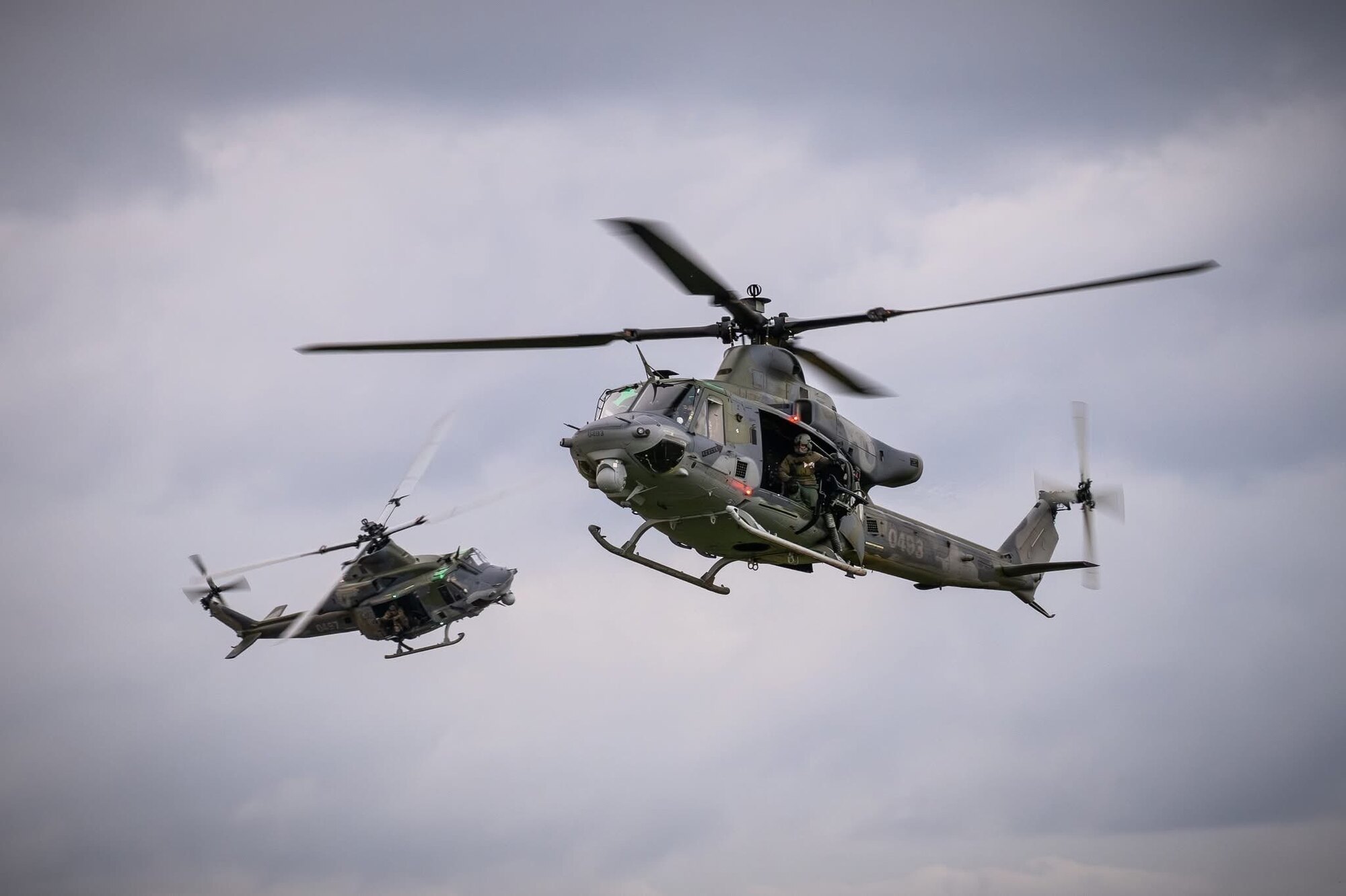
The Czech Armed Forces have for the first time deployed two multi-role UH-1Y Venom helicopters abroad to Poland as part of a NATO mission on the eastern flank. The official purpose is to counter low-flying drones and low-observable rocket threats near the Ukrainian border. This was reported by Armáda ČR.
How the unit will operate
The helicopters arrived together with a technical and logistical group that ensures their autonomy in the field. Crews spent several months preparing for C‑UAS tasks and were certified during the VORTEX exercises according to NATO standards. In Poland they will be integrated into a unified air defense system, receive data from radars and be able to respond quickly to slow, low-altitude targets that traditional SAMs and fighter jets handle less effectively.
"We are helping to protect Polish airspace. For the external operation we have for the first time deployed our new multi-role UH-1Y Venom helicopters. Crews have undergone specialized alliance training and are fully ready to defend against low-flying targets."
— Armáda ČR (official Twitter)
Why this matters for Ukraine
This is not only assistance to Poland — it is a practical measure to reduce the risk of incidents along the border that could have cross-border consequences for Ukraine. The rotation shows that allies are moving from declarations to operational integration of counter-drone capabilities. In addition, strengthening low-altitude defense complements Polish systems, including SAN, together with Patriot and Narew, creating a layered defense.
Context and consequences
The dispatch of the UH-1Y is a signal of partners' readiness to work comprehensively: from training and certification to deployment on positions. For Ukrainian security this means reduced vulnerability of critical border infrastructure and increased operational coordination with allies. It is also an example of the growing role of regional manufacturers in the defense market — the Czechoslovak Group is mentioned as one of the significant players in the Czech Republic.
Conclusion
This is not an isolated action, but part of a broader logic: allies are testing and refining mobile solutions against new threats. The question for the next stage is whether such practical measures will evolve into permanent rotations and wider deployment of C‑UAS assets on the eastern flank. The answer will affect not only Poland's security, but also the operational space for Ukraine.