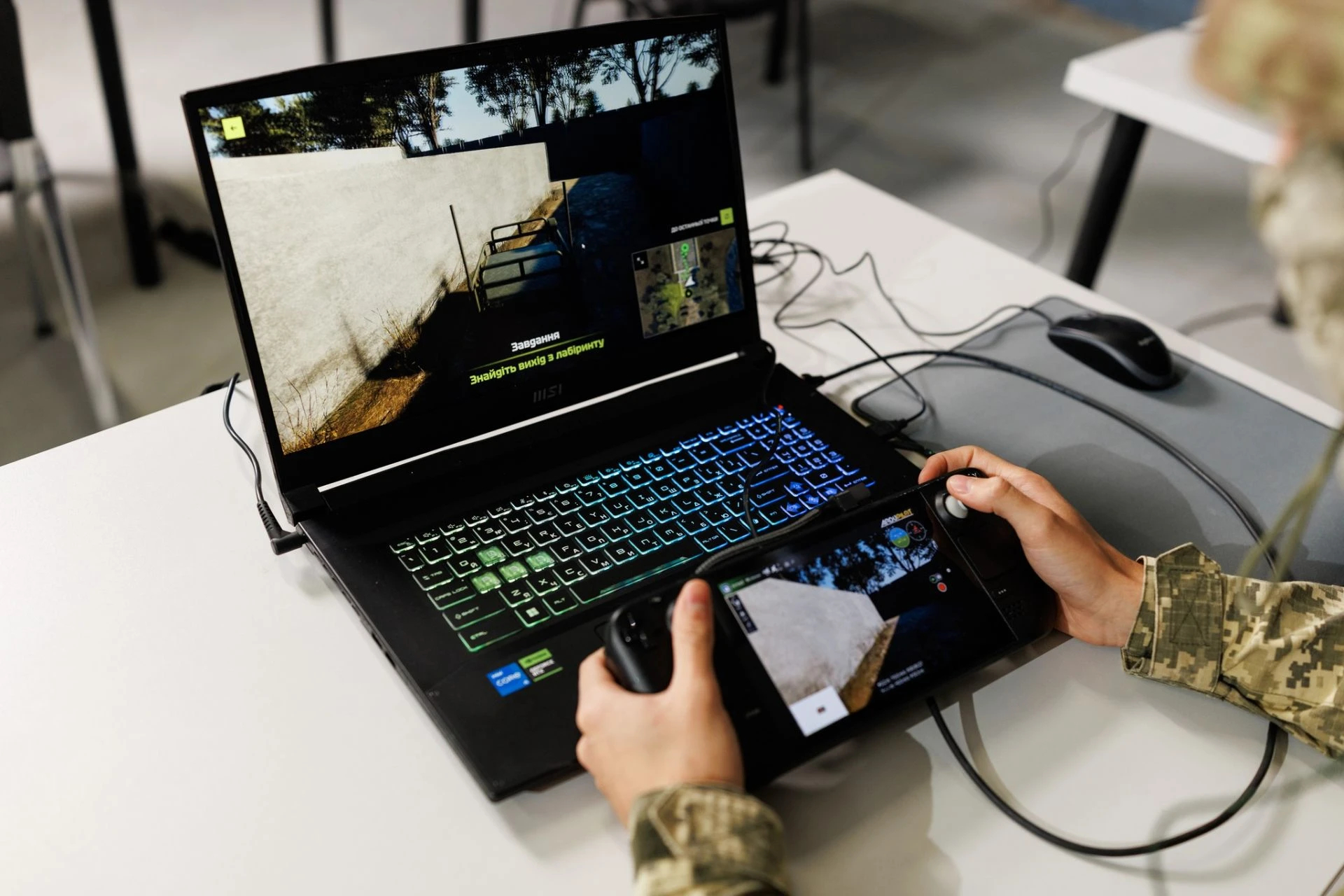
What the platform is
Ukrainian company Roboneers has developed the Shadow simulator to train operators of robotic complexes (NRKs). The platform's launch was announced by "Technological Forces of Ukraine". The platform is presented as a tool for rapid and safe rehearsal of combat tasks in a virtual environment.
How Shadow works
Shadow enables training with an unlimited number of attempts and recreates conditions as close to real as possible: modeling the effects of electronic warfare with partial or complete signal loss, challenging weather — strong wind, fog, heavy rain — maneuvering in dense urban areas and in tree belts. The platform supports integration of different types of equipment — ground NRKs, UAVs, maritime drones and even air-defense elements — and includes theoretical materials and case studies for practicing rapid decision-making.
"The platform enables training in a virtual environment with an unlimited number of attempts"
— "Technological Forces of Ukraine", source
Social proof and scale of application
According to the developers, more than 300 operators who carry out combat missions have already completed training on Shadow. This is not just a number — it signals that digital trainers are beginning to serve as a force multiplier: it is cheaper, faster and safer to prepare several shifts of personnel in a simulator than to spend resources on numerous field deployments.
Why this matters
Training technology affects operational effectiveness. Shadow allows rehearsal of stressful scenarios and improves decision-making skills during loss of communication and in an aggressive electromagnetic environment — precisely the challenges modern operations face. Investment in training is an investment in reducing mistakes and preserving equipment and lives.
Context of the international ecosystem
Against the backdrop of Ukrainian developments, it's important to note international trends: recently, German company Quantum Systems announced deliveries of Falke drones, which are already being used in Ukraine. This shows that hardware solutions and software simulators are moving in the same direction — toward integration and interoperability — increasing the likelihood of rapid adoption of new solutions by combat units.
Conclusion
Shadow is an example of how technological tools bolster defense capability without unnecessary fanfare: effective training makes operations safer and more successful. The next steps are scaling the platform, validating training outcomes against field performance indicators, and integrating it with existing training procedures. A question for partners and the military: can digital training become the standard that accelerates re-equipment and improves the quality of operations on the front line?