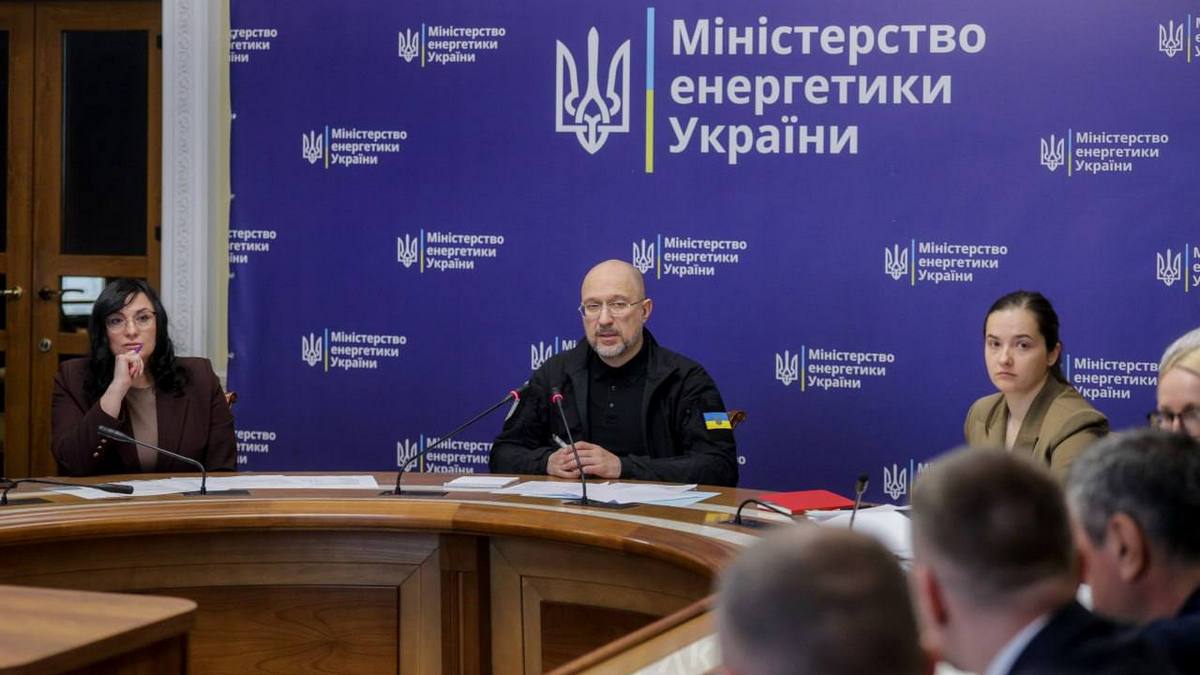
The Ministry of Energy approved a forecast gas balance for the 2026/2027 heating season: by its start, underground storage facilities must contain 14.6 billion cubic meters of gas. The figure was announced by First Vice Prime Minister and Energy Minister Denys Shmyhal following a meeting of the Crisis Committee with the participation of heads of fuel and energy companies.
From 13 to 14.6: how the target changed
Just a few months ago, Shmyhal cited 13 billion cubic meters as the benchmark. Now this indicator has been reclassified: 13.2 billion is the critical minimum, which corresponds to previous seasons' experience and, according to the minister, will allow the country to survive winter even in case of severe frosts and massive missile strikes on gas infrastructure. The baseline target is higher.
«We continue to live under war conditions, when the enemy deliberately attacks, in particular gas infrastructure. It is obvious that next winter will take place under the same difficult circumstances as this one»
Denys Shmyhal, Energy Minister
Where they're starting from
The planned targets look confident — but the starting context is important. Ukraine ended the 2024/2025 winter with the lowest gas reserves in underground storage in the last 11 years. That is why this season's injection began from a depleted base.
As of early August 2025, the pace of reserve recovery was twice as high as a year earlier — over 50 million cubic meters per day, according to ExPro Consulting analyst Mykhailo Svyshcho. By September 14, storage facilities reached 12.055 billion cubic meters — for the first time since the beginning of the year exceeding last year's values on the same date. The 2024/2025 withdrawal season ended on March 10 and became one of the shortest in Ukrainian history; the output was 9.5 billion cubic meters, 1.6 times more than after the previous winter.
Where the gas comes from
Domestic production is insufficient — that is why fuel is imported from several directions: from Poland, Slovakia, Hungary, as well as via the Trans-Balkan route through Greece, Bulgaria, Romania and Moldova. Imports are planned to continue in winter as insurance against new infrastructure strikes.
- Target for November 1, 2025: 13.2 billion cubic meters (confirmed by Ministry of Energy plan)
- Target for beginning of 2026/27 season: 14.6 billion cubic meters (new balance)
- Critical minimum: 13.2 billion cubic meters — the level below which stable winter passage is questionable
The total cost of the heating season preparation plan is almost 278 billion hryvnias, reported Prime Minister Yuliia Svyrydenko.
What this figure actually measures
14.6 billion cubic meters — it is not just more than last year. This is the first gas plan in several years drawn up not for survival, but for a buffer: a reserve above the minimum that allows for flexible response to strikes on storage facilities or pipelines in the middle of winter, without resorting to emergency imports at maximum prices.
If by November 1, 2025 it is possible to reach the planned 13.2 billion — and the current injection pace allows this — then the realism of the 14.6 billion target for next year will look like an achievable, not declarative plan. The question is different: whether gas infrastructure will withstand winter without critical damage — because this depends on whether it will be possible next summer to maintain the injection pace and not start another season from a depleted base.







