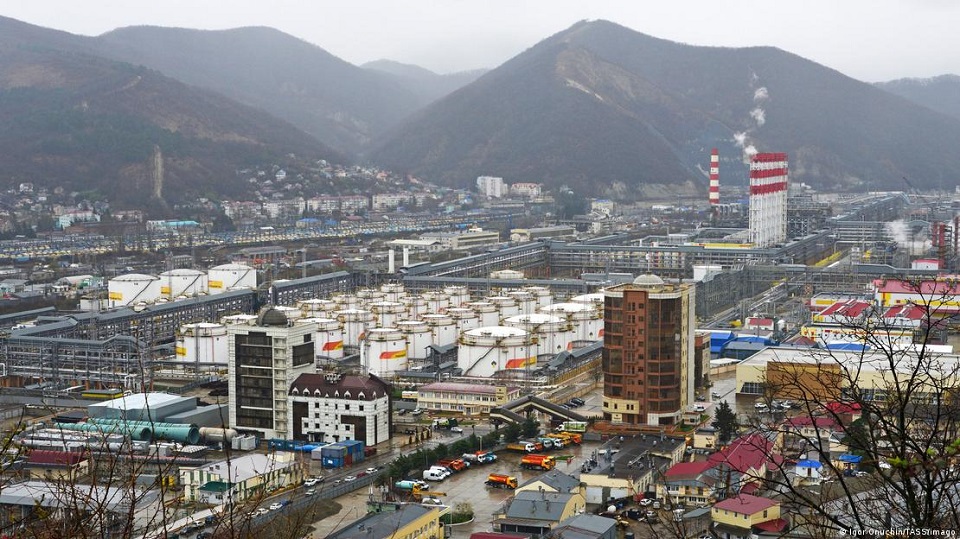
On the evening of April 24, Krasnodar Krai Governor Veniamin Kondratyev announced the completion of the fire at the Tuapse sea terminal. Around 300 people extinguished the fire over five days — from the night of April 20, when drones struck the facility for the second time in a week.
The Tenth Strike — Not by Chance
This was the tenth strike in total by Ukrainian Defense Forces on the Tuapse refinery. According to the Commander-in-Chief, previous strikes were recorded in November and on the night of December 31 — each time causing damage to processing units or oil loading infrastructure. The first strike in this series occurred on the night of April 16, the second — on the night of April 20. That was when the tank farm caught fire and an oil tanker was damaged.
According to the General Staff of the Armed Forces of Ukraine, the strike on April 20 resulted in direct hits on the tank farm with massive fire. According to UNIAN citing sources, deep-water oil loading stands, pipeline infrastructure, and terminal storage tanks were also damaged.
Why Tuapse Specifically
Tuapse refinery belongs to Rosneft and is one of Russia's largest — with a capacity of approximately 12 million tons of oil per year, or about 240,000 barrels per day. The plant produces gasoline, diesel fuel, fuel oil, and raw materials for petrochemistry.
"For the Russian Armed Forces, this plant has strategic significance, as it supplies fuel to the Black Sea Fleet and military infrastructure in the southern part of the country."
Commander-in-Chief
The plant is part of the logistics chain for supplying fuel for military equipment and aviation. After the April strikes, Reuters confirmed: Tuapse refinery halted oil processing. According to Telegram channels, some tankers left the port of Tuapse and moved to Novorossiysk during the fire — due to the threat of repeated strikes.
Scale of Losses Across the Industry
Tuapse is not an isolated case. By the end of 2025, losses to Russian oil companies from systematic drone attacks on refineries exceeded 1 trillion rubles (approximately $12.9 billion): direct destruction, lost profits, and insurance expenses.
- Tuapse refinery — shutdown after strikes on April 16 and 20
- Novokuybyshevsk refinery — also shut down after strikes (both belong to Rosneft)
- Together, the two plants processed over 20 million tons of oil per year
Armed Forces Commander Oleksandr Syrsky demonstrated the results of strikes on Tuapse during a meeting with a NATO representative — effectively as a demonstration of the effectiveness of the strategy to destroy Russia's oil rear.
The Fire Was Extinguished. The Plant — Not
A shutdown of processing at a plant with a capacity of 12 million tons — this is not a week-long pause. Recovery from damage to the tank farm, pipeline infrastructure, and oil loading stands will require months and equipment that Russia, under sanctions, cannot quickly replace.
The question is not whether Tuapse will resume operations. The question is whether it will manage to recover before the next strike records new hits — considering that ten strikes on one facility over three years indicate not coincidence, but a sequential campaign.







