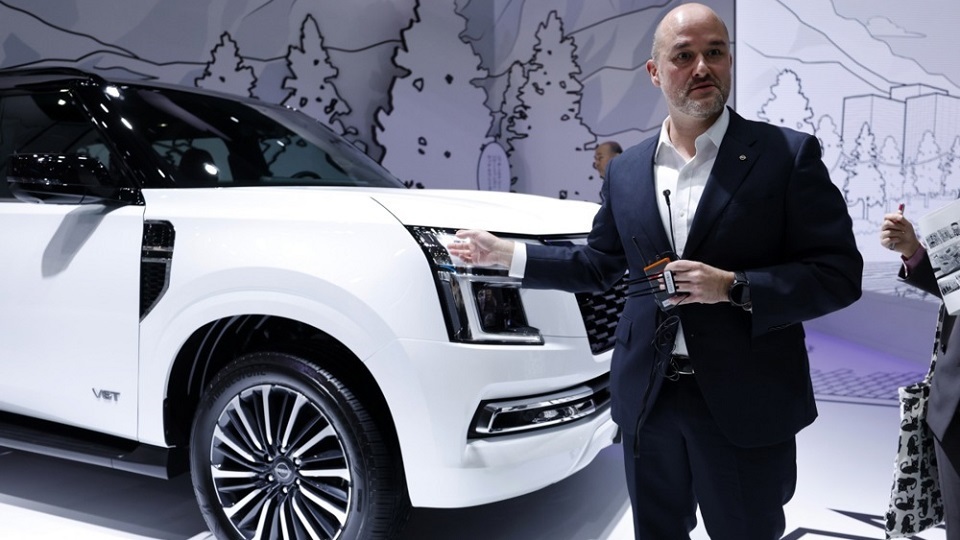
A Nissan engineer in Yokohama spends four years taking a car from sketch to showroom. His counterpart at BYD does the same in two years. This difference is not a detail of the manufacturing process, but an explanation for why the Japanese giant has been recording sales declines for the second consecutive year and is negotiating a merger.
Nissan officially announced a transition to a 24-month development cycle for new models. For a company that has spent decades building its reputation on meticulous engineering, this is not simply an acceleration—it is an admission that the rules of competition have changed without its consent.
What changes technically
The main tool for shortening the cycle is generative AI in design and simulation. Instead of physical prototypes in the early stages, Nissan plans to use digital twins, which allow testing thousands of design variations in parallel. Chinese manufacturers—particularly BYD, Li Auto, and Xpeng—have been applying this approach for several years already.
In parallel, the company is reviewing its decision-making architecture: fewer approvals between departments, more authority to project teams. According to former Nissan managers, this bureaucratic overhead consumed months at each stage.
Why China became a benchmark, not a warning
As recently as 2019, Japanese automakers viewed Chinese competitors as producers of cheap copies. Today, BYD sells more electric vehicles globally than Tesla, and Chinese brands are capturing market share in Southeast Asia—the traditional domain of Japanese companies.
Speed proved to be a strategic weapon: while Nissan developed a model, the market managed to transition to the next generation of batteries. Chinese companies release updates once a year—like smartphones.
Where the real risk lies
Cutting the cycle in half is not just a matter of tools. The Japanese development model historically ensured Nissan a low recall rate and a reputation for reliability. This very reputation allowed the company to sell cars at a premium over Chinese analogs in North American and European markets.
If acceleration comes at the expense of quality control—the company may win in speed but lose in trust. There are precedents: several Chinese manufacturers that scaled rapidly encountered waves of complaints in the second or third year after entering new markets.
Nissan has not yet disclosed which specific verification stages will be shortened and which will be replaced by digital simulation. The answer to this question will determine whether the announced reform is a genuine transformation or a PR response to quarterly losses.
The first model developed under the new cycle is expected to launch by 2027—that is when it will become clear whether it is possible to borrow Chinese speed without borrowing Chinese compromises.







