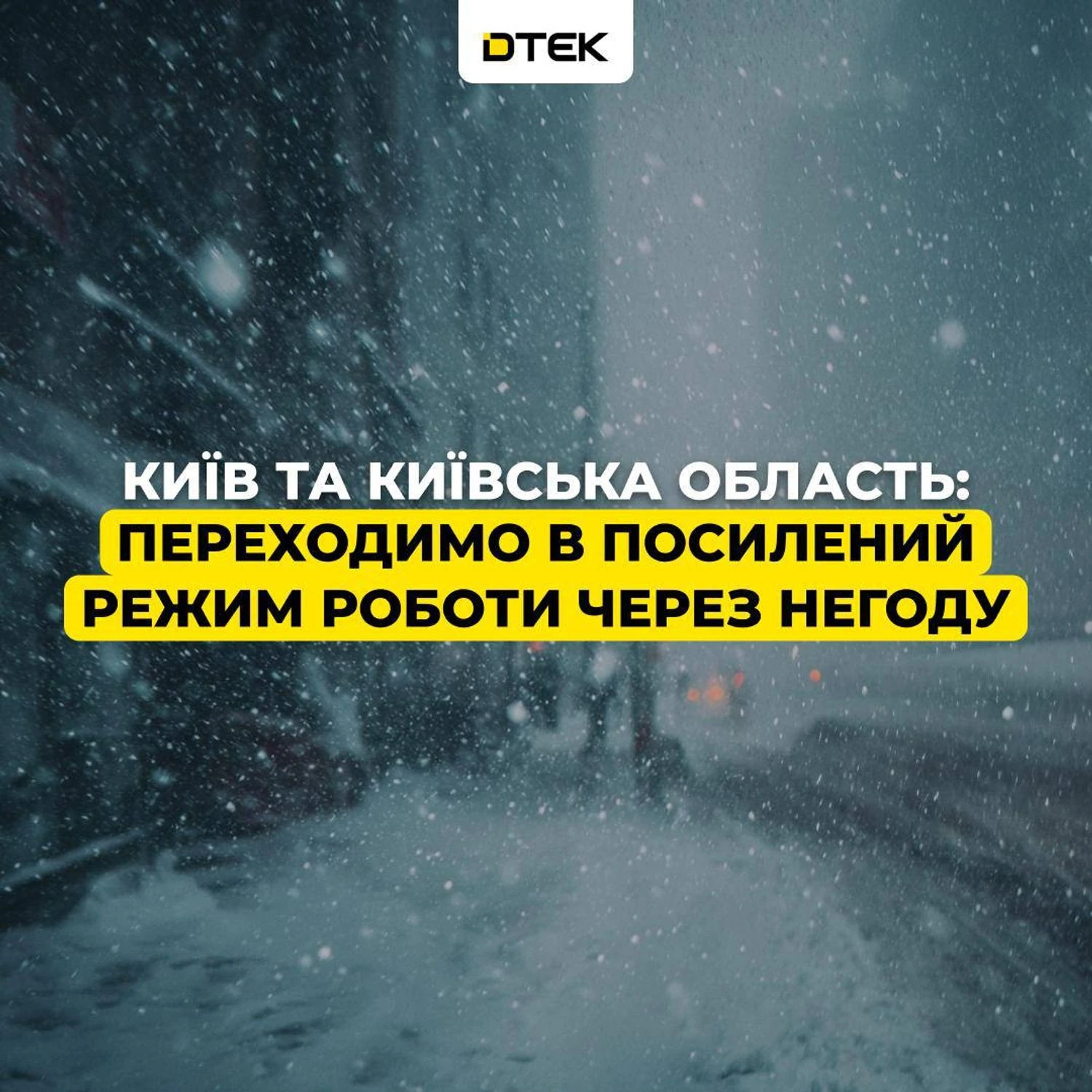
DTEK and the weather threat: what happened
In Kyiv and Kyiv region the energy company DTEK has moved its emergency crews to an enhanced working regime — they are operating 24/7 due to predicted wind gusts and a cold snap down to around −10°C. This was reported by UNN, citing the company's press service. Forecasters warn of gusts, snow squalls and icy conditions — such weather may last up to a week.
Why this matters
When temperatures drop sharply and strong winds occur, electricity consumption rises simultaneously (because of heaters) and the risk of mechanical damage to power lines increases. This creates extra stress on the grid and raises the likelihood of local failures. Moving crews to an enhanced regime is a preventive step that shortens response and restoration times.
Message from the company
"DTEK emergency crews have been moved to an enhanced regime and are working 24/7 to promptly address possible accidents. We ask that you use electricity sparingly to avoid overloading the grid"
— DTEK Press Service (message for UNN)
What this means for residents
Brief and practical: during peak loads (morning, evening) avoid running several high-power appliances at the same time — iron, washing machine, multiple heaters simultaneously. Check backup light sources, make sure important devices are charged, and, if possible, lower the temperature in non-essential areas of the apartment. This reduces the likelihood of local outages and helps emergency crews work more effectively.
Context and responsibility
Moving crews to a heightened regime is a standard practice for energy companies during extreme weather. Energy specialists emphasize: collective discipline in energy consumption during cold spells is one of the fastest and most effective ways to reduce the impact of bad weather. If the situation worsens, official services will announce possible outage schedules or additional restrictions.
Conclusion
Bad weather is a technical challenge, not a sentence. Rapid response by crews and responsible behavior by each resident reduce the risk of outages. Conserve electricity during peak hours — it helps the city keep operating.







