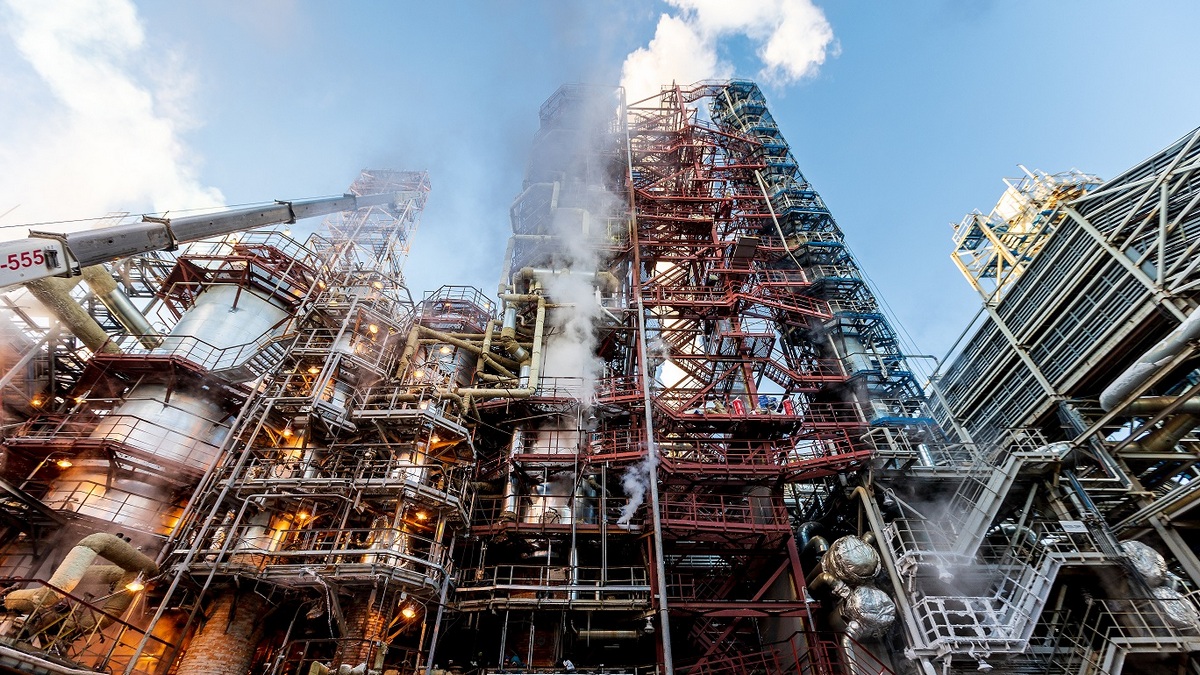
On the morning of June 6, a fire broke out at the Antipinsky (Tyumen) oil refinery at a steam hydrocracking unit. Thick black smoke over the industrial zone was visible for dozens of kilometers. Tyumen authorities released a single version: "violation of the technological process." Not a word about drones.
Eyewitnesses in local Telegram channels describe it differently: before the fire—a series of explosions. Videos with columns of fire trucks spread across the network before any official comment. According to Bloomberg, the fire occurred in the cleaning system "after a malfunction of the technological process"—a formulation that does not answer the question of what exactly caused the malfunction.
What this facility is
The Antipinsky oil refinery is not an ordinary plant. According to Wikipedia and open sources, it is the only oil refinery built in Russia after the collapse of the Soviet Union, and at the same time the only refinery in the entire Ural Federal District. Capacity—over 9 million tons of crude oil per year, processing depth reaching a record 98% for the Russian Federation, products include Euro-5 diesel and gasoline for the domestic market.
The plant went through bankruptcy: in December 2019, it was declared insolvent due to debts of 18 billion rubles. In September 2024, the assets were purchased by RI-Invest—and the enterprise resumed operations. The distance from Ukraine's borders is approximately 2,000 km.
The same day, confirmed strikes
While the Tyumen fire remained without official attribution, Zelenskyy confirmed three separate strikes by the Armed Forces of Ukraine on the same day:
- The 15th arsenal of the Russian Navy in the Lomonosov District of Leningrad Oblast—a warehouse of naval ammunition, torpedoes, and missile weapons of the Baltic Fleet. After impact, secondary detonation began. Governor Drozdenko first reported "no destruction," then—"minor destruction" and a fire at a military facility.
- The Kronstadt Maritime Plant and the corvette "Boyky"—the strike was confirmed by the commander of the Armed Forces of Ukraine's Unmanned Systems Forces, Robert Brovdi "Madyar." The Project 20380 corvette was damaged in dry dock on June 3.
- The Poltava oil depot in Ust-Labinskaya (Krasnodar Krai)—a petroleum storage facility with a capacity of about 15,000 cubic meters, serving Lukoil supplies.
"Important results of joint work by the Armed Forces of Ukraine, the SBU, and the GUR. Russia needs to end its war and stop strikes on lives."
— President Zelenskyy, June 6
Context: fuel as a war resource
The fire in Tyumen comes amid systemic pressure on Russian oil refining. According to Bloomberg estimates, since the beginning of the year, Ukrainian drones have disabled 38% of Russia's primary oil processing capacity. A fuel deficit has spread to more than 20 regions—from Sakhalin to Nizhny Novgorod Oblast, wholesale prices for gasoline and diesel have increased by 20–30%.
The Antipinsky oil refinery, during the fuel shortages of 2025, was supplying products to plants in Khabarovsk, Komsomolsk-on-Amur, Angarsk, Kemerovo, and Surgut—that is, covering the needs of regions beyond the reach of central Russian refineries, which were attacked earlier.
The version about a technological accident is quite possible: the plant recently changed ownership after bankruptcy, and equipment repair at Russian refineries is complicated by sanctions-induced shortages of imported components. But until Tyumen provides a detailed technical report, and satellite images confirm or refute the nature of the damage, both versions remain open.
If the fire stops even part of the refinery's capacity for several weeks—the Urals and Siberia will feel it by the end of June: there are no alternative capacities in the federal district.







