Briefly
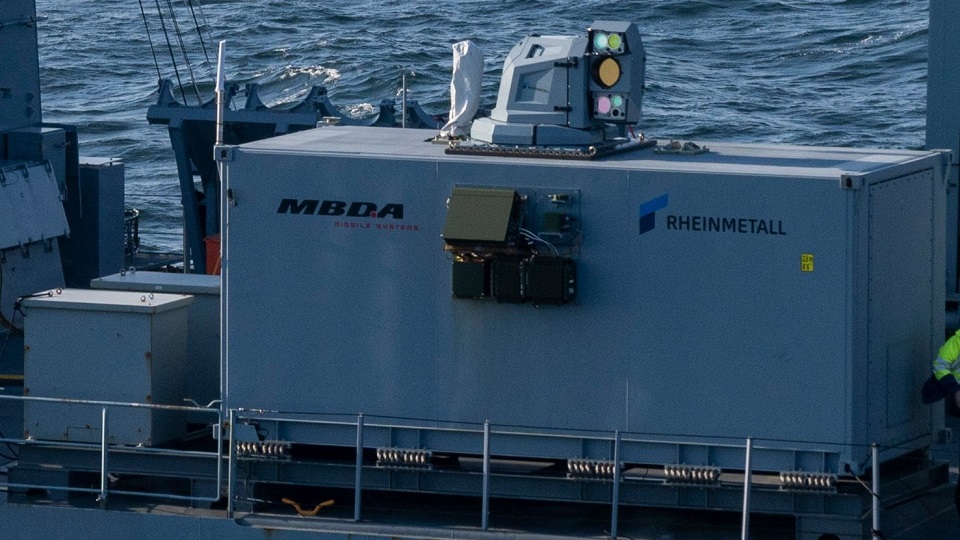
Rheinmetall and MBDA plan to establish a joint venture in the first quarter of 2026 to produce naval laser systems, Rheinmetall's press service said. According to the German broadcaster WDR, serial production could begin in 2029 — a step from a demonstrator to operational installations on warships.
What the companies announced and what it's based on
The collaboration has been ongoing since 2019 and is based on tests of a naval laser demonstrator. During trials aboard the German Navy frigate SACHSEN, the system reportedly struck more than 100 targets — a fact Rheinmetall calls proof of the technology's suitability for countering drones and other highly maneuverable targets at close range.
"The German navy will receive an operational laser weapon system that will complement its guns and guided missiles, in particular for combating drones and other highly maneuverable types of targets at close and very close ranges"
— Rheinmetall, press service
How it works and its advantages
Laser systems operate on electricity and do not require traditional munitions. This provides two practical advantages: a lower cost per hit compared with missile interception and rapid re-engagement against multiple threats. The technology is especially effective against small drones, fast targets at short range, and for local ship self-defence.
At the same time, lasers have limitations: they require a line of sight to the target, are sensitive to weather conditions, and demand high onboard electrical power. This means effective use requires investment in a ship's power architecture and integration with existing weapon systems.
Tests and confirmation of effectiveness
The demonstrator mounted on the frigate SACHSEN underwent a series of tests and, according to the manufacturer, struck more than 100 targets. This serves as a technical and marketing argument for moving to serial production and fleet integration.
"The development is, of course, a real innovation, but work on this system has been ongoing for many years. It is now approaching operational readiness"
— Ulrich Jukerzaifer, weapons expert
What this means for Ukraine
The appearance of operational naval lasers in the fleets of leading countries changes the rules of close-in ship defence. For Ukraine this has several concrete implications:
- Increased level of protection in the Black Sea and Sea of Azov: lasers provide an additional layer of defence against drones and fast surface threats, complementing existing missile systems.
- Energy modernization of ships: to deploy such systems, capable power sources and upgraded electrical distribution are required — an area where partner investments and Ukraine's defence industry should focus.
- Technological competition and cooperation: Ukraine also has laser weapon developments — notably the "Tryzub" system, which its developers position as capable of engaging aerial targets. This means Ukrainian engineers can draw on their own experience in negotiations with allies and during technology transfer.
Analysts note that the emergence of lasers will not replace missiles or artillery, but shifts the balance toward energy-oriented solutions — where interception costs fall and response times accelerate.
Conclusion
The creation of a joint venture between Rheinmetall and MBDA is a logical step toward commercializing and scaling naval lasers. For Ukraine, it is a signal: this technological trend should be taken into account in fleet modernization plans and in dialogue with partners about supplying protected platforms and energy solutions. The coming years will show how quickly these systems become the standard for close-in defence at sea and how fast Ukrainian projects and international assistance can turn this into practical protection for our ships and ports.







