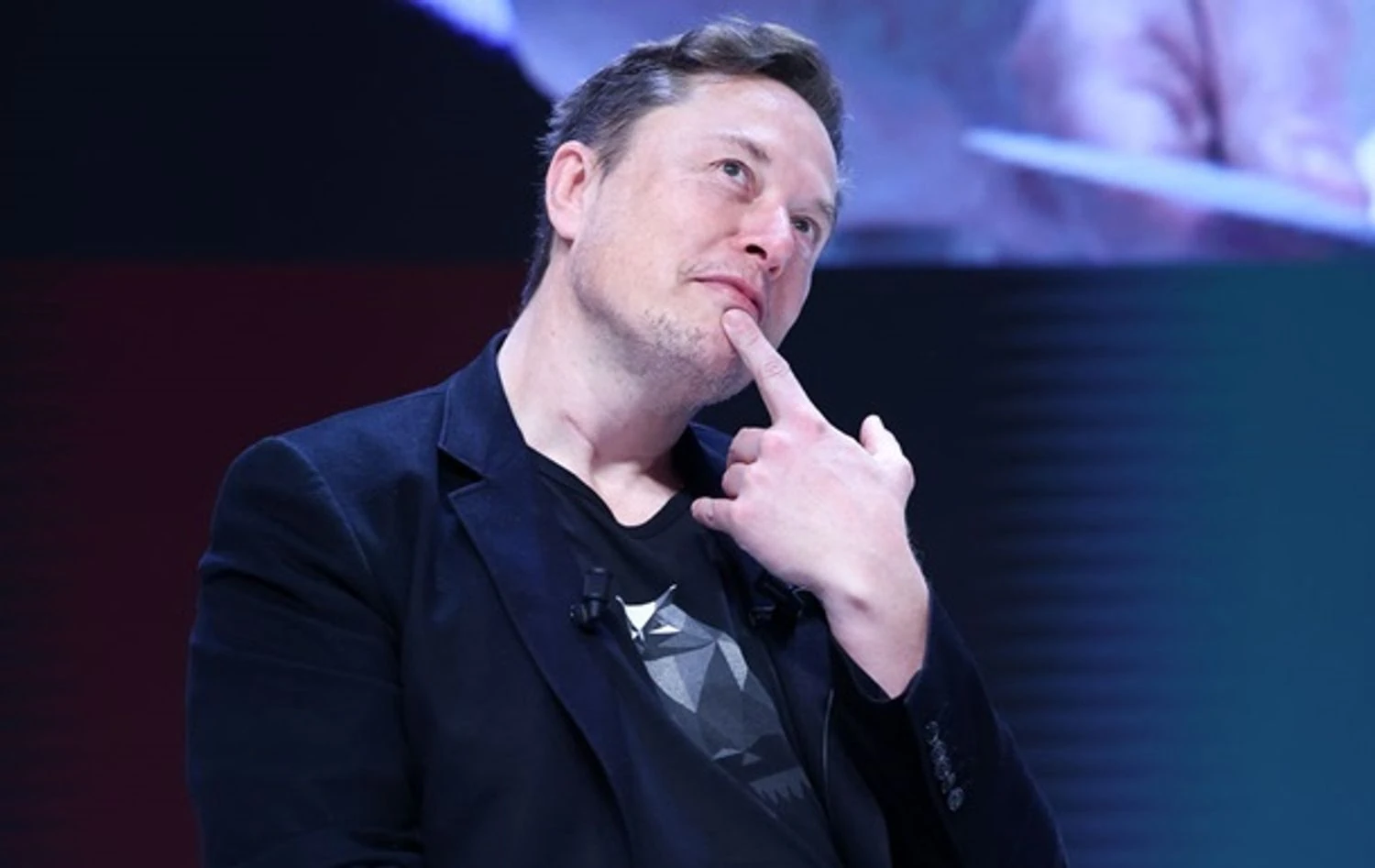
Friday, Nasdaq: SpaceX shares opened at $150 and reached $166.90 within a few hours. The company's market capitalization is $2.18 trillion. According to Forbes' assessment, Elon Musk's wealth crossed the $1.1 trillion mark that same day. The first trillionaire in documented human history — officially.
The largest IPO in history — and where the money comes from
555.6 million shares were placed at $135 per share. According to Reuters, the company raised $75 billion — more than Aramco in 2019, which had been considered a record until now. Before the IPO, Musk was worth approximately $780–813 billion; the closest pursuer, Google co-founder Larry Page, is worth about $300 billion. The gap between first and second on the world's richest people list is now three times larger.
An important nuance: SpaceX is largely Starlink. According to the prospectus published before the IPO, the satellite internet division generated $10.6–11.39 billion in revenue, or approximately 61–67% of the company's total income of $18.67 billion. According to CNBC, Starlink's margins are closer to software than hardware manufacturing: after launching the constellation, each new subscriber adds nearly pure profit. As of the end of 2025 — more than 10.3 million subscribers in 155 countries.
Part of this income is directly related to government contracts. According to analytics firm Quilty Space, the Pentagon signed a $537 million deal with SpaceX to provide Starlink for the Ukrainian army — as part of the PLEO program, whose ceiling was raised to $13 billion.
What economists say
"This is a large influx of cash, which is good for any company. They will use these funds to finance many things — including data centers on Earth and in space."
Pierre Lionnet, space economist at Eurospace (France), Scientific American
But there is another dimension. Guido Alfani, professor of economic history at Bocconi University in Milan, put Musk's wealth in historical context: in 2025, he could "control" the equivalent of 557,800 people's labor — compared to 116,000 for John Rockefeller at the peak of his influence in 1937. "We can confidently say that Elon Musk is probably the richest person who has ever lived — if we don't count monarchs whose property was inseparable from the state," Alfani said in a comment to Al Jazeera.
Nabil Ahmed, senior director of economic justice at Oxfam America, called the moment "a new gilded age of inequality": "Musk's arrival at trillionaire status is a new peak of oligarchy."
Scale in numbers
- Only 19 countries in the world have a GDP exceeding $1 trillion — according to the World Bank.
- Musk could finance NASA's 2025 budget ($24.6 billion) with less than 3% of his capital.
- His wealth exceeds the combined riches of the next three on the Bloomberg Billionaires Index.
- Until summer 2024, Musk, Bezos, and Arnault took turns trading places in the ranking with capital around $200 billion each.
However, not all of SpaceX's business is profitable. Starship development costs the company approximately $4 million per day; in 2025, SpaceX spent $3 billion on it, resulting in an operating loss of $657 million for the space division. Full reusability of the rocket — the main promise to investors — has not yet been confirmed at operational scale.
Shares are traded under the ticker SPCX on Nasdaq.
If Starship achieves declared full reusability and SpaceX wins key government contracts in the next budget cycle — the $2 trillion valuation will look conservative. If not, investors are holding the most expensive rocket in anticipation of a takeoff that so far has only been promised.







