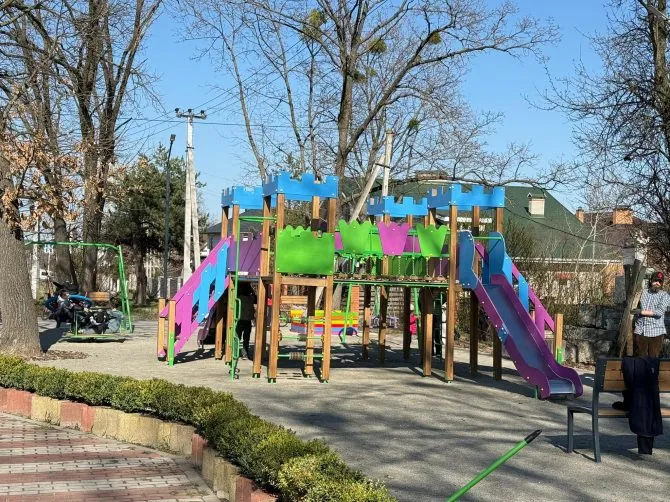
A playground has appeared in the Stoyanka microdistrict of the Irpin area. Formally — an event of district scale. But behind it is a concrete model of how neighbors can obtain infrastructure without queuing up in offices.
Bottom-up initiative, funding from multiple sources
It all began not with a council decision, but with parents: residents independently planned the project, submitted it to the city's participatory budget competition, campaigned for neighbors to vote — and won. Then the authorities stepped in: the parents turned to a deputy of the Irpin City Council, Anton Holovenko, who in turn appealed to the council body.
“The success of the district's development largely still depends on the residents. On active residents.”
— deputy Anton Holovenko
Funding was gathered from three sources: part was allocated by the city council, part was provided by benefactors, and another part — by the residents of the yard themselves. First Deputy Mayor Oleksandr Pashchynskyi confirmed the opening of the playground and called the project an example of “the community's joint work.”
What really matters here
Irpin is a city that, after the full-scale invasion of 2022, has been actively rebuilding. The participatory budget as an instrument has existed in the city for more than ten years, but precisely now — when municipal resources are stretched between restoring destroyed housing and basic infrastructure — the model “residents submit, the authorities co-finance” is gaining practical significance.
Deputy Holovenko personally inspected the structures after installation and assured that the equipment is safe. It's a small detail, but telling: in projects without clear technical oversight, such checks often do not take place.
A model that can be replicated — but not everyone will be able to
Stoyanka is a microdistrict with a relatively cohesive, active community. There were people willing to invest time in preparing the application, campaigning and collecting funds. In neighborhoods without such social capital and without a deputy interested in engaging with constituents, the same procedure can stall at the first step.
If the Irpin City Council publicly discloses the specific amounts from each funding source and spreads this mechanism to other microdistricts with methodological support — the model will become reproducible. If not — Stoyanka will remain a happy exception, not a precedent.