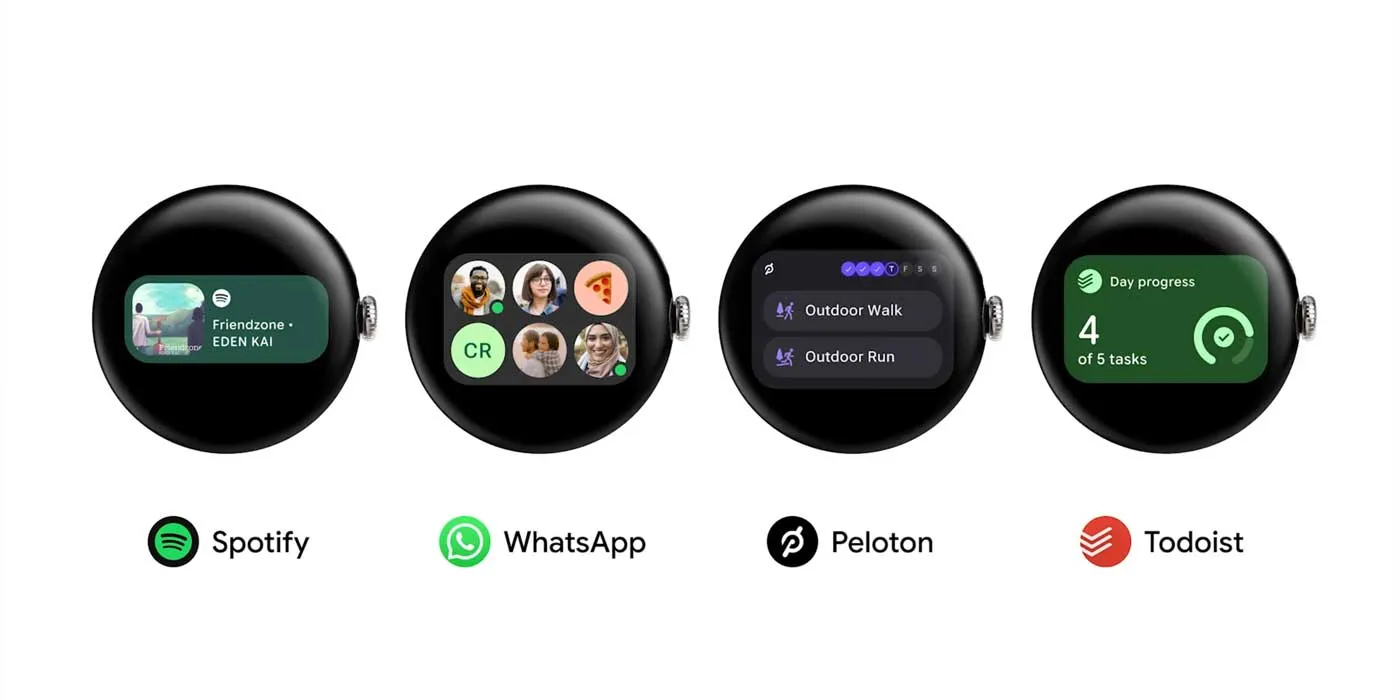
At Google I/O 2026, the company announced Wear OS 7 — the first version of the operating system for smartwatches built on the basis of Android 17. The main change appears superficially insignificant: the familiar Tiles (full-screen information "cards") have been officially renamed to Wear Widgets. But behind the rebranding lies a fundamentally different architecture.
Why "just a rename" is an inaccurate frame
The new Wear Widgets support 2×1 and 2×2 formats — identical to Android widgets on smartphones. Google's stated goal is to enable developers to write a single widget and deploy it simultaneously on both phone and watch without dual adaptation. At the same time, the API is backward compatible with Wear OS 4 and above — meaning older watches won't be left without updates.
A practically important moment for Galaxy Watch owners: widgets will now be able to fill Multi-Info Tiles on Samsung watches, which were previously available exclusively for Samsung's own solutions. This opens Galaxy Watch to the ecosystem of third-party developers — something that wasn't possible before.
"Full-screen Tiles were the primary way to get information on Wear OS. Now we're bringing watches closer to the rest of the Android family"
— Android Developers Blog, Google I/O 2026
Gemini on the wrist: not for everyone and not yet
In parallel with widgets, Google presented AppFunctions API — a tool that allows Gemini to perform actions within third-party applications via voice command. Examples from the Google I/O stage: "Start tracking my run" through Samsung Health or ordering food through DoorDash without opening the app.
But there's a significant limitation: Gemini Intelligence requires Gemini Nano v3 support — the same hardware threshold that currently limits the feature to a few flagship Android phones. This means that the full AI experience will only be available on new 2026 models — expectedly Pixel Watch 4 and select Galaxy Watch 8 versions. Older watches on Wear OS 7 will get widgets and Live Updates, but without Gemini.
What else is changing
- Live Updates — dynamic notifications right on the watch face: delivery with timer, match score, trip tracking.
- Battery savings — Wear OS 7 consumes 10% less power than Wear OS 6.
- Android Auto — the same Wear Widgets will appear in the automotive interface later this year.
- Canary emulator is already available to developers for testing.
Wear OS 7 will be released to users later in 2026 — along with new watch models. However, Google has not announced specific dates.
The key question is not when Wear OS 7 will arrive, but how actively developers will adopt the unified API for Android and Wear OS: if a large wave of applications doesn't come by the time new watches launch, unification will remain a technical elegance with no visible effect for the user.







