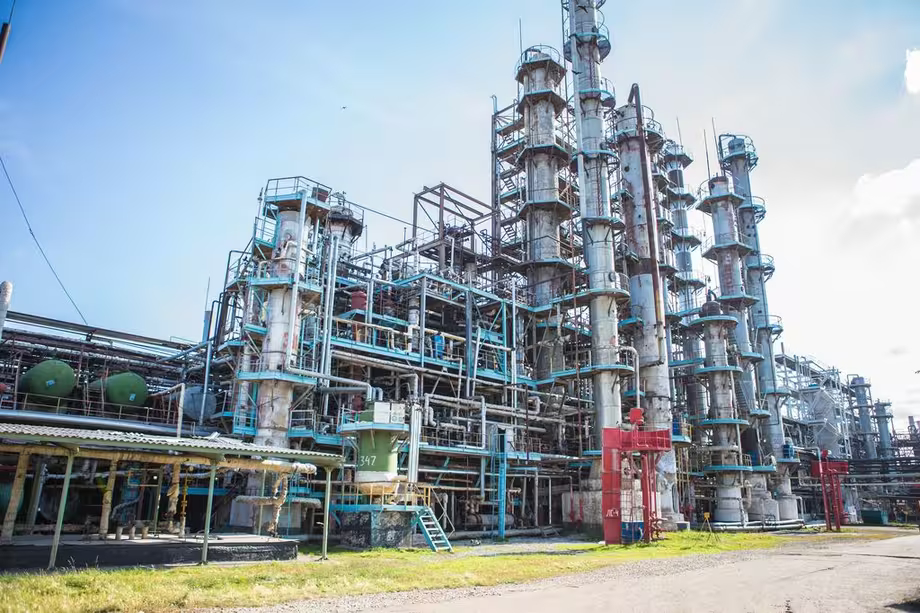
On April 15, unmanned aerial vehicles attacked Sterlitamak, a city in Bashkortostan located more than 1,300 kilometers from the front line. A fire broke out in an industrial zone. The head of the region, Radiy Khabirov, reported "several downed UAVs," whose debris allegedly fell on the territory of one of the enterprises, according to his version.
What is burning and why it matters
Sterlitamak is not a random target. The city concentrates several large chemical plants at once: the Sterlitamak Petrochemical Plant (SNPZ), which is part of the Roschim holding and produces rubbers, ionol, and aviation gasoline; the Avangard plant, founded in 1943 and still involved in ammunition production as part of state defense contracts through Rostec; and also the Bashkir Soda Company, one of the largest chemical manufacturers in Russia and Europe.
The SNPZ was already on fire in August 2024—at that time, authorities explained the fire as a "violation of safety rules." In November 2025, the GUR officially confirmed a successful strike on the same plant: the enterprise manufactures ionol, aviation gasoline, and synthetic polymers for the needs of the Russian army and military-industrial complex.
"The Sterlitamak industrial complex suffered a terrorist attack by two UAVs. The Ministry of Defense forces and enterprise security services shot down both drones."
— Radiy Khabirov, head of Bashkortostan (statement regarding the November attack; the April statement was made in the same rhetoric)
The formula of "debris from downed drones"
Khabirov's official version is standard for such incidents: the drones were allegedly shot down, and the fire resulted from falling debris. This construction allows acknowledging the fact of the attack while avoiding admission of a direct hit. However, videos from the scene circulated by local residents record several fire sources—a characteristic picture of direct impact rather than debris scatter.
Ukraine traditionally does not comment on such strikes operationally. Confirmation, if it appears, usually comes from the GUR within several days.
Context: Bashkortostan under systematic pressure
The April attack comes against the backdrop of consistently escalating long-range strikes. According to the head of the SBU Vasyl Malyuk, in just September–October 2025 alone, Ukrainian forces successfully attacked Russian oil extraction and processing facilities approximately 20 times. In 2025, Bashkortostan has already been targeted: "Gazprom Neftekhim-Salavat" and "Ufarorgsintez" were struck.
- Distance from the Ukrainian border to Sterlitamak — more than 1,300 km
- SNPZ — produces aviation gasoline and dual-use polymers
- "Avangard" — on the EU sanctions list since February 2024, produces ammunition
- Bashkir Soda Company — one of the largest chemical manufacturers in Russia and Europe
The authorities did not name the specific enterprise that was damaged on April 15. If the strike hit the SNPZ or "Avangard" rather than civilian production, the difference in the strategic significance of the event would be substantial.





