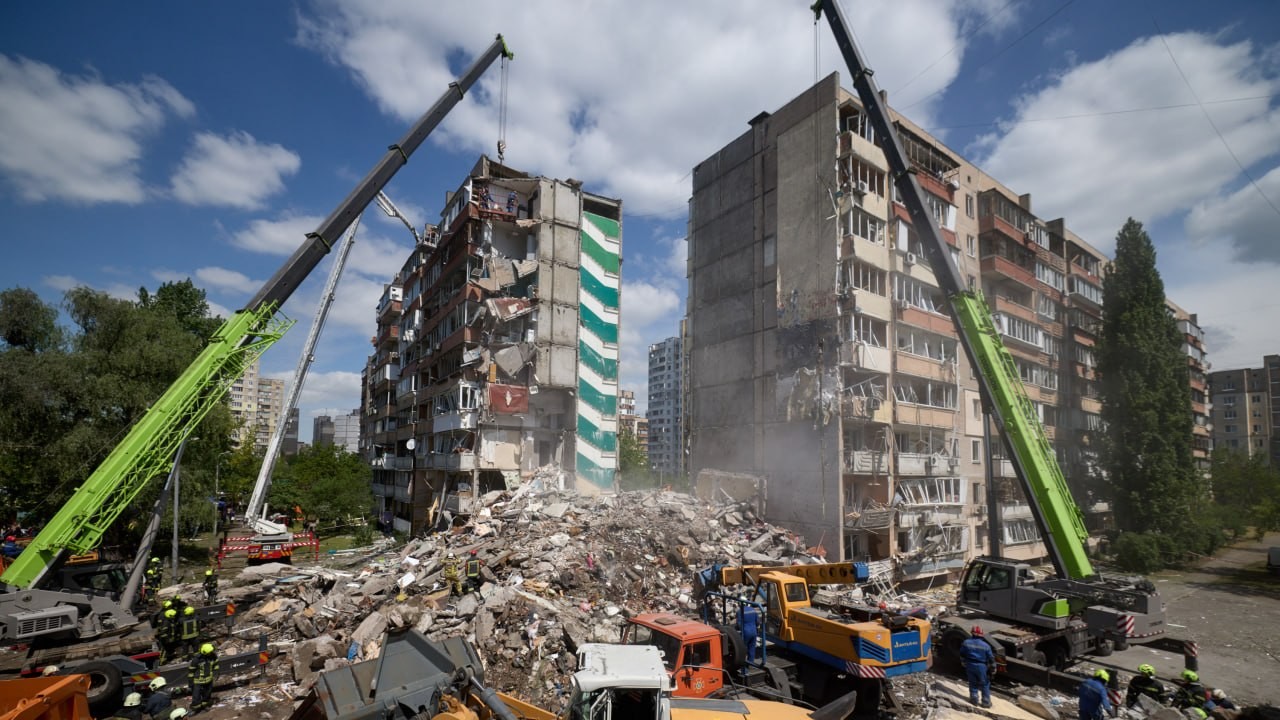
52 people were killed, 346 were wounded — among them 22 children. This is the toll from one week following the three-day ceasefire of May 9-11, which Washington promoted as a first step toward peace. President Volodymyr Zelensky published the figures on Telegram.
«During this week, Russians fired over 3,170 attack drones at Ukraine, more than 1,300 guided aerial bombs and 74 rockets of various types, with most being ballistic. Many struck residential buildings and other civilian infrastructure».
Volodymyr Zelensky, Telegram
In total — over 4,500 weapons in seven days. For comparison: this is more than Russia had on average used in any previous week since the start of the full-scale invasion.
Ceasefire as a Window for Accumulation
The strikes were not improvisation. ISW documented that during the ceasefire itself, Russia did not simply reduce activity — it used the pause to bring up reserves and build up supplies. A Ukrainian brigade on the Lyman direction reported: Russians held «Molniya» drones until the ceasefire was announced, then sharply increased their use precisely during the three «quiet» days.
According to ISW, NASA FIRMS satellite monitoring confirmed a reduction, but not cessation, of hostilities on May 9-11. Both sides mutually accused each other of violations. On the Kupiansk direction, Russian forces continued attempts to break through to Ukrainian Armed Forces positions on the left bank of the Oskil — even during the ceasefire days.
Air Defense and Anti-Ballistic Systems: What Zelensky Presented to Europe
Against the backdrop of these statistics, Zelensky voiced a specific demand: the PURL program, additional contributions for anti-ballistic missiles, and — for the first time so directly — joint European protection against ballistic weapons. «We must be self-sufficient in defense so that Russian air terror cannot threaten either Ukraine or any other country on the continent», the president emphasized. Earlier, Zelensky reported that France was prepared to help Ukraine develop anti-ballistic systems.
- 3,170+ attack drones per week
- 1,300+ guided aerial bombs (KAB)
- 74 rockets, predominantly ballistic
- 52 civilians and military killed
- 346 wounded, including 22 children
The tactical picture is evident: the ceasefire gave Russia time, not restraint. If subsequent negotiation pauses occur without a mechanism to verify the movement of ammunition and reserves — each «ceasefire» risks becoming preparation for the next wave.





