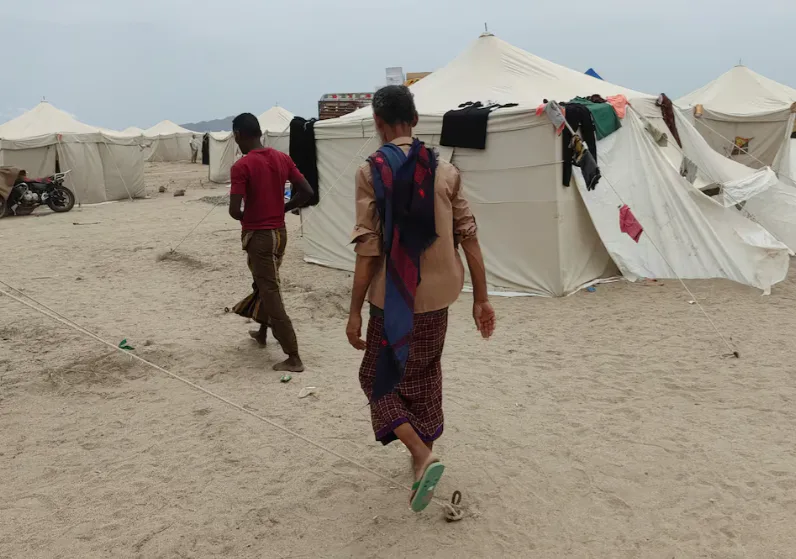
Over 115,000 people in Yemen have left their homes or camps in just two weeks due to a sharp escalation in fighting. At least 112,000 have become internally displaced, while nearly 3,000 decided not to wait for the front lines to reach them and set out by sea — on overcrowded boats across the Gulf of Aden to Djibouti, Reuters reports citing the International Organization for Migration.
The unexpected aspect here is not the scale of the tragedy — Yemen has been experiencing similar events for years — but rather where exactly people are fleeing to. Djibouti, a tiny country on the opposite shore of the gulf, has become a kind of safety valve for the Red Sea coast: when overland routes are cut off by fighting, the sea remains the only way out, despite the risks of overcrowded vessels.
A Second Flight for Life
The displacement wave began after the resumption of large-scale fighting between Iran-backed Houthis and forces linked to the Saudi-backed Yemeni government. Last week, the Houthis captured the port city of Mokha and advanced along the southern part of the Red Sea coast, after which thousands of people headed toward government-controlled areas.
Reuters spoke with families who were leaving their homes with almost no belongings — some fled barefoot, leaving livestock, clothing, blankets, and food supplies behind.
We fled barefoot. We didn't even know where our children were. We had nothing with us: no blankets, no mattresses, no food, no water, nothing
This is how Rawya Hassan, a mother of seven children, described her escape. Her family had already lost their home eight years ago due to the war and lived in a displaced persons camp — now, due to a new wave of fighting, they have to flee a second time.
Why the Sea Became an Option, Not a Last Resort
The capture of Mokha means the Houthis control another section of the coastline and strengthen their influence over the maritime route through the Bab el-Mandeb Strait — a narrow chokepoint through which a significant portion of world oil trade passes. For civilians, this simultaneously means that overland evacuation routes are increasingly cut off by front lines, and crossing the gulf on an overcrowded boat becomes not a last resort but practically the only option.
Meanwhile, the fighting has escalated into confrontation on multiple fronts simultaneously: the Houthis are using drones and ballistic missiles, while Saudi Arabia is conducting airstrikes on territories controlled by the group.
The question is whether Djibouti can sustain its role as an improvised shelter if the flow of boats across the gulf continues to grow at this pace, and who — besides the IOM — will take on the funding of camps for people who are losing their homes for the second or third time.