Briefly
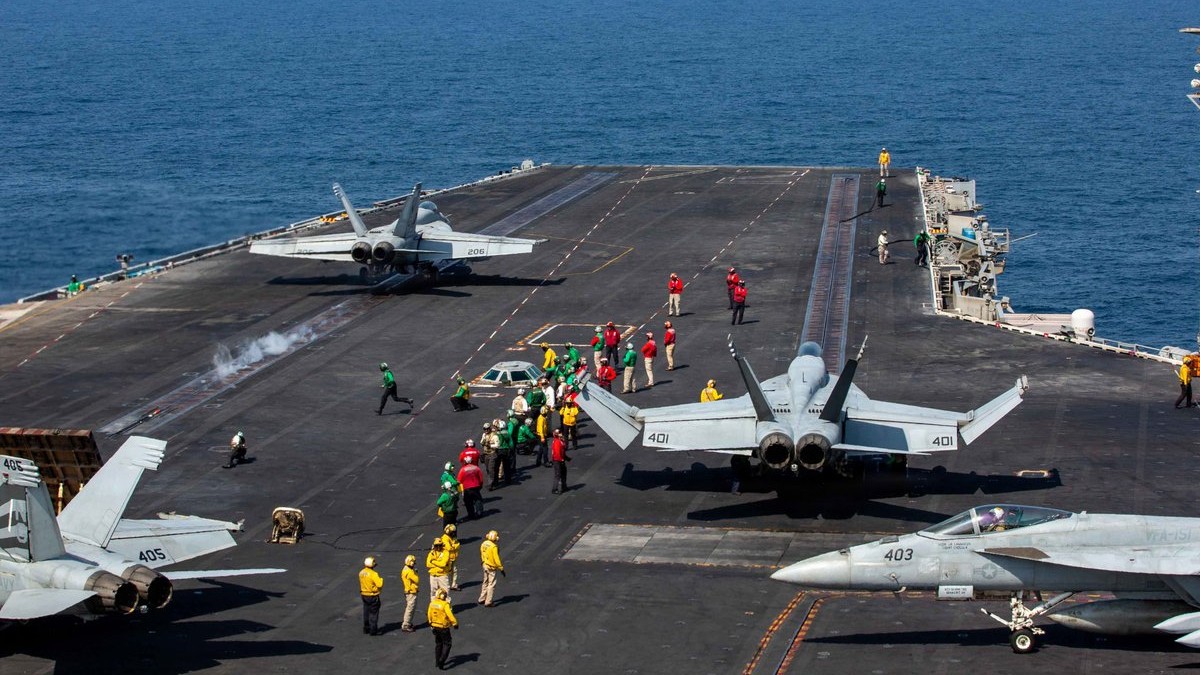
After the night operation on February 28, U.S. Central Command (CENTCOM) denied Iranian claims that ballistic missiles struck the aircraft carrier USS Abraham Lincoln. At the same time, U.S. President Donald Trump announced significant losses for the Iranian fleet — in particular, the sinking of nine ships. We break the claims down and explain why this matters.
Official U.S. position
"The Lincoln was not struck", CENTCOM states, adding that the carrier continues to carry out support missions in the region.
"Last night, U.S. B-2 stealth bombers, armed with 2,000 lb. bombs, struck Iran’s hardened ballistic missile facilities. No nation should ever doubt America's resolve."
— U.S. Central Command (@CENTCOM)
The command's releases also mention the use of strategic B-2s with 2,000-pound bombs against sites related to ballistic missiles. CENTCOM reports injuries and deaths among U.S. service members: three killed, five seriously injured, and several others with minor injuries and concussions.
What Iran claims and where the discrepancies are
The Islamic Revolutionary Guard Corps (IRGC) claimed it struck the U.S. aircraft carrier with ballistic missiles. CENTCOM denies this. Reports from the U.S. side also mention the damaged corvette Jamaran near Chah‑Bahar — the U.S. side called on the Iranian crew to abandon ship.
Trump's declarations and their role
"We destroyed and sank nine Iranian military ships... We're coming after the rest — they'll be at the bottom of the sea soon too!"
— Donald Trump, President of the United States
This is a powerful public statement from a head of state — it has both military and signaling dimensions. Often such assertions serve to demonstrate resolve and to mobilize support at home and among allies; at the same time they can contain elements of political rhetoric that should be verified by independent sources.
The most serious claims and the need for verification
Several reports also included the claim of the death of Iran's Supreme Leader Ali Khamenei and the temporary appointment of his successor. This is an extraordinary assertion with potentially unprecedented consequences for Iran's power structure. If confirmed, the implications would be a key factor in assessing further escalation; if not, it is an example of informational pressure during hostilities.
Consequences for the region and for us
This operation is not only an attack on targets or ships; it is a test of the U.S. ability to coordinate strikes, protect routes, and demonstrate readiness to respond. For Ukraine it is important to monitor several aspects: possible changes in global logistics for supplying defense materiel, risks of wider escalation in the Persian Gulf, and a signal to partners about the U.S. willingness to employ long-range force.
Conclusion
We have a combination of confirmed military actions (B-2 strikes, CENTCOM data on the status of the USS Abraham Lincoln and U.S. military casualties) and strong political statements (claims about sunk ships and the death of Iran's top leadership). The coming hours and days should provide additional verification. For now the key question is whether this will develop into systemic escalation that changes the region's security architecture, or remain a series of targeted strikes with predominantly tactical consequences.
Sources: official statements of U.S. Central Command, public statements of the U.S. president; regional security analysts stress the need for further verification of key claims.





