What happened
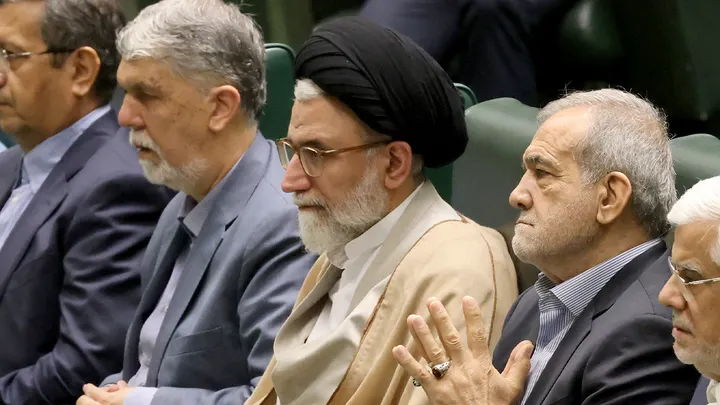
Israel said that Iran’s intelligence minister, Esmail Khatib, was killed in an overnight airstrike on Tehran. The claim was made by Israeli Defense Minister Kag, and the information is circulating in major media, including The Times of Israel.
According to reports, this is the third high-ranking Iranian official to die in the past 24 hours.
Who says this and what sources they cite
Fox News, citing a senior Israeli official, writes that the operation was carried out with the involvement of U.S. and Israeli intelligence capabilities. According to that account, Khatib was allegedly coordinating plots against American officials.
“This man had American blood on his hands. His network specifically targeted current and former U.S. officials.”
— a senior Israeli official (per Fox News)
Iranian President Masoud Pezeshkian confirmed Khatib’s death in a social media post.
Context: previous strikes and timeline
According to Israeli sources and media reports:
- Khatib headed the Ministry of Intelligence since 2021 and played a role in recent internal crackdowns in Iran.
- On March 17 Israel reported the elimination of other senior officials — notably Ali Larijani and Basij commander Gholamreza Soleimani.
- Since February 28 the U.S. and Israel have allegedly begun large-scale strikes on targets in Iran in response to the buildup of American military presence in the region; Iran has responded with missiles and drones.
- The Israeli military describes Iran’s Ministry of Intelligence as a “key structure” that conducts surveillance and covert operations beyond the country’s borders.
Why it matters
First, eliminating a target of this level in the heart of the capital is not only a tactical operation but also a signal of willingness to use high-precision strike and intelligence tools. Second, it raises the risks of regional escalation: removing key figures in Iran’s security apparatus could prompt reprisals and new sabotage actions.
What connection this has to Ukraine
Analysts, including LIGA.net, point to several channels of impact:
- Geopolitical attention of partners. A major escalation in the Middle East could divert the political and military resources of the U.S. and European allies — important for Ukraine, which relies on arms deliveries and diplomatic support.
- Economic consequences. Rising energy prices and transport risks could affect global markets, budget planning and inflation in partner countries.
- Opportunities for Ukraine’s defense industry. An expanded theater of conflict and the need for new solutions could open demand for Ukrainian defense products — but this also requires rapid adaptation and diplomatic promotion.
What may happen next
Likely scenarios range from local acts of retaliation and intensified intelligence activity to a broader cyclical escalation between regional forces and their partners. For Ukraine, it is critical to monitor developments and coordination among allies to minimize the risks of resource diversion while also seizing opportunities to strengthen its defense industry.
Conclusion
If confirmed, this operation demonstrates how modern warfare combines intelligence and international coordination. Readers should understand not only the fact of the killing but the chain of consequences — political, security and economic — including how they may affect Ukraine’s interests. Now the ball is in the court of diplomacy and verified intelligence — declarations must turn into concrete actions that preserve stability and secure support for our partners and for us.





