What happened
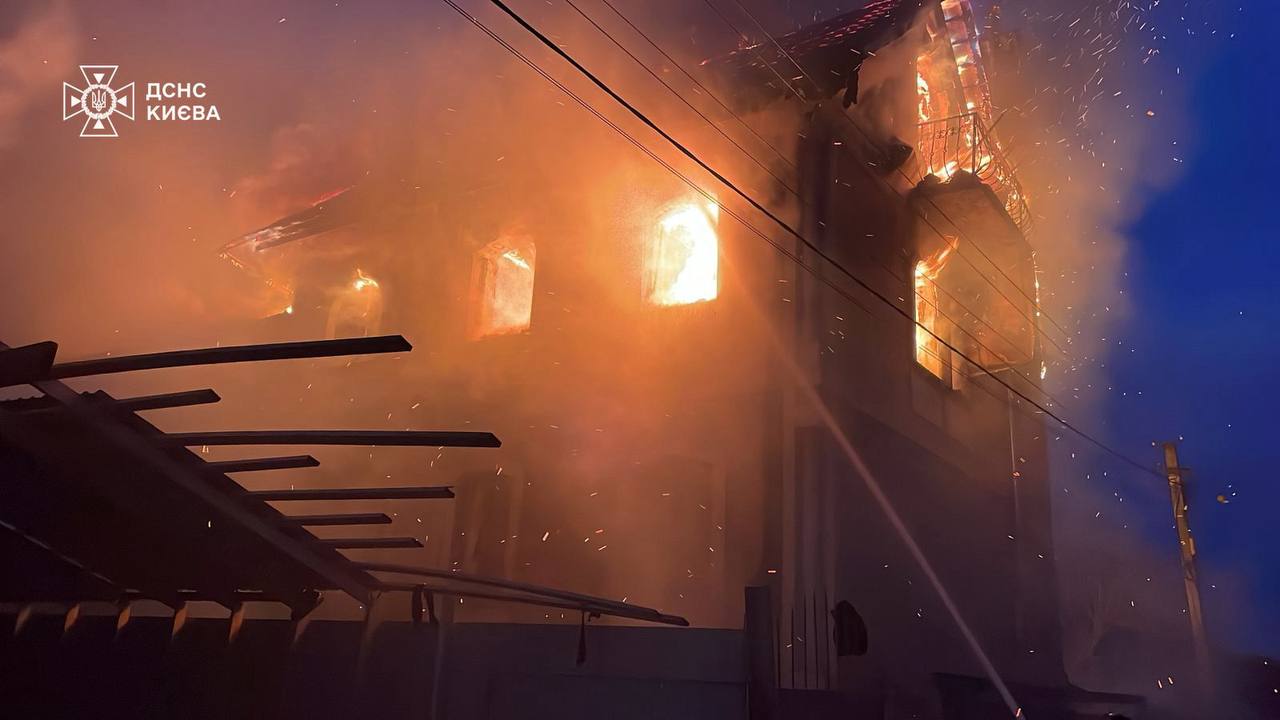
On the night of December 27, Kyiv suffered a combined strike — according to the State Emergency Service and city authorities, strike drones and high-speed targets (cruise missiles) were used against the city. As of 11:22, Mayor Vitali Klitschko reported 28 wounded, 13 of whom were taken to medical facilities.
"There are already 28 people injured in the capital, 13 have been taken to medical facilities"
— Vitali Klitschko, Mayor of Kyiv
Reports were updated several times: initially they spoke of isolated casualties and local fires, but later the number of injured rose to 28 — reflecting the scale of the strike across different districts.
Damage by district
Damage and fires have been recorded in at least seven districts of Kyiv.
In Holosiivskyi District, debris caused a fire near an auto repair shop — three cars were destroyed. In Obolonskyi District, debris fell in a dacha cooperative and on open ground, and vehicles were also damaged.
In Darnytskyi District, a strike hit a 24-story residential building: the top floor was on fire, technical floors were partially destroyed; private two-story houses were also burning. Due to the threat of fire spreading, 10 residents were evacuated from a home for the elderly located nearby. A tram depot sustained damage.
In Dniprovskyi District, debris struck several high-rise buildings (in one case there was a fire on the 3rd–4th floors; there is information about a possible person under the rubble on the 5th floor). Buildings in Desnianskyi, Shevchenkivskyi and Solomianskyi districts were also damaged.
Response by services
"The Russians launched a combined strike on the city"
— State Emergency Service of Ukraine
Rescuers extinguished a number of fires, are clearing debris and conducting evacuations, and medics are working on site and treating patients in hospitals. Head of the Kyiv City Military Administration Timur Tkachenko reported damage in seven districts of the city.
"Damage has been recorded in seven districts"
— Timur Tkachenko, Head of the Kyiv City Military Administration
The Air Force of the Armed Forces of Ukraine warned of the movement of UAVs and high-speed targets toward the capital — in the morning the attack continued, with strike drones and cruise missiles still heading toward the city.
"Throughout the night the Air Force warned of the movement of UAVs and high-speed targets toward the capital"
— Air Force of the Armed Forces of Ukraine
Context and consequences
This attack is part of a strategy of mass use of drones and cruise missiles to create gaps in air defense systems and to put pressure on civilian infrastructure. The consequences are clear: destruction of housing, damage to transport and communications, and additional strain on the medical system and rescue services.
Experts and military analysts note that the combination of target types — drones and missiles — aims to exhaust air defense assets and stretch response resources. For residents, this means it is especially important to heed official warnings and have an action plan in case of new air raid alerts.
What comes next
Kyiv authorities and rescue services are already working to eliminate the consequences. The next hours and days will be important for establishing the final number of victims, assessing the damage and restoring infrastructure. For the state, this is another test of the resilience of the civil defense system and the ability of partners to strengthen air defenses and provide humanitarian assistance.
Questions for partners and local authorities: are there sufficient resources to protect densely populated neighborhoods, and how can the repair of damaged facilities be accelerated? The answers to these questions will determine how strong the defensive line for civilians will be in subsequent waves of attacks.