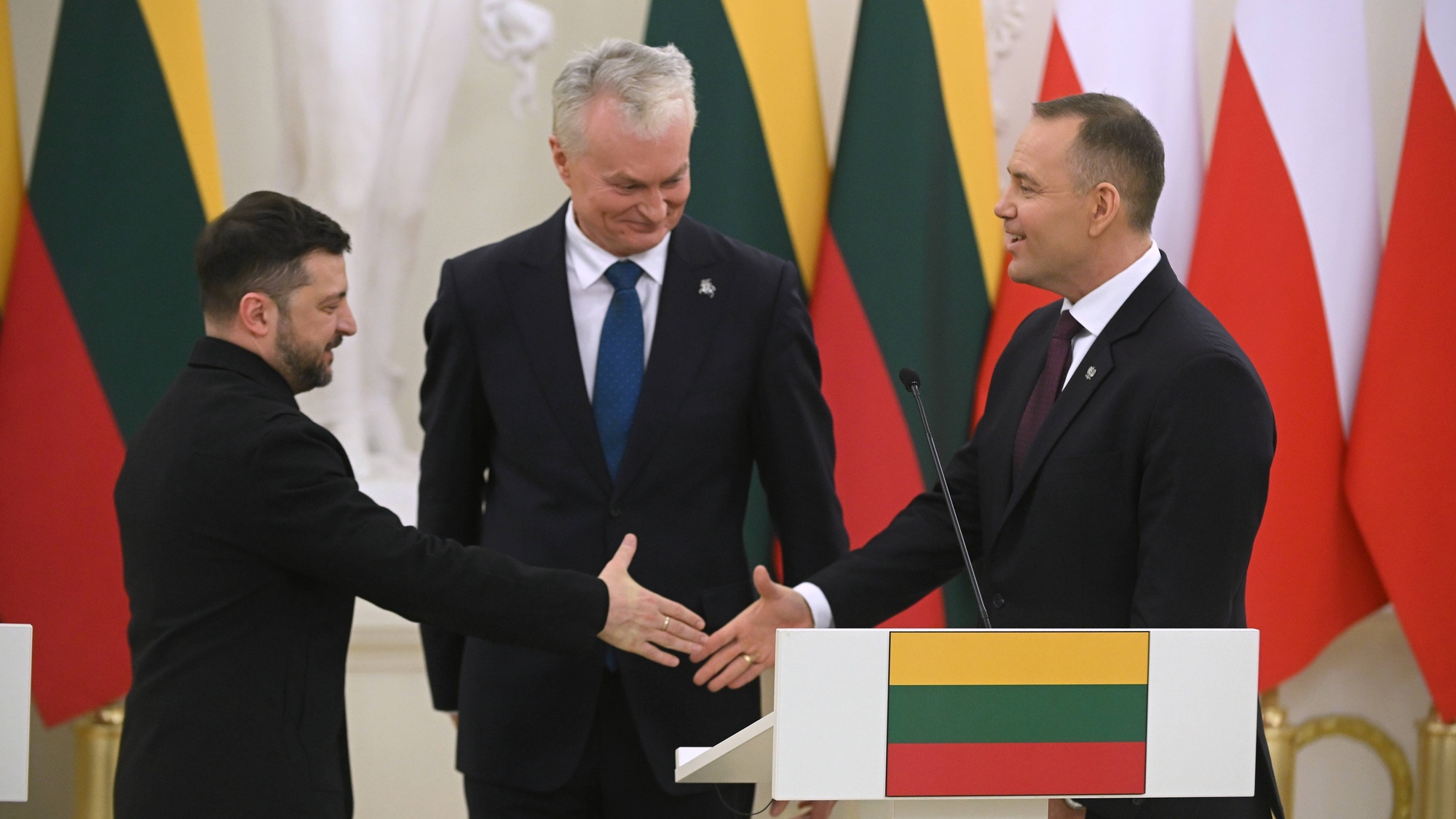
Gitanas Nausėda, President of Lithuania, has publicly offered his candidacy as a possible mediator between Warsaw and Kyiv — should such a need arise in bilateral relations. He emphasized his personal relationships with the presidents of both countries as a key resource for such a role.
The proposal sounds neutral, but the context is not. Polish-Ukrainian relations over the past two years have been marked by chronic tensions over grain transit, rhetoric from Polish politicians ahead of elections, and painful discussions about Volhynia. Vilnius, which has none of these irritants in its relations with Kyiv, is indeed in a comfortable position as an outside observer with the trust of both sides.
Why Lithuania
Lithuania is not a neutral country in the classical sense. Vilnius systematically supports Ukraine's Euro-Atlantic integration, participates in programs for training Ukrainian military personnel, and has never publicly competed with Kyiv economically the way Warsaw has. This gives Nausėda a mandate of trust that Berlin or Brussels does not have, for example.
At the same time, Poland is Lithuania's strategic partner within both NATO and regional formats such as the Lublin Triangle. Balancing between Warsaw and Kyiv for Vilnius means not sacrificing any of its priorities — but rather strengthening its own regional weight.
What This Means in Practice
For now, Nausėda's statement is a signal of readiness rather than a concrete proposal with an agenda. No formal request has come from Poland or Ukraine, no negotiation mechanism has been announced. In fact, the Lithuanian president has opened the door without knowing exactly whether anyone will knock.
A real need for mediation will arise if tensions between Warsaw and Kyiv escalate again — for example, in the context of new disputes over EU agricultural policy or if the Volhynia issue returns to the forefront of Polish domestic political discourse. That is when we will see whether Nausėda's personal relationships carry more weight than the structural contradictions between the two countries.
The question is not whether Lithuania is an acceptable mediator — it probably is. The question is whether both sides are ready for a mediation format at all, or whether each believes that time and pressure will resolve the problem better than any third party.