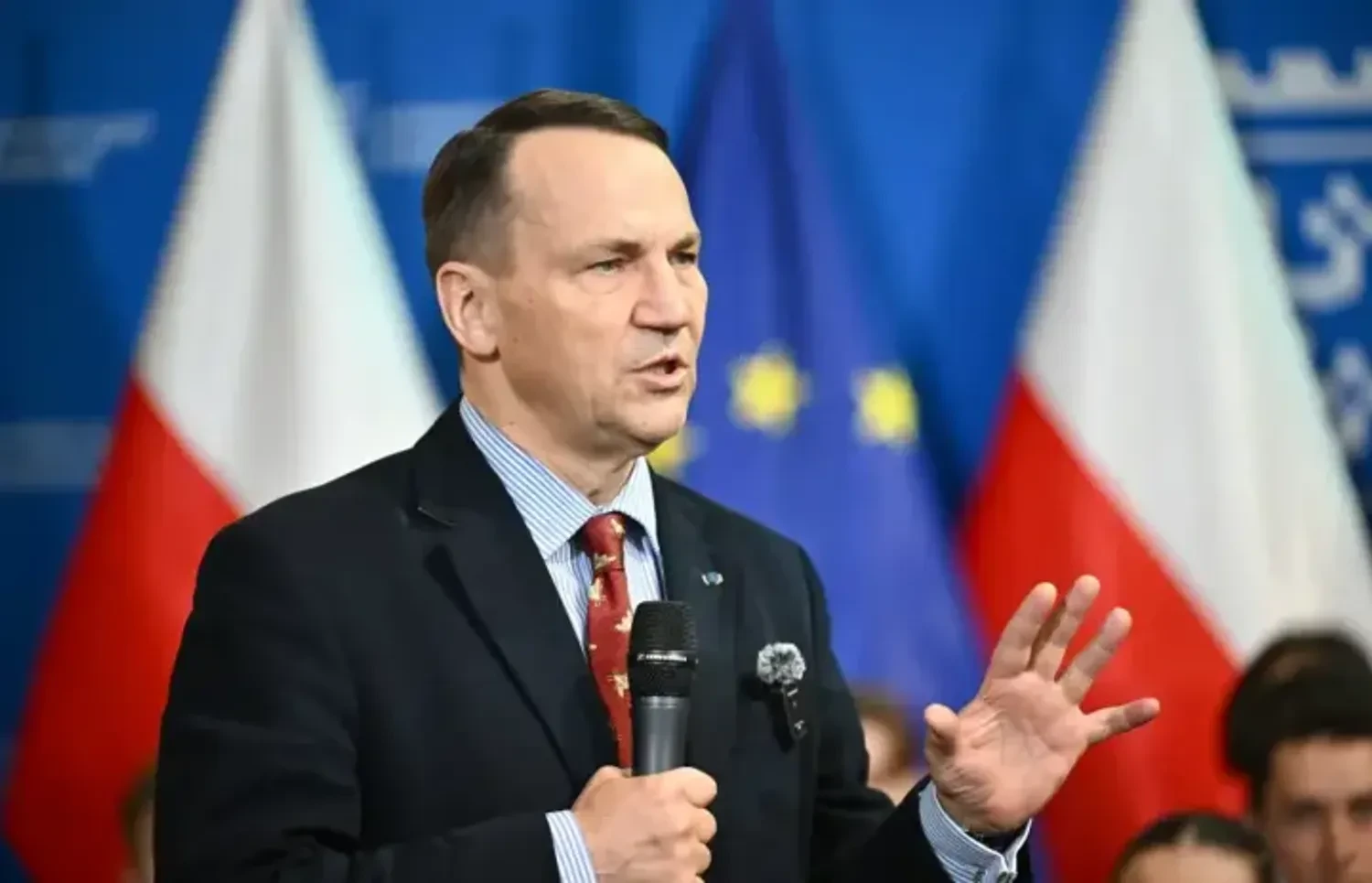
In August 1939, the Abwehr dressed its agents in Polish uniforms, staged an "attack" on the radio station in Gleiwitz — and the next day Hitler announced a counteroffensive. Eighty-seven years later, Polish Foreign Minister Radosław Sikorski used this very episode as a warning.
"I do not rule out that the Russians will carry out some operation under a false flag against their own territory in order to get a pretext for striking one of the NATO countries."
Radosław Sikorski, interview with CBS News
The statement did not come in a vacuum. The Kremlin has been ramping up rhetoric in recent weeks about the alleged preparation of the West to attack Russia — precisely the narrative that typically precedes staged incidents. Sikorski directly pointed to the connection: Putin's words that "if NATO attacks — Russia will respond" sound like an announcement of a scenario, not a reaction to a real threat.
Why now — and why it hasn't happened yet
According to Sikorski's assessment, Ukraine's successful resistance continues to deprive Moscow of resources for an invasion of NATO's eastern flank. This is not merely a diplomatic compliment to Kyiv — it is a concrete logic of deterrence: while Russia keeps about 90% of its combat power on the Ukrainian direction, a dash to the Baltics or Poland remains a logistical impossibility.
At the same time, the commander of Latvia's Armed Forces, Kaspars Pudans, has already warned that Russia may attempt to use a "window of opportunity" by the end of 2028 — if it manages to rebalance forces after Ukraine.
Poland is responding not with words. In 2025, Warsaw spent approximately 4.3–4.5% of GDP on defense — significantly above NATO's new threshold of 3.5% agreed upon at the Hague Summit. At the same summit, the Alliance launched Operation Eastern Sentry to strengthen vigilance along the entire eastern flank.
Mechanism of provocation: what makes it "convenient"
- Plausible deniability: an incident on Russian soil immediately puts the West in the position of having to "prove a negative" — disproving is harder than accusing.
- Speed: a decision to invoke Article 5 requires consensus from 32 countries — the time between a provocation and NATO's response is a strategic resource for Moscow.
- Domestic effect: for the Russian audience, the picture "we were attacked" matters more than any evidence — as shown by the experience with the "Buk" over Donbas in 2014.
The Center for Countering Disinformation is already registering the preparatory element: Russia, according to its data, is preparing provocations with Polish symbolism in Ukraine — in order to sow distrust between Warsaw and Kyiv before any major incident.
If a ceasefire in Ukraine does occur and Russia gains the ability to shift resources westward — will Sikorski's warning remain merely diplomatic rhetoric, or will it transform into an operational task for NATO intelligence services with specific triggers for response?







