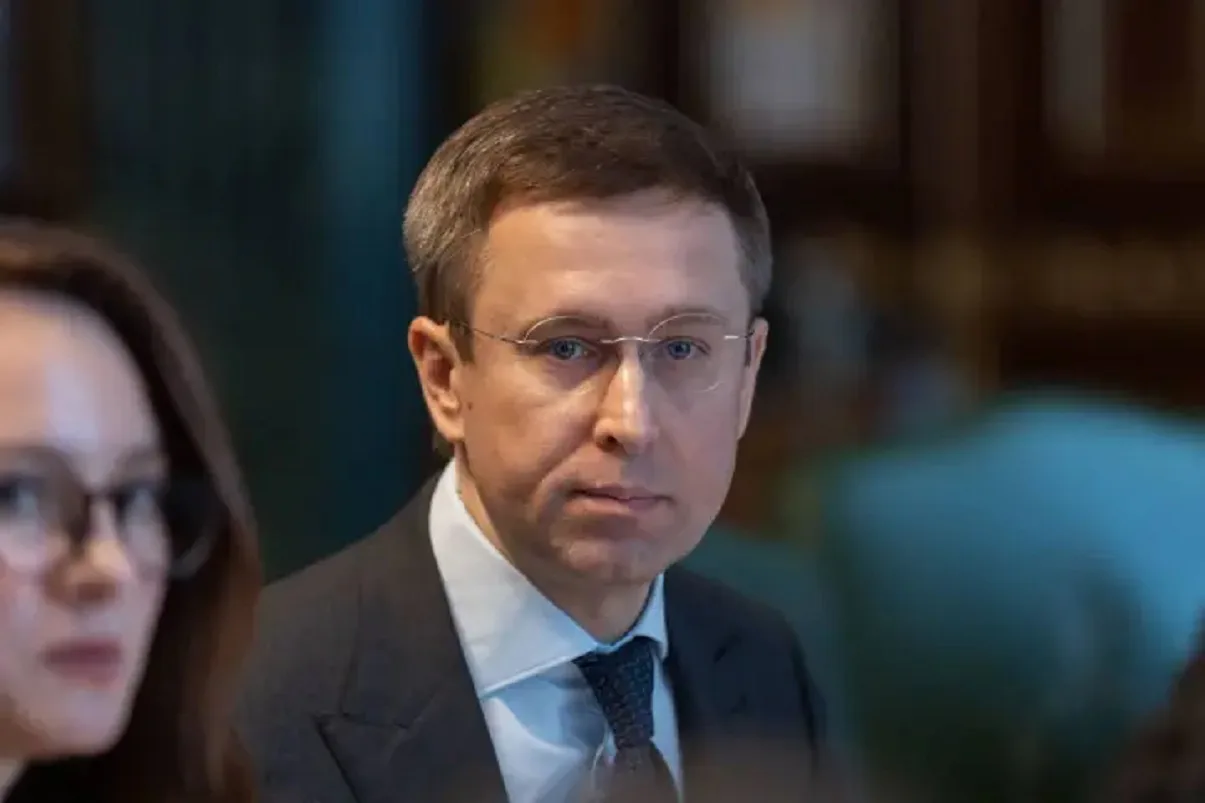
On July 15, President of Ukraine Volodymyr Zelensky officially submitted to the Verkhovna Rada a proposal to appoint Sergii Koretsky as Prime Minister. Parliament Speaker Ruslan Stefanchuk confirmed receipt of the documents and promised to consider them "in the near future in accordance with the established procedure." The relevant committee has already recommended the candidate for a vote.
Who is Koretsky and why him
Until 2022, Sergii Koretsky had no experience in the public sector. His entire career was in the private energy business: analyst, then CEO of the Continuum group, general director of the WOG gas station network. In November 2022, he took over the nationalized Ukrnafta and Ukrtanafta, and from April 2025 — the National Joint-Stock Company Naftogaz of Ukraine, having passed a competitive selection by the supervisory board.
Zelensky's argument is direct: "If we are entering winter, we must prepare. That is why Sergii Koretsky, after all consultations, is probably the most prepared person for the position of Prime Minister," the president said during a joint press conference with European Commission President Ursula von der Leyen. In other words, the Prime Minister is being chosen primarily as a crisis manager for energy, not as a politician.
Another telling detail: Koretsky accompanied Zelensky at the NATO summit in Ankara — before any official announcements. His candidacy was presented to Western partners in advance.
How the reshuffle happened and where Svyrydenko disappeared
The chain of events developed rapidly. On July 12, Zelensky met with Svyrydenko and Koretsky at Bankova and posted on social media — the Servant of the People faction learned about the government reshuffle from the same Telegram as everyone else. On July 14, the Rada voted to remove Prime Minister Yulia Svyrydenko and the entire Cabinet of Ministers. On July 15 — submission of Koretsky's nomination.
Denys Shmyhal, who headed the government for over five years — a record for all of Ukraine's independence — also resigned on July 16. According to NV, he will likely move to the position of Defense Minister to replace Rustem Umerov.
"Parliament will consider the submission in the near future in accordance with the established procedure"
Ruslan Stefanchuk, Speaker of the Verkhovna Rada
Parliament's reaction: cautious support and conditions from the opposition
The European Solidarity faction held a meeting with the candidate. According to the co-chair of the faction Iryna Herashchenko, Koretsky began the conversation with a promise to maintain constant dialogue with all parliamentary forces. European Solidarity separately advised him, if appointed, to immediately return Mykhailo Fedorov to the composition of the new Cabinet.
Davyd Arakhamia noted that Koretsky presented to the Servant of the People faction his vision of government work and his management experience was recognized as useful. However, both deputies of the mono-majority and the opposition learned about personnel decisions after the fact — from the president's posts. This has already become an established procedure at Bankova during government rotations.
A technocrat in a wartime position: what does this mean in practice
Koretsky is the first Prime Minister of Ukraine without experience working in public politics or civil service before the start of the full-scale war. His mandate, judging by the logic of his appointment, is narrow and specific: to survive the heating season of 2025–2026, which experts already call the most difficult in years of armed conflict. In parallel — to continue negotiations with the IMF and donors, where the reputation of a state company manager matters more than party loyalty.
Koretsky is not a member of the Servant of the People and has no independent political base — which makes him fully dependent on the presidential office. This is convenient for Bankova, but means that the Prime Minister will have minimal space for independent decisions on matters outside energy and economics.
If Koretsky manages to lead the country through winter without large-scale blackouts — his positions will strengthen and he will be able to claim a broader mandate. If not, the president will have a ready-made "lightning rod" without political costs for the Servant of the People.







