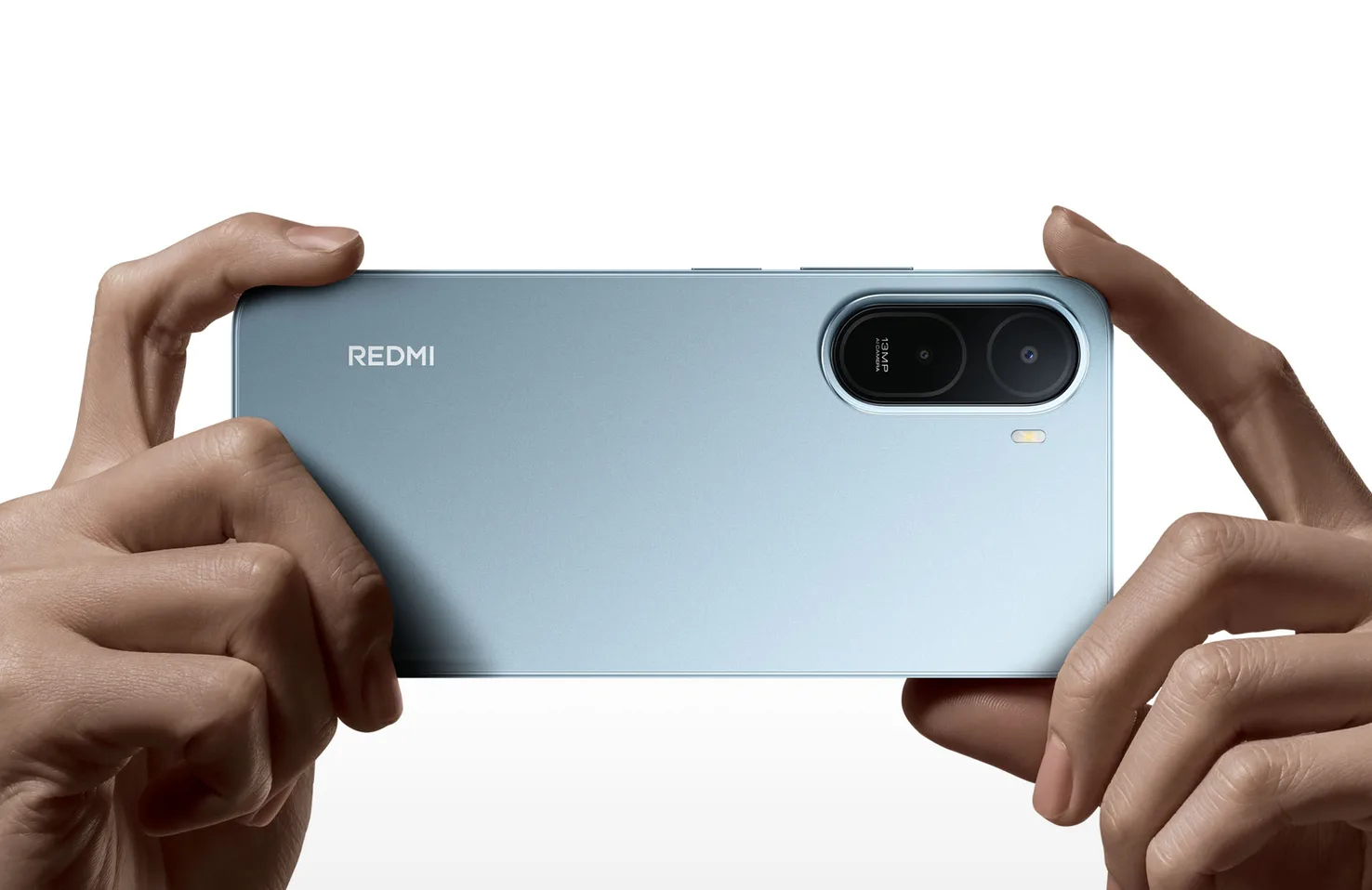
For €129.90 in Italy — the first European market — a buyer receives a smartphone with a 6.9-inch IPS screen at 120 Hz, a 6000 mAh battery and Android 16 "out of the box". The Redmi A7 Pro appeared in global sales on April 15, 2026 — two months after its debut in Malaysia. In addition to Europe, the device is available in the UAE and several other markets.
What's inside for the money
Processor — Unisoc T7250 on a 12-nanometer process. This is not a flagship chip, but for basic tasks — social networks, browser, navigation — there are enough resources. Physical memory of 4 GB is supplemented by RAM expansion technology up to 8 GB at the expense of flash memory; storage — 64 or 128 GB (UFS 2.2) with microSDXC support.
Screen — HD+ (720×1600), which in 2026 is a compromise even for the budget segment. However, 120 Hz in this category is a real advantage: most competitors still limit themselves to 60–90 Hz. Peak brightness — 650 nits, thickness — 8.2 mm, weight — 210 g.
Camera — 13 MP (dual rear module with AI processing) and 8 MP front. Charging — 15 W: to fill a 6000 mAh from zero will take about two hours. There is a 3.5 mm jack, side fingerprint scanner, Bluetooth 5.4, Wi-Fi 5. NFC is present, but availability depends on the market.
Key detail, which is rarely found in this price range: Xiaomi promises four major Android updates. That is, a device purchased now on Android 16 will theoretically receive support up to Android 20. For a phone at €130, this is an atypical level of commitment.
Context: why Xiaomi sells cheaper when cheap phones are becoming unprofitable
The Redmi A7 Pro is coming out at a time when the manufacturer itself is publicly withdrawing from the low price segment. According to IDC, in the first quarter of 2026, Xiaomi shipments fell 19.1% year-on-year — the largest among the five leading brands. IDC qualifies this as an intentional strategy: the company is deliberately reducing volumes on cheap devices to maintain profitability.
"Memory costs have increased by almost 300% compared to last year and now account for over 65% of the cost of devices in the lower price segment, making survival increasingly difficult for manufacturers with budget portfolios".
Nabila Popal, Senior Director of Research, IDC Worldwide Consumer Devices
Against this background, the Redmi A7 Pro looks like an attempt to maintain a presence in the under-€150 segment in Europe, without moving into the zero-margin zone. According to market analysts, in 2025, IPS LCD retains 32% of the share in Europe precisely in devices under €300, where Redmi competes with Motorola G-series and Samsung Galaxy A0x.
What the device does not offer
- 5G is absent — in 2026, this is already a noticeable limitation, especially considering that 5G penetration in Western Europe exceeded 60% already in 2024.
- Screen resolution HD+ (720p) lags behind competitors in the same price category, where Full HD+ is increasingly common.
- 15 W charging — a standard from 2019–2020; competitors offer 33–45 W even in the budget segment.
The question is not whether it's worth buying the Redmi A7 Pro for €130 — for its class, it's a balanced device. The question is whether Xiaomi will fulfill its promise of four major Android updates for a budget phone: if so, it will change the support standard in the segment; if not, it will remain a marketing line in the press release.







