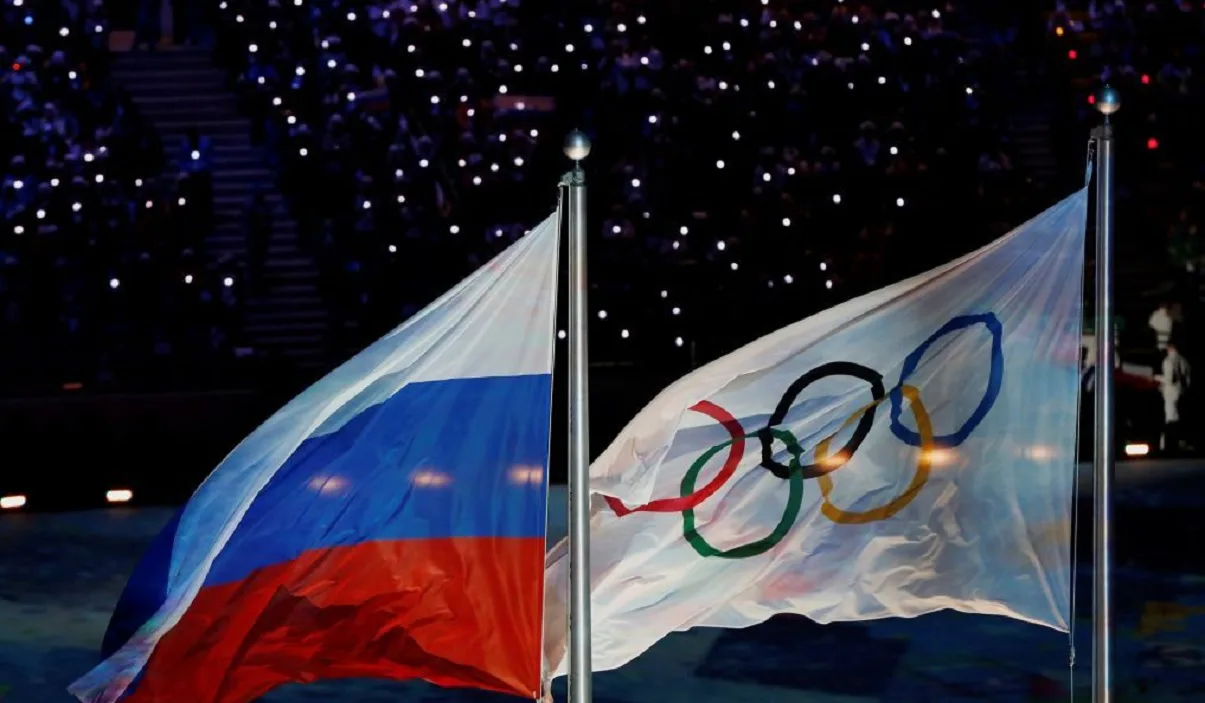
When on July 7 the International Olympic Committee officially restored the membership of Russia's Olympic Committee and cancelled recommendations on restricting Russian athletes' participation, Kremlin spokesman Dmitry Peskov immediately appeared before journalists. "An important step towards restoring the legitimate rights of our athletes," he said. For the propaganda machine, it was a ready-made message: sanctions don't work, isolation has been broken through, the world is returning.
Not One Decision, But a Chain
The IOC's decision was not sudden. As Euromaidan Press documented, Russia's return to international sports happened gradually and quietly — long before the July vote. The International Gymnastics Federation cancelled all restrictions back in May without any public explanation. That same month, federations of wrestling, muay thai, sambo, judo and taekwondo restored Russians' right to compete under the national flag and with the national anthem. In December, chess joined them — with approving comments from Moscow.
This pattern, according to the publication's assessment, points not to a change in the battlefield situation, but to Moscow's influence within the federations themselves.
The Mechanics of Propaganda
The Disinformation Counteraction Center of Ukraine's National Security and Defense Council (DCC) documented how exactly the Kremlin monetizes the IOC's decision in the information space. Propagandists are pushing two parallel narratives: for domestic audiences — "sanctions are ineffective," for external ones — "Russia is returning to normalcy." The DCC reminds that for Russia, sport has never been separate from politics — it has always been a tool of "soft power" to justify the Kremlin's actions and whitewash the image of the aggressor state.
"The return of the Russian flag and anthem to world competitions at a time when occupying forces continue to wage a brutal war against Ukraine is unacceptable. The state symbols of Russia, under which Ukrainians die every day, cannot be part of the international sports movement."
— Disinformation Counteraction Center of Ukraine's National Security and Defense Council
Europe's Response
The IOC's decision provoked a harsh response at the EU level. According to Euromaidan Press citing Politico, MEPs called for stripping the IOC of European funding. Ukrainian parliamentarians in a letter to the IOC — a draft of which Kyiv Independent saw — wrote that the organization had given "the Kremlin a significant propaganda victory while Russia continues to bomb Ukraine night after night."
Ukraine's Sports Minister Matviy Bidnyi called the decision "an alarming signal" and urged federations to maintain their own bans. Presidential Envoy on Sanctions Policy Vladyslav Vlasiuk said the IOC's decision contradicts the logic of international sanctions pressure.
Formal Safeguards Exist. But They Don't Stop Federations
The IOC included a number of conditions in its decision: enhanced anti-doping testing for all Russian athletes, a ban on holding their own events on Russian territory, prohibition of attendance at Olympic events for Russian officials. The Executive Committee reserved the right to "quickly reinstate strict sanctions" in case of violations.
The problem is different: these conditions apply directly to the IOC — but not to individual federations, which have now been given authority. Gymnastics, wrestling, judo have already made decisions before any official "obligations." The IOC's decision does not provide a mechanism that would force them to coordinate athlete admission with the actual state of the war.
If by the 2028 Los Angeles Olympics most major federations restore full status to Russian athletes, the question will no longer be whether the IOC is a tool of pressure — but whether it will remain one at all.