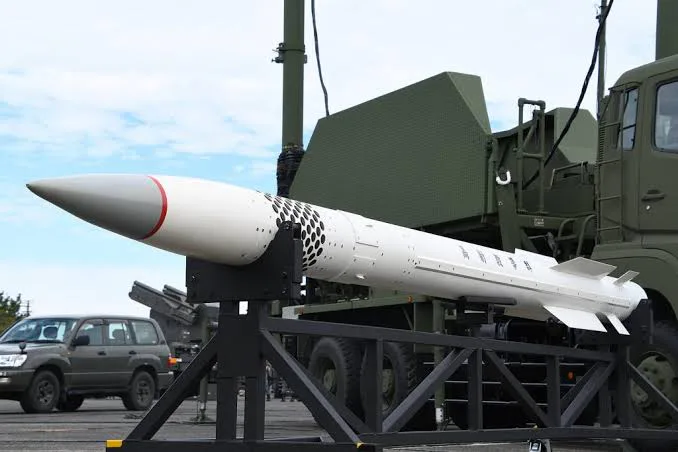
At the NATO summit in Ankara, Donald Trump announced that the United States would provide Ukraine with a license to manufacture Patriot missiles. "We will show you how it's done, it's very complicated, but you will quickly understand the complexity," NV quotes the American president. If the license is indeed formalized, Ukraine will become the third country in the world with such rights — after Japan and Poland.
But from signature to the first serial missile — there are years of concrete work ahead. Fire Point CEO Irina Terekh estimates a minimum horizon of 4–6 years, and only if three conditions are met simultaneously.
Where the real bottleneck is
Terekh clarifies: the main barrier is not solid-fuel engines. Ukrainian enterprises are already mastering their production. The critical problem is seeker heads (GSN), which are manufactured by highly specialized subcontractor companies, and without transferring a license specifically for these components, all other progress will be meaningless.
"If we assess it — it's probably 4 to 6 years, but on the condition that licenses for manufacturing critical components are also transferred, which will be the bottleneck in manufacturing this missile."
Irina Terekh, CEO Fire Point, UNN
The second structural challenge is the architecture of production itself. Under conditions of constant Russian strikes, Ukraine cannot build one large factory. A distributed, protected, and duplicated network of sites, resistant to precision strikes, is being planned. This complicates logistics and quality control, but it is the only realistic model for wartime.
What the experience of others shows
Precedents do not add optimism regarding timelines. As Defense Express analyzes, Japan in 2006 agreed with the United States on licensed assembly of PAC-3 at Mitsubishi Heavy Industries facilities — and spent two years just mastering assembly. Meanwhile, a number of key components, including those very same seekers, are still supplied from the United States.
Poland began negotiations on localizing MSE missile components back in 2018. Production of cross-range maneuvering engines received certification only in September 2025 — seven years after the agreements. And this is just one component, not a full cycle. According to UNIAN citing analysts, a full production cycle under such conditions could take over 5–10 years.
- Japan — the only country outside the US with licensed PAC-3 assembly; partial localization, seekers — imports.
- Poland — a seven-year path to engine certification alone; full localization still ahead.
- Ukraine — received a public promise, but a licensing agreement has not yet been signed.
What remains uncertain
Defense Ministry advisor Sergiy Beskrestnov, quoted by Suspilne, warns: technically everything is realistic, but deployment of production "could drag on for a year or more" even after obtaining the license. The key uncertainty is whether American subcontractor companies will agree to share technologies for manufacturing seeker heads, rather than merely transferring finished components.
If the US limits the license to assembly from American parts — Ukraine will receive a production line, but will not achieve strategic independence from the American supply chain. Whether the license will be full-scale or merely "screwdriver assembly" — will become clear at the moment of signing a specific agreement, not from the podium of a summit.







