Israel's request: what happened
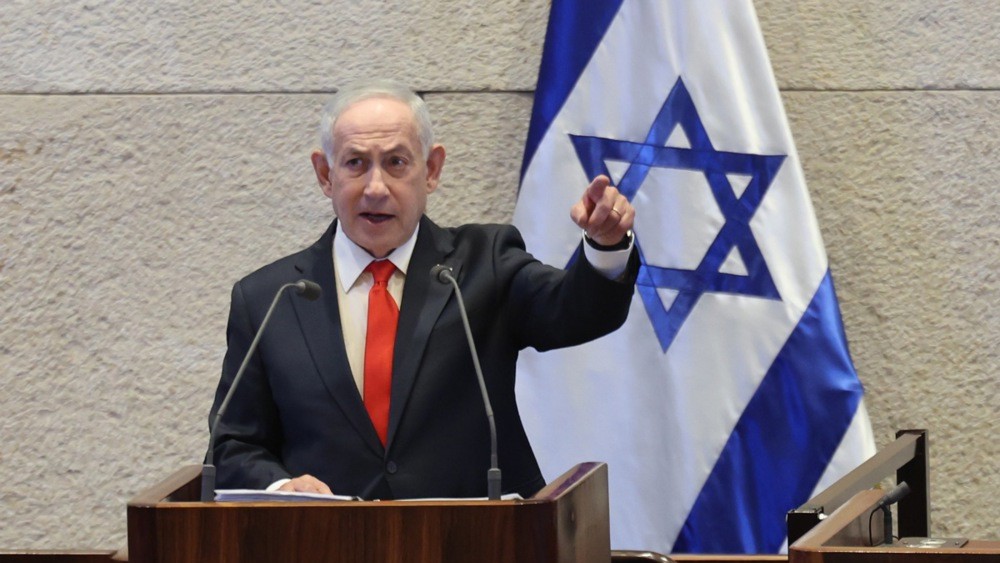
Israeli Prime Minister Benjamin Netanyahu reached out to President Volodymyr Zelensky with a request to hold talks on cooperation to counter Iranian drones, Ynet reports. Ukrainian Ambassador to Tel Aviv Yevhen Korniichuk confirmed the media version and clarified that the call has not yet taken place due to scheduling, but may occur early next week.
Why this matters for Ukraine
Ukraine has practical experience intercepting Iranian-made drones, accumulated during the defence against repeated attacks by the occupiers. It was this experience that drew Israel's attention: this is not about exchanging declarations, but about operational tactics and technologies that have already worked in real combat — hence the interest represents a form of technological trust.
For the domestic defence industry this is a chance for practical cooperation and contracts, and for the Armed Forces of Ukraine — an opportunity to obtain additional systems and ammunition. As LIGA.net wrote, Ukraine has simultaneously asked partners for PAC-2 and PAC-3 missiles for the Patriot — such munitions specifically enhance the ability to shoot down ballistic targets.
Risks: escalation and diplomatic costs
While the prospects look promising, there is a direct warning: official Iranian figures have already alerted to possible consequences. Head of the Parliament's National Security Commission of Iran Ibrahim Azizi said that if Ukraine assists Israel, Tehran may consider our country a potential military target. This is not hypothetical rhetoric but a factor that must be taken into account in the risk management of foreign policy.
"The request was submitted, but due to scheduling constraints the call has not yet taken place. I hope the conversation will take place early next week."
— Yevhen Korniichuk, Ukraine's ambassador to Israel
Context of international requests
Zelensky previously said that Ukraine had received requests from six countries for help in defending against Iranian drones; separate appeals also came from the United States and Jordan. At the same time, significant resources have already been sent to the region: the U.S. Army Secretary Driscoll mentioned the delivery of Merops interceptor drones, which were tested in the Ukrainian conflict.
What next: options and consequences
Possible scenarios for a conversation between Netanyahu and Zelensky range from exchanging intelligence and interception methodologies to practical agreements on equipment supplies or joint exercises. For Ukraine the key task is to turn the request into concrete benefits: technological assistance, contracts for the defence industry, and security guarantees that would reduce the risks of escalation.
Experts note that cooperation will be more valuable if accompanied by diplomatic steps to minimise risks from Iran — meaning not only equipment, but a comprehensive security strategy.
Conclusion
Netanyahu's request is both an opportunity and a test. For Ukraine it is a chance to turn combat experience into a geostrategic advantage and economic contracts for the defence sector. At the same time, any decision to engage must consider possible repercussions from Iran and be coordinated with partners so as not to increase risks for the country. The ball is now in Kyiv's court and its diplomats' hands: can they extract the maximum benefit from this contact without unnecessary escalation?
"If Ukraine helps Israel, Iran may consider it a legitimate military target."
— Ibrahim Azizi, head of the Parliament's National Security Commission of Iran





