What happened
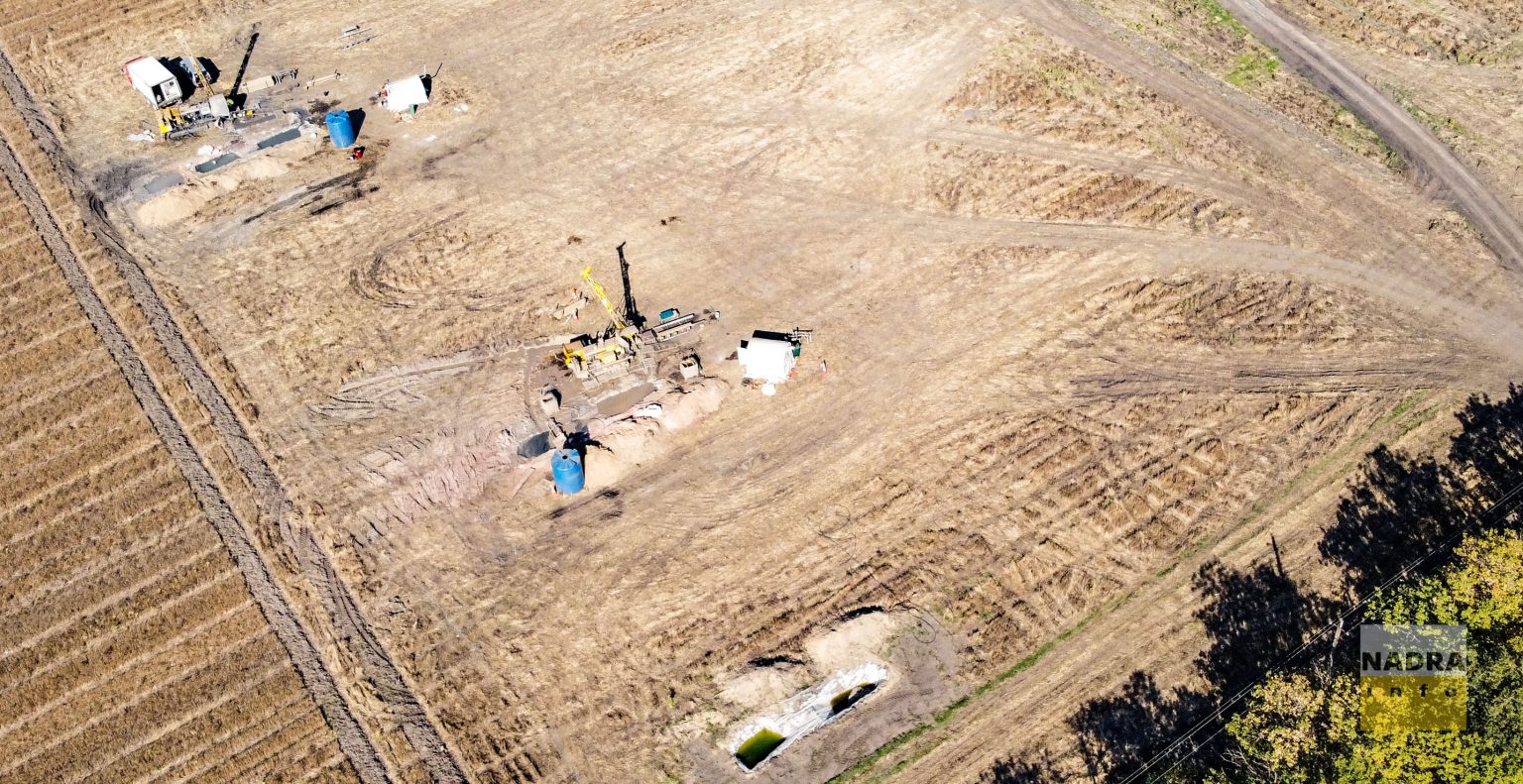
The State Service of Geology and Subsoil annulled the special permit of Spis Ukraine LLC (Onur group) for the Zhovtovodska area in Dnipropetrovsk region after the company itself renounced the permit. The industry publication NADRA.info was the first to publish the information.
Why the investor refused
Onur explained the decision by saying the actual gold content in the ore turned out to be significantly lower than expected: 1.4 g/t instead of the forecast 4.5 g/t. At those levels mining becomes economically unfeasible. At the same time, the company had earlier reported unsatisfactory exploration results and intended to seek reimbursement of expenses from the State Service of Geology and Subsoil (Derzhgeonadr).
"They drilled 12 boreholes, a foreign company. There's no gold. Not even close. Not even thousandths of a gram per tonne."
— Oleksiy Falkovych, director of LLC "Geological Service Company GSK", Candidate of Geological Sciences
"Therefore we do not see prospects in this area and do not plan to invest further."
— Emre Karaahmetoglu, CEO of Onur Group in Ukraine
Context and consequences
The area was acquired by Spis Ukraine LLC at an online auction of the State Service of Geology and Subsoil in December 2020 for over UAH 5.7 million; the special permit was granted in February 2021, and control of the company was established by the Onur group in April 2021. At the end of 2021 the first reports of unsatisfactory drilling results appeared.
After relinquishing the permit, Onur, according to NADRA.info's calculations, still controls eight other license areas with deposits of limestone, sand, granite, graphite and other minerals.
Niobium is included on the list of strategic and critical minerals in Ukraine; niobium and gold are mentioned among the components whose extraction projects could feed the U.S.–Ukrainian Reconstruction Investment Fund. The investor's refusal of one license area does not mean a loss of potential — it is a signal of the need for more accurate geological assessment and a realistic approach to investor risk.
What next
The practical outcome — the area has been returned to the state register, and it may appear at a new auction. This is a test for state procedures: whether they can quickly and transparently redistribute rights so that resources serve the national interest rather than speculative expectations.
The context is also reinforced by a recent government decision: on March 10, 2026 the Cabinet of Ministers annulled licenses for three titanium deposits linked to sanctioned entities and will put them up for auction. The trend toward open tenders and a rethinking of rights to mineral resources could change the rules of the game for reconstruction investments.
Experts and industry publications note that investors need reliable exploration data, and the state needs an effective mechanism for reclaiming and reassigning license areas. Whether we turn this case into strengthened transparency and control is a question with direct implications for future investment and the national economy.







