What happened
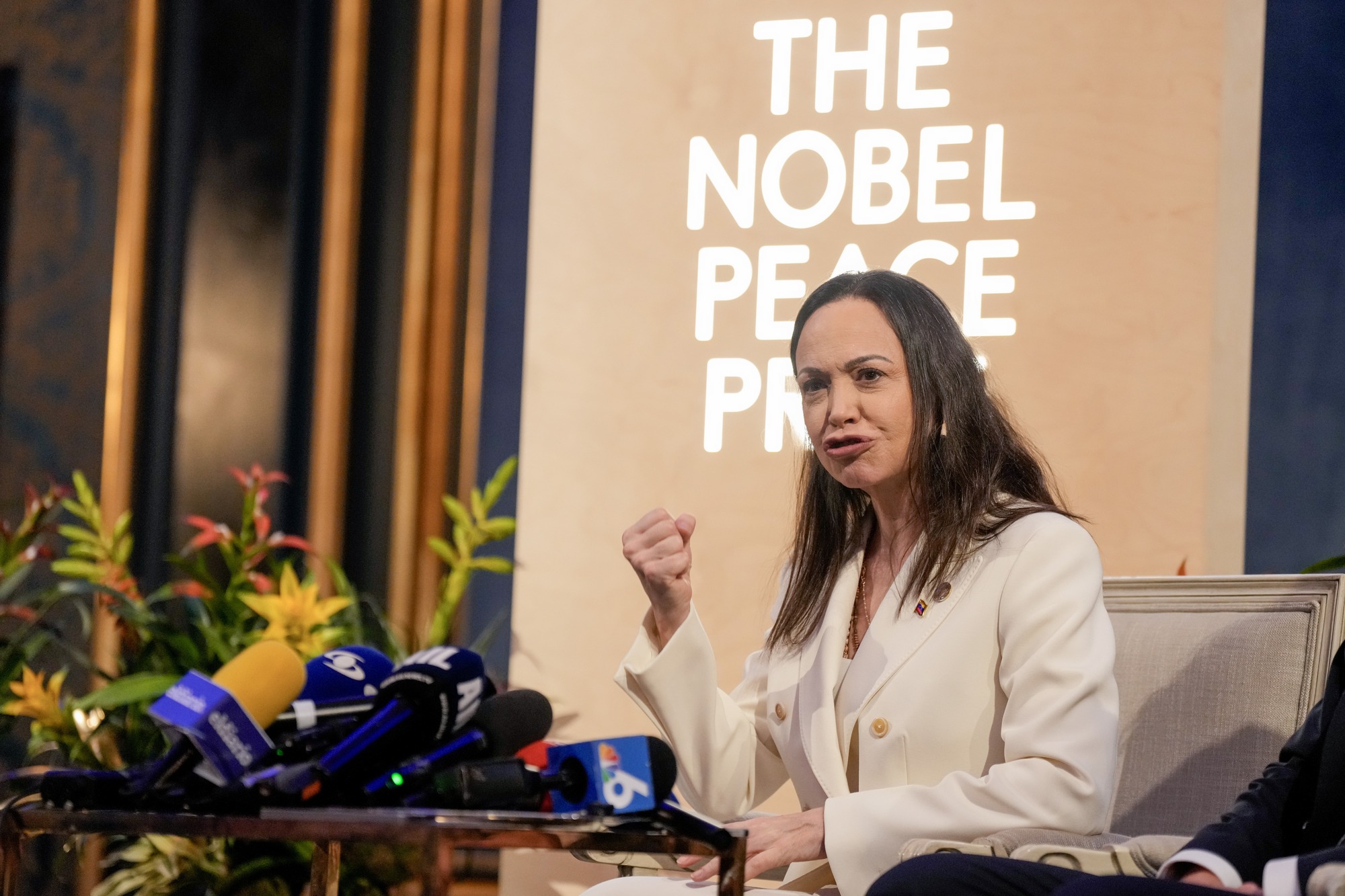
María Corina Machado, the leader of Venezuela's opposition, who in 2025 received the Nobel Peace Prize, said in an interview with Fox News that she would like to “share” the award with U.S. President Donald Trump. Machado directly linked her decision to a U.S. operation on January 3 that resulted in the capture of Nicolás Maduro — an event she called historic.
"I think he [Trump] has shown the whole world who he is. January 3 will go down in history as the day when justice defeated tyranny"
— María Corina Machado, leader of Venezuela's opposition, Nobel Peace Prize laureate (2025)
"This prize is the prize of the Venezuelan people… We would like to give it to him and share it with him"
— María Corina Machado, interview with Fox News
Why it matters
This gesture is not only an emotional acknowledgment. It serves several functions at once: it legitimizes external intervention in Venezuela's internal crisis, signals a possible shift in relations between Caracas and Washington, and opens a discussion about the future of regional security and energy. Political analysts note that symbolic moves often precede practical agreements — from security guarantees to foreign investment.
Possible consequences for the region
First, there is the possibility of faster integration of Venezuela into regional security alliances, which could change the balance of power in the Caribbean basin and South America. Second, if Caracas truly becomes an “energy hub,” it will attract investors but will require guarantees of the rule of law and protection for investments. Third, the return of millions of migrants will add domestic resources for recovery but will also pose challenges for economic and social reintegration.
What it means for Ukraine
For Ukraine, the principle itself is important: international political will and military-political actions can quickly change realities on the ground and create space for the restoration of state institutions. Given our interests, it is worth closely watching how international guarantees and investments are transformed into concrete decisions — from reconstruction to energy cooperation.
Conclusion
Machado's gesture is a powerful signal: symbolic actions can accelerate political change. The question now is whether these words will be turned into long-term agreements and investments that ensure stability and reconstruction. Demonstrative statements must be followed by practical steps; it will depend on those steps whether a free Venezuela embarks on a path of sustainable recovery.





