Suspicions against the Black Sea Fleet command
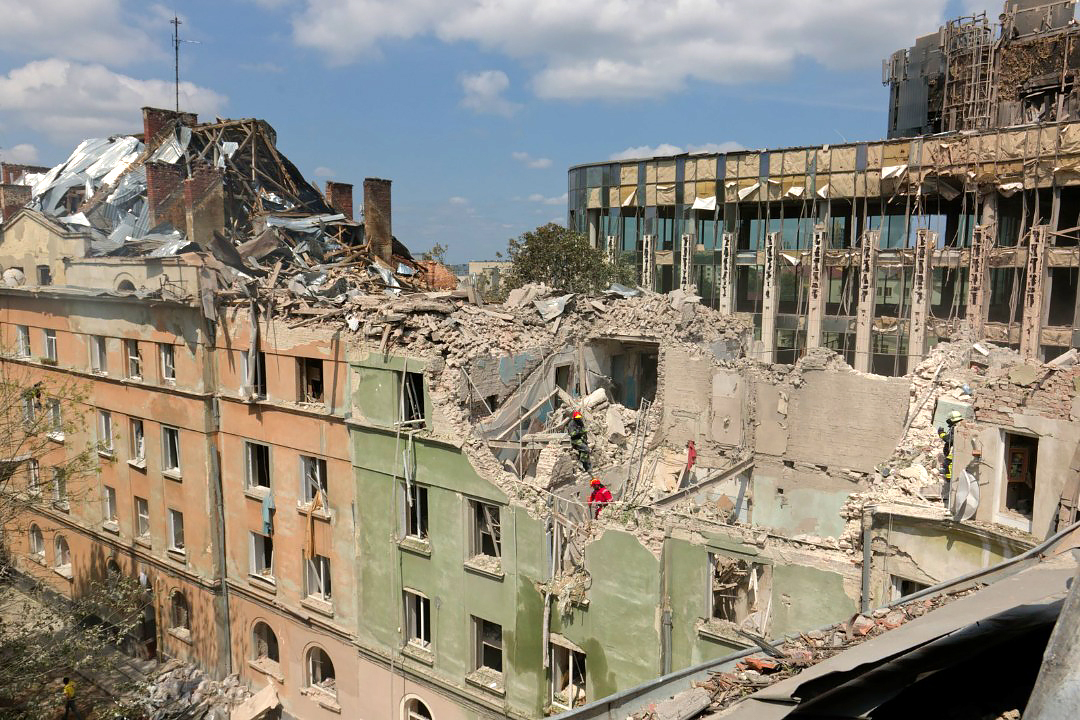
The Office of the Prosecutor General has reported suspicions against the commander and the chief of staff of the Russian Black Sea Fleet — an admiral and a vice-admiral — for involvement in the missile strike on Lviv on 6 July 2023. The investigation established that the attack was carried out with sea‑launched cruise missiles 3M-14 "Kalibr", launched from submarines and surface ships in the Black Sea. As a result of the strike civilians were killed, residential buildings were damaged, and part of the city's historical heritage was affected.
"The investigation established the involvement of the Black Sea Fleet command in the missile strike on Lviv and on sites in the UNESCO buffer zone on 6 July 2023"
— Office of the Prosecutor General
What is known about the damage
According to the investigation, the strike hit a residential area: nine people were killed, and houses, cars and civilian infrastructure were damaged. Damage was also recorded in the historic part of Lviv — 17 architectural monuments of local significance. The investigation classifies these actions as violations of the laws and customs of war, combined with intentional killing, committed by a group of persons acting in prior conspiracy.
Why this matters
First, this concerns the principle of command responsibility: if it is established that the strikes were organized and planned at the command level, the legal framing shifts from isolated incidents to systematic decisions that can be demonstrated in court. Second, attacks on cultural heritage have not only a human but also a civilizational dimension — the destruction of monuments weakens the cultural identity of regions, which is a component of national security.
"The attack was carried out with sea‑launched cruise missiles 3M-14 'Kalibr'"
— Office of the President of Ukraine
International context and consequences
Within the framework of the full-scale aggression, the Russians have already damaged 1,685 cultural heritage objects; in connection with these facts, 16 individuals have been notified of suspicion. Among the destroyed or damaged sites are more than 100 entries on the UNESCO World Heritage List. These figures strengthen the argument for international response: from sanctions and intensified criminal investigations to diplomatic pressure on cultural platforms.
The Ministry of Foreign Affairs has already used soft instruments of pressure — calls to boycott Russian initiatives under the auspices of international institutions — as part of a broader strategy to delegitimize the aggressor's culture. This approach combines legal accountability with information‑diplomatic reaction.
What next
The investigation's next steps may include issuing arrest warrants for the suspects, identifying other involved persons, international cooperation on the evidentiary base and extradition where appropriate. For Ukraine, this is an opportunity to turn allegations of crimes into concrete legal procedures and to secure precedents for holding those responsible for strikes on civilian and cultural objects to account.
Conclusion. The suspicions against the Black Sea Fleet command are not an end in themselves but a tool: they test whether the international system is capable of turning facts of destruction into justice. Whether these suspicions will become the beginning of systemic accountability for the destruction of cultural heritage depends on partners' ability to support the investigation, share evidence and demand the enforcement of international law.







