On May 24, Russia delivered its most powerful strike on Kyiv since the start of the full-scale war in terms of the number of affected locations. The next day, Russian Foreign Ministry spokeswoman Maria Zakharova held a press conference with what Moscow apparently considered an escalation of pressure.
"Retaliatory strikes have been and will be delivered against Kyiv"
Maria Zakharova, May 25, 2025
She also announced a separate statement from the Russian Foreign Ministry with "detailed warnings" for the foreign diplomatic corps in the capital — essentially a call for evacuation.
Threatening what is already happening
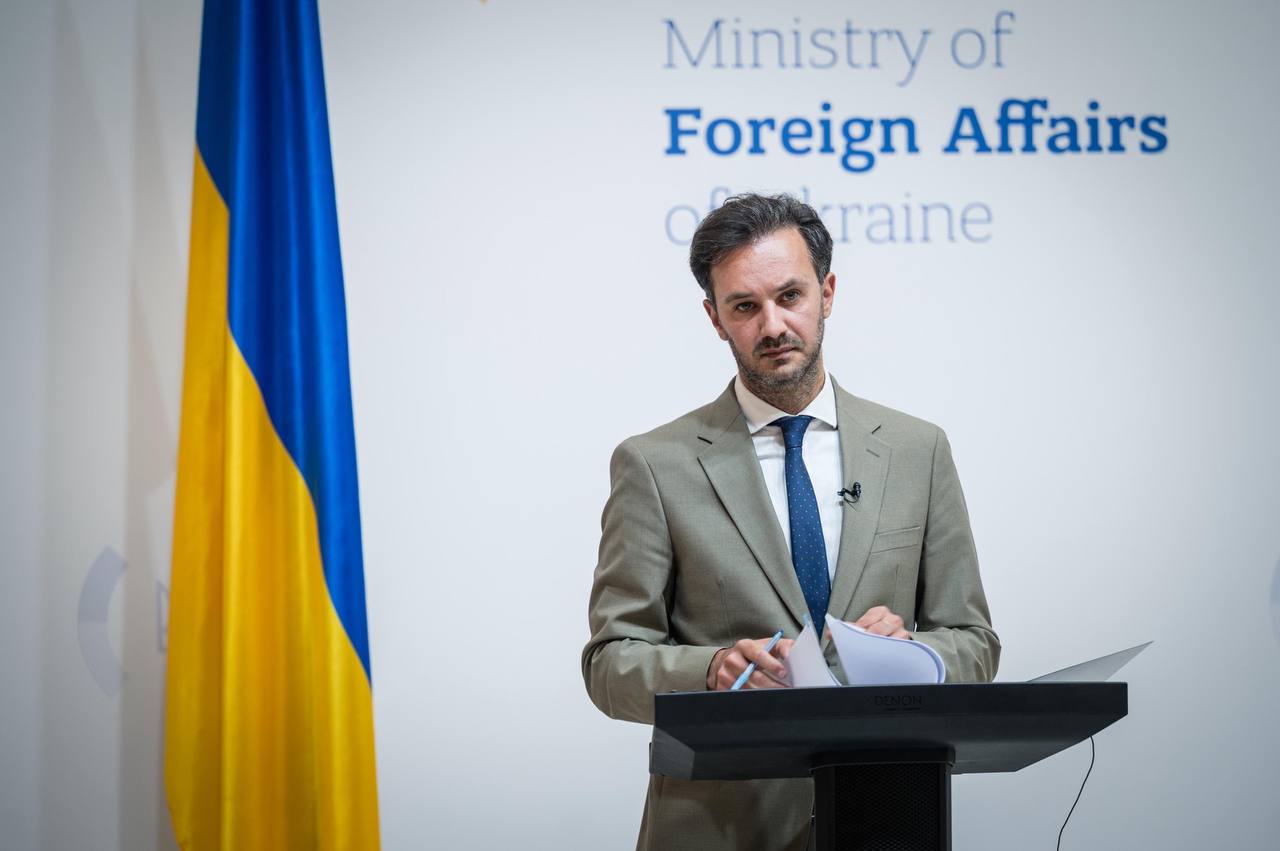
Ukrainian Foreign Ministry spokesman Heorhii Tykhy responded on X with a question more effective than any refutation: he reminded that Russia has already attacked Kyiv for four years and three months every week with ballistic and cruise missiles and drone swarms — and asked what exactly Moscow is announcing with its threat.
The options he suggested as explanation for such logic: desperation or alcoholism. A joke — but one with argumentative structure: if a state threatens what it already does every week, that is either rhetorical bankruptcy or a signal for internal audiences.
What stands behind the "warning to diplomats"
The Russian Foreign Ministry did indeed publish an official statement — with threats of strikes on "enterprises of the Ukrainian defense complex," "decision-making centers," and "command posts." The pretext was named as an attack by the Defense Forces on a college dormitory in the temporarily occupied Starobilsk.
Ukraine's Foreign Minister Andrii Sybiha, commenting on the statement, reminded that on the same day more than 70 representatives of foreign diplomatic missions personally visited the strike sites in Kyiv. That is, diplomats did precisely the opposite of what Moscow demanded.
The Center for Countering Disinformation at the National Security and Defense Council explained the purpose of such statements differently: Russia wants to show that it is not going to stop — especially after pretending to be interested in negotiations before Putin's visit to China.
- The threat appeared a day after the most massive strike on Kyiv in terms of number of locations
- The Russian Foreign Ministry called on diplomats to evacuate from the capital "as soon as possible"
- None of the more than 70 diplomats who came to the strike sites did so
- Sybiha called on partners "not to succumb to Russian blackmail"
The remaining open question: if the purpose of the statement is to pressure the diplomatic corps, yet diplomats demonstratively travel to strike sites rather than leave the city, will Moscow change its tool of influence, or will it continue to threaten with what it already does?





