What happened
Italian Prime Minister Giorgia Meloni called participants in the anti‑Olympics protests on Facebook “enemies of Italy and Italians” and expressed solidarity with the police, the city of Milan and those whose efforts are being undermined by the demonstrations. In several episodes of the protests — notably on 7 February — a group of about 100 people threw firecrackers, smoke grenades and bottles at law enforcement officers; police used water cannons. There are also reports of railway cables being cut, affecting train traffic.
Why it matters
Major events always carry several layers of risk. First, security is a direct component of the Olympics’ success: from the smooth operation of volunteers to the protection of infrastructure. Second, it’s a matter of the country’s image: international broadcasts capture both positive moments and clashes, and harsh rhetoric from leadership changes how events are perceived abroad. Third, there is a geopolitical dimension: Italy’s Ministry of Foreign Affairs reported repelled cyberattacks that, according to its assessment, were led by Russia — indicating a combination of street action and hybrid threats.
Facts and sources
Key points to note:
• Meloni published a post on Facebook sharply criticizing the protesters and calling for support for law enforcement.
• On 7 February clashes took place in Milan: roughly 100 participants threw explosive devices and bottles; police used water cannons.
• On 4 February Italy’s MFA reported repelled cyberattacks against embassies and Olympic facilities that, the ministry said, were led by Russia.
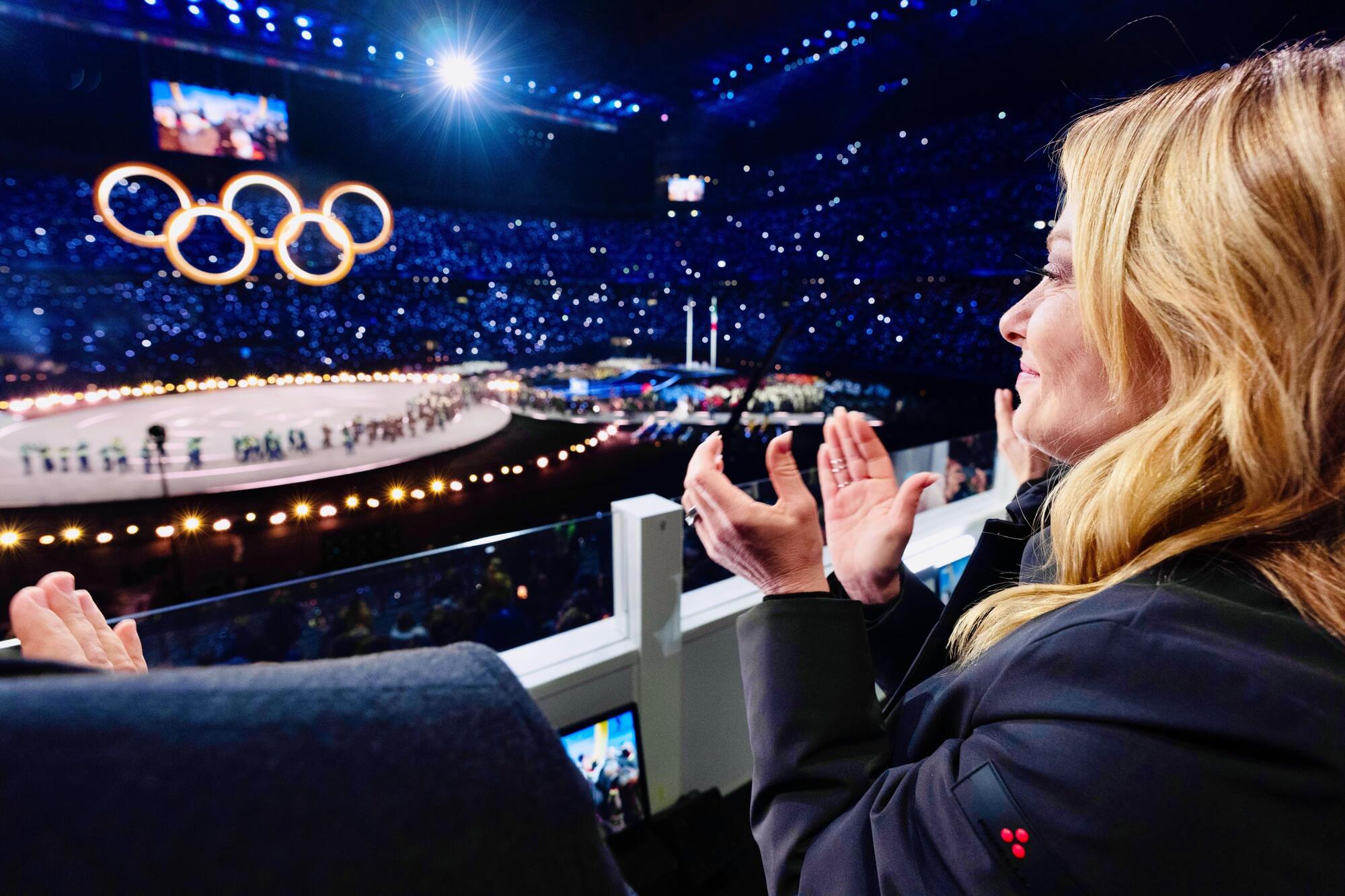
• On 6 February the opening ceremony of the 2026 Winter Olympic Games took place; the Ukrainian team is represented by 46 athletes — the largest delegation since 2010.
"And here they are: the enemies of Italy and Italians, who stage demonstrations against the Olympic Games, broadcasting these scenes on television around the world"
— Giorgia Meloni, Prime Minister of Italy
Analysis: what this could mean next
Meloni’s rhetoric is a signal to two groups. For law enforcement — a mandate for tougher action against excesses; for political opponents and civil society — a reminder that the questions of order and the freedom to protest will be sources of tension. The balance is important: excessive repression will reduce risks to the Games in the short term but will deepen political polarization and fuel narratives about the “suppression” of protest.
Separately — a geopolitical signal: the MFA’s report on cyberattacks adds context and suggests the actions may be part of a broader hybrid pressure. Analysts note that major international events always attract both local forms of protest and external interference.
What this means for Ukraine
For the Ukrainian delegation and supporters, not only physical security but also media presence matters. Forty‑six athletes — the largest representation since 2010 — is a chance to demonstrate the strength and normalcy of our state in Europe. Any incidents and sharp rhetoric can distract from performances and shape the public discourse.
Conclusion
Meloni has chosen a tone: to clearly assert the priority of security and order. That simultaneously addresses a political and security knot — but it does not resolve the question of how to preserve the right to peaceful protest without undermining major international events. While attention is fixed on the clashes, the key task for the organizing committee and European partners is to turn declarations into concrete security and dialogue measures so that sport remains outside political escalation.





